The Sumo Museum in Tokyo: A Complete Guide with Highlights, Access, and Tips
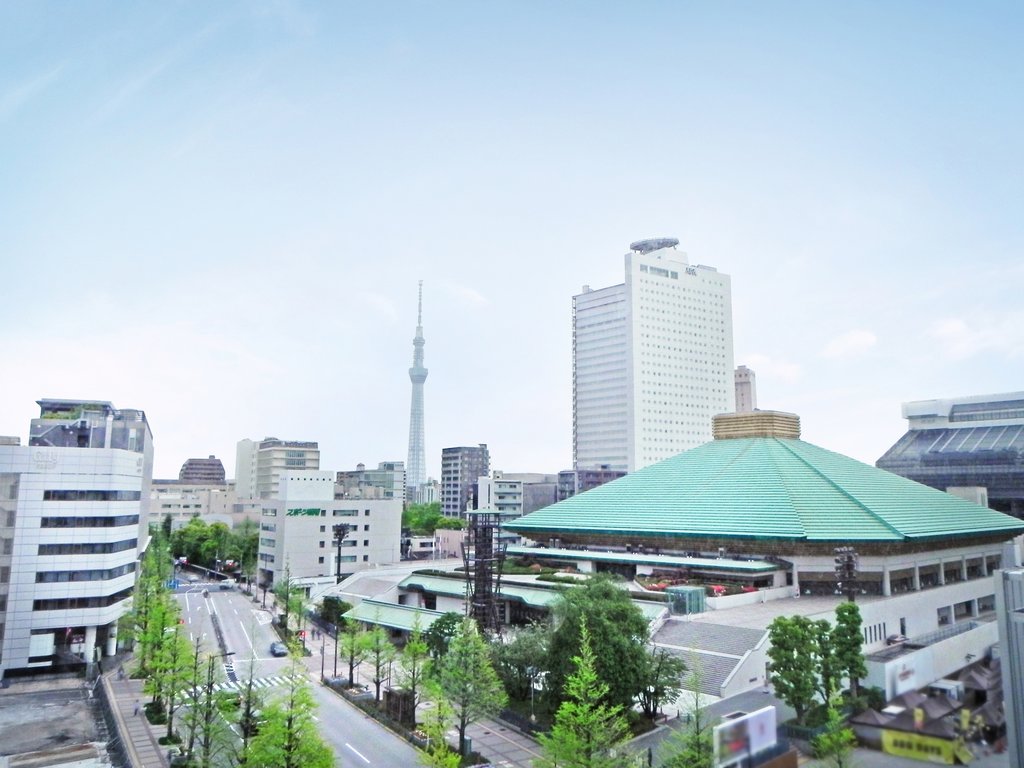
Looking to experience the history and culture of sumo in Tokyo?
The Sumo Museum—located inside Ryogoku Kokugikan, the official venue for Grand Sumo Tournaments—is a popular spot with free admission. Keep in mind that opening days and entry conditions change depending on tournaments and events, so it pays to confirm details before you go.
The essentials are easy to sort out in advance: hours, access, what’s on display, and the entry rules that apply during tournament periods. A chanko-nabe lunch nearby or a browse through the Kokugikan’s souvenir stands pairs naturally with a visit to the museum, turning a short stop into a rewarding half-day adventure.
With a little planning, the Sumo Museum makes an excellent centerpiece when exploring the Ryogoku area.
Contents
Sumo Museum Basics: Hours, Admission, and Access
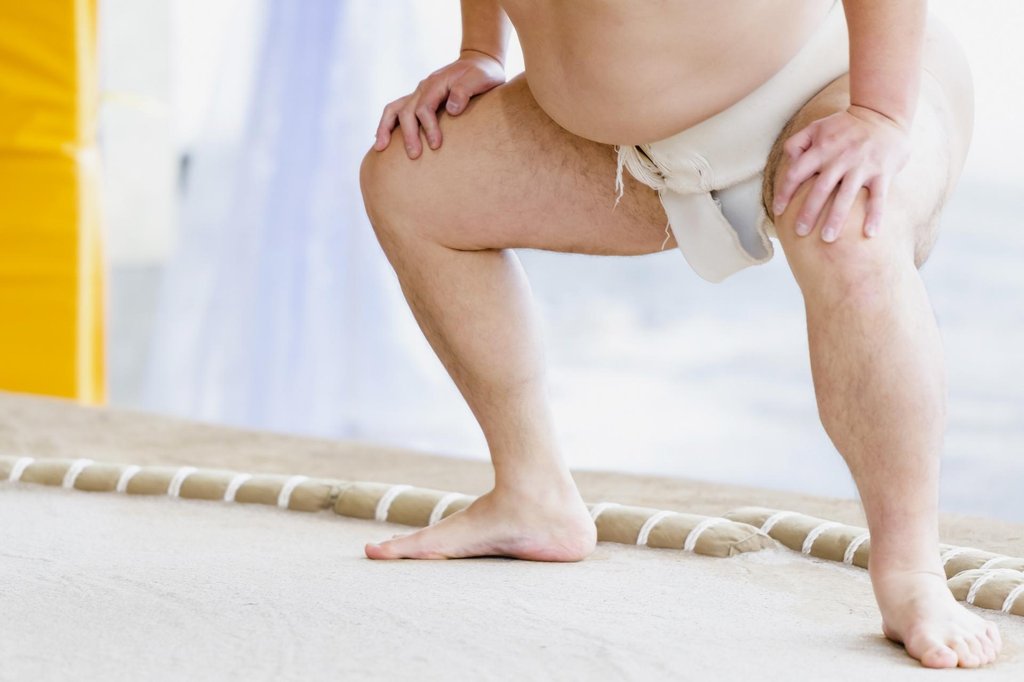
First-time visitors may be unsure about opening hours and how to get to the Sumo Museum, so we’ve listed basic information about those concerns in this section. We’ve also included an overview of the facility, admission, and opening days, and entry rules during Grand Tournament periods and directions from the nearest train stations. Knowing these details in advance makes it easy to decide whether or not the Sumo Museum fits into your itinerary.
A Free Museum on the First Floor of Ryogoku Kokugikan
The Sumo Museum is a free cultural facility operated by the Japan Sumo Association. Located on the first floor of Ryogoku Kokugikan, it opened in 1954 together with the former Kuramae Kokugikan. Built around an ukiyo-e art exhibition owned by its first director, the museum holds a wide range of valuable materials, including nishiki-e (multicolored woodblock prints), banzuke (official, hand-written ranking sheets), and kesho-mawashi (ceremonial sumo belts).
When the Kokugikan moved to Ryogoku in 1985 (becoming Ryogoku Kokugikan), the museum moved with it. The exhibition room is compact: at about 150 square meters (1,600 square feet), a visit can be completed in as little as twenty or thirty minutes. Tightly focused displays distill centuries of sumo history into a single room.
Combine the Sumo Museum with nearby restaurants and sightseeing spots for a satisfying half day in Ryogoku.
Details
| Address | 1st floor, Ryogoku Kokugikan, 1-3-28 Yokoami, Sumida City, Tokyo |
| Hours | 10 am-4:30 pm (last entry at 4 pm) |
| Closed | Saturdays, Sundays, national holidays, and New Year’s holidays (open daily during Sumo tournaments) |
| Official website | https://www.sumo.or.jp/KokugikanSumoMuseum/ |
| Recommended for | Travelers interested in Japanese culture; anyone wanting to stop by before or after watching sumo |
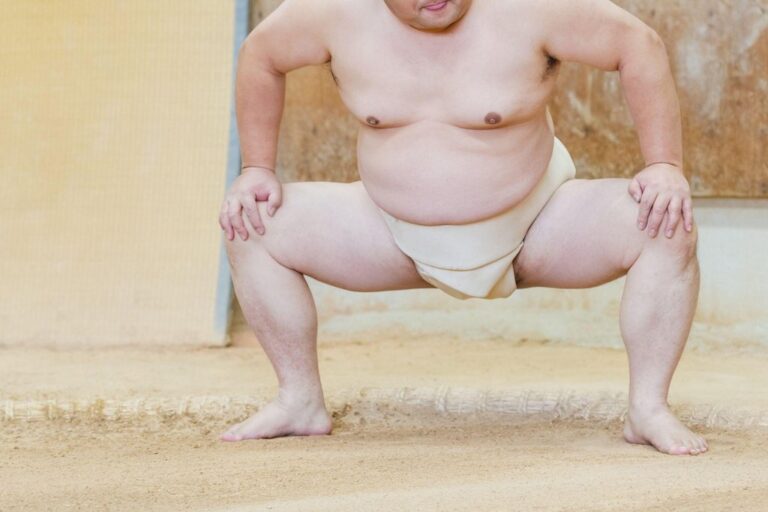
Open 10 am to 4:30 pm Weekdays
The Sumo Museum’s regular hours are Monday through Friday, 10 am to 4:30 pm, with the last entry at 4 pm. It closes on weekends and national holidays, so if you’ll be in Tokyo for the weekend only, you’re out of luck. However, as an exception, the museum is open every day, including weekends, during the Tokyo Grand Sumo Tournament.
Temporary closures also occur at irregular times for New Year’s holidays and exhibition changes. The official website posts a monthly schedule, and the top page shows whether the museum is open on any given day. Quickly checking this information before you leave can help you plan your outing with confidence.
A Tournament Ticket Is Required During Tokyo Grand Tournaments
Tokyo hosts Grand Tournaments (honbasho) three times a year—in January, May, and September—with each tournament lasting fifteen days. While the Kokugikan serves as the tournament venue, you cannot enter the building at all without a sumo ticket. Even if you only want to see the museum, a ticket is mandatory.
Tickets are sold online through official channels such as the Japan Sumo Association’s Ticket Oosumo site, but you can also reserve admission by phone or buy advance tickets on in-store terminals at convenience stores (such as 7-Eleven) in Japan. Many dates sell out quickly, and seat types that have sold out are not offered as same-day tickets, so plan carefully.
Things to Keep in Mind When Attending a Tournament:
- Tournament periods: January, May, and September (duration: 15 days)
- Entry requirement: a tournament ticket is mandatory
- Where to buy: online via Ticket Oosumo, Ticket Pia, and similar services; in-store terminals at convenience stores in Japan
If the museum is your only goal, visiting outside the tournament periods is the better option. And as always, a quick check of the tournament schedule on the Japan Sumo Association’s official website just before your trip is a good idea.
Just a 2-Minute Walk from the West Exit of JR Ryogoku Station
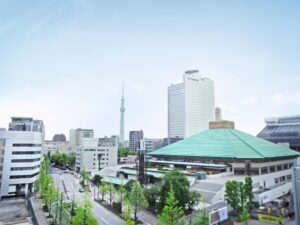
The shortest route to the Sumo Museum is from the West Exit of Ryogoku Station on the JR Sobu Line. Ryogoku Kokugikan’s distinctive green roof is visible right in front of the ticket gates, so there’s little chance of getting lost and the walk takes just 2 minutes.
If you take the Toei Oedo Line, Exit A3 brings you closest to the venue, though the walk is a bit longer (at about 5 minutes).
| Line and Station | Exit | Walk |
|---|---|---|
| JR Sobu Line, Ryogoku Station | West Exit | About 2 minutes |
| Toei Oedo Line, Ryogoku Station | Exit A3 | About 5 minutes |
JR Ryogoku Station has two sets of ticket gates, the west gate and east gate. If your goal is the Sumo Museum, use the West Exit gates on the Ryogoku Kokugikan side. Traveling to Ryogoku Station from Tokyo Station takes about 7 minutes on the JR Sobu Line Rapid; from Shinjuku Station, about 25 minutes on the Chuo-Sobu Local Line.
The museum is on the first floor, just inside the main entrance, but the signage is modest and some visitors unknowingly walk right past it. Staff near the entrance can point you in the right direction if you ask. There’s no parking at Ryogoku Kokugikan, so we recommend using public transportation whenever possible.
Exhibits and Highlights of the Sumo Museum
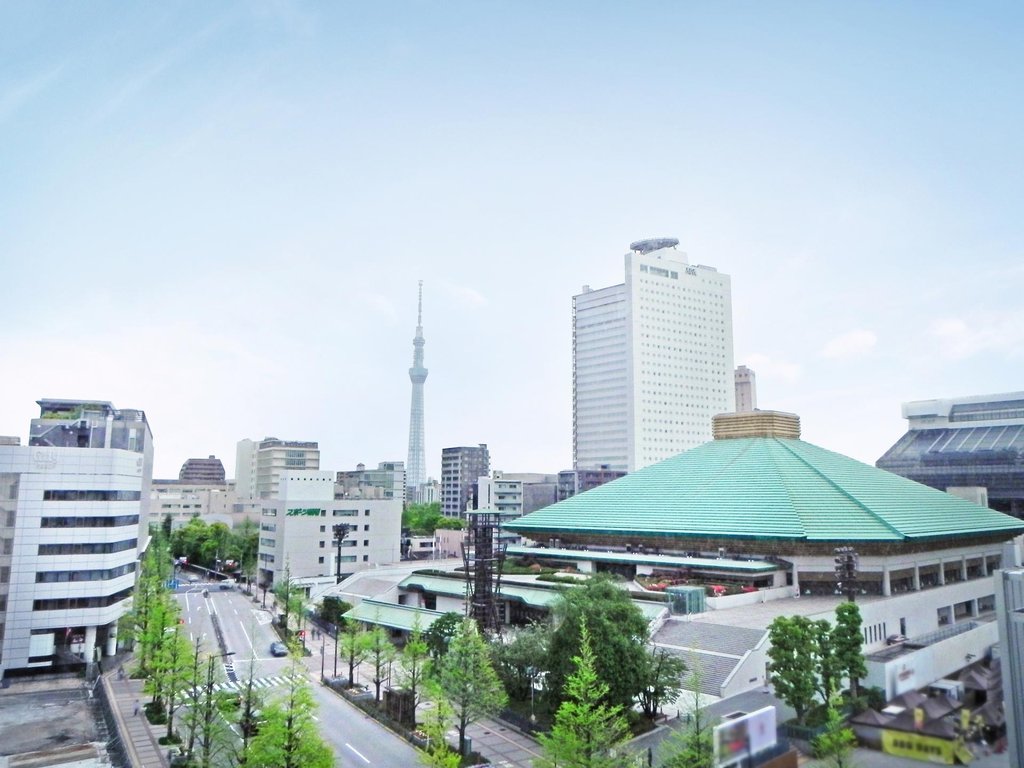
Knowing what’s on display in advance helps you avoid missing out on anything, even on a tight schedule. To help you, we’ve included information on the main highlights of the Sumo Museum in this section, including details on the rotation cycle of special exhibitions, English language assistance, and souvenirs. A little preparation will help you take in a lot of sumo culture, even during a short visit.
Special Exhibitions Change Three Times a Year
Because the Sumo Museum has only one exhibition room, it holds no permanent display. Instead, the exhibition changes three times a year and features a rotating selection of materials, including nishiki-e, banzuke, and kesho-mawashi. The timing of each exhibition change (and whether certain items are swapped out during a given exhibition) varies, so check the Japan Sumo Association’s official website for the latest information.
Exhibition themes are varied, including exhibitions centered on nishiki-e prints to retrospectives on the great yokozuna—Grand Champions—of generations past. Before your visit, check the “Current Exhibition” section on the top page of the official website, which shows the current theme and exhibition dates at a glance. The museum sometimes closes temporarily between exhibitions, so make sure to verify the schedule before heading out.
Portraits of Successive Yokozuna on Display
Many visitors find themselves lingering over the materials on past Grand Champions, and the portraits and photo panels of championship-winning sumo wrestlers—or rikishi—are displayed in keeping with each exhibition’s theme. Through an exploration of the lineage of championship status and the figures chosen for it across the eras, you can feel the weight of several centuries of history firsthand.
Yokozuna from the era before photography are presented in nishiki-e, a type of Japanese art form, and the wrestlers depicted in these richly colored woodblock prints are striking as works of art in their own right. When color photography became available in Japan, the records shifted from black-and-white to color, a transition that mirrors the country’s modern history.
Each yokozuna’s career and history are presented alongside their portraits, so even visitors new to sumo can follow along easily. For anyone interested in Japanese culture, this display is well worth a visit, so take your time here.
See Nishiki-e, Banzuke, and Kesho-mawashi Up Close
The Sumo Museum’s collection numbers approximately 36,000 items, remarkable for a facility with just one exhibition room. At its heart are the objects that symbolize sumo culture: nishiki-e, banzuke, kesho-mawashi, and gunbai: the characteristic fan waved by referees at a sumo match. The Edo-period nishiki-e collection assembled by the first director also holds significant artistic value, making the museum a worth-while trip for ukiyo-e fans as well.
The display cases are close at hand, so you can clearly make out the gold-thread embroidery on the kesho-mawashi and the brushwork on the banzuke. This intimate viewing experience—near impossible at large museums—is part of what makes the Sumo Museum so appealing.
The items on display change with each special exhibition, so every visit brings with it new works to discover. We recommend checking the official calendar to find an exhibition that interests you before planning your trip.
Pick Up Souvenirs at the Nomi no Sukune Shrine Stand
Inside the exhibition room is a display of amulets from Nomi no Sukune Shrine. Nomi no Sukune is a figure from Japanese mythology long revered as the patron deity of sumo.
The amulets and talismans available here differ slightly from those sold at typical shrines, and they remain popular among sumo fans as amulets for good luck in competition and good health. Feel free to take a look.
Nomi no Sukune Shrine itself stands in the Kamezawa district of Sumida City, a fifteen-minute walk from Ryogoku Kokugikan. Its grounds feature stone monuments engraved with shikona (the ceremonial fighting names of past yokozuna), offering a tangible sense of sumo history. If you have time to spare, visiting the shrine can help deepen your appreciation of sumo culture.
English Booklets Help You Understand the Exhibits
Most of the exhibit captions are in Japanese, so English speakers sometimes worry about whether they’ll be able to understand the content on display. This is where the English booklets published by the Japan Sumo Association come in handy. The booklet covers basics such as sumo rules and rituals, so you can view the exhibits with this context in mind. The booklet is reasonably priced, too, so pick one up when you enter.
For anything not covered in the booklet, a translation app on your smartphone can help fill in the gaps. Simply point your camera at a Japanese caption and you can get the gist of it on the spot.
Tips for Overcoming the Language Barrier:
- The Japan Sumo Association’s official English website: check exhibit overviews and current special exhibition information in advance
- Online sumo glossaries: learning common terms beforehand enriches your understanding of the exhibits
- Offline translation packs: downloading the Japanese language pack in advance is convenient
Combined with a little background knowledge, the pamphlet, and digital tools can help you enjoy the exhibits without getting frustrated by the language barrier.
What to Know Before Visiting the Sumo Museum
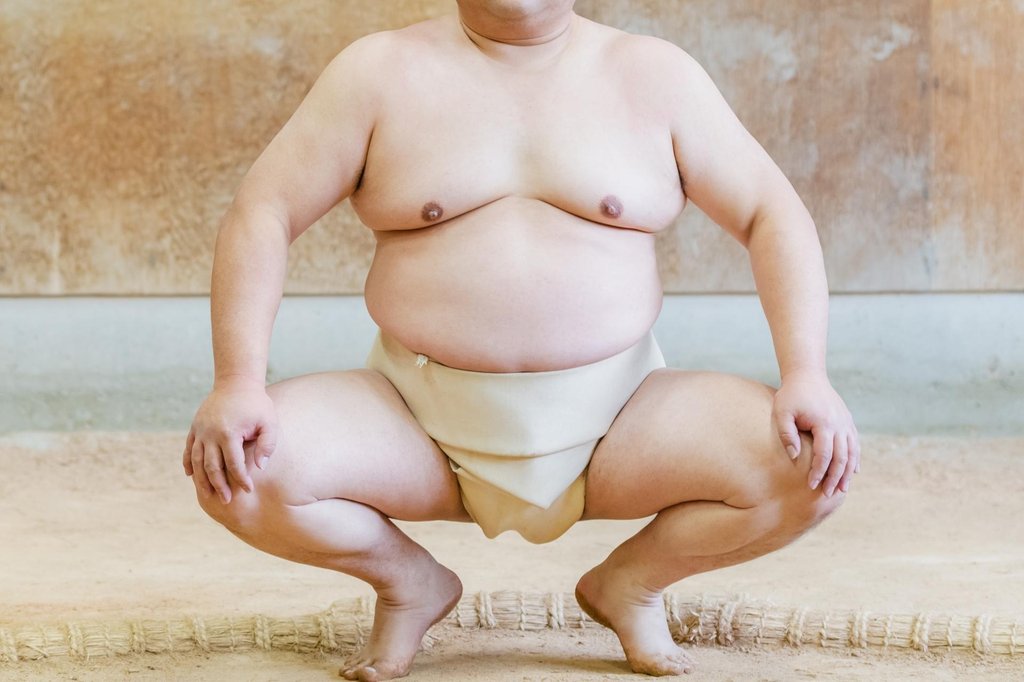
Unexpected rules and restrictions can catch you off guard at any museum you visit for the first time. Here we’ve described some points to keep in mind before your visit, including information on how long a visit takes, photography rules inside the museum, the timing of temporary closures, and procedures for group visits.
Knowing these points in advance can make planning your day easier and lead to a more satisfying visit.
A Visit Takes Just Twenty to Thirty Minutes
The single exhibition room is only 150 square meters (1,600 square feet) in size, so a typical visit takes about twenty to thirty minutes. Even a dedicated sumo fan viewing everything carefully can finish touring the museum within an hour. If you travel to Ryogoku solely to see the museum, this might feel a bit underwhelming. Since it’s compact and free to enter, the museum is best enjoyed as part of a larger sightseeing plan in Ryogoku.
The recommended approach is to build a half-day plan in the Ryogoku area. Here are some spots that pair easily with a visit to the museum:
- Edo-Tokyo Museum: a large facility tracing Tokyo’s history from the Edo period to the present
- Chanko-nabe: savor the traditional cuisine of sumo wrestlers at one of Ryogoku’s specialty restaurants
- A stroll around Ryogoku Kokugikan: statues, handprint monuments, and other vestiges of sumo culture fill the neighborhood
Treat the Sumo Museum as the starting point of your Ryogoku sightseeing, and you can pick up the fundamentals for free before heading out into the streets. In this way, a thirty-minute visit becomes the gateway to a fulfilling half day.
Photography Is Not Allowed in the Exhibition Room
Photos and videos are prohibited inside the exhibition room. This measure protects fragile and valuable materials—such as the nishiki-e and banzuke—that are sensitive to light and heat.
Outside the venue, several spots are perfect for photos:
- Ryogoku Kokugikan’s front exterior: the classic spot for photos with the imposing building as your backdrop
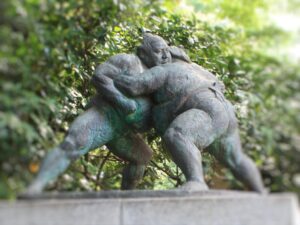
- The statues along Kokugikan-dori in front of the venue: pose alongside near-life-size bronze statues of sumo wrestlers
- The yokozuna handprint monuments on Kokugikan-dori: place your hand over the prints and feel just how large a sumo wrestler’s hands are
All of these spots are outdoors, so you can take pictures freely and without restrictions. In other words: take in the exhibits with your eyes, and save photography for outside.
The Museum Closes Temporarily Between Exhibitions
Because the Sumo Museum has only one exhibition room, it closes temporarily while exhibitions are being changed. With three changes a year, the museum is likely to be closed for several days between the end of one exhibition and the start of the next.
The last thing you want is to arrive in Ryogoku only to find a closed sign at the entrance. For overseas travelers on a tight schedule, landing on a closed day can be a real setback.
Once your date is set, be sure to check the opening schedule on the Japan Sumo Association’s official website. Exhibition dates and temporary closure notices are updated regularly.
Questions you can get answers to on the official website:
- When does the current special exhibition end?
- When does the next one begin?
- Does your planned visit fall into the gap between them?
A few minutes spent checking the website before your departure can save you from wasting time.
Groups of More Than Twenty People Must Contact the Museum in Advance
For school trips and tours, groups of more than twenty people must contact the museum in advance. You’ll find details about this on the Japan Sumo Association’s official website, so verify current requirements before your visit.
The exhibition room has limited space, and a large group entering at once disrupts other visitors. Keeping your arrangements flexible—or being open to splitting into smaller groups and staggering entry times—can help ensure a pleasant visit for your group and for other visitors.
- Sumo Museum phone inquiries: (+81) 03-3622-0366
Once your date is set, contacting the museum as early as possible is the safest course. Share your group size and expected arrival time to make sure everything goes smoothly on the day of your visit. Note that individuals and families need no reservation.
Tips for Combining the Sumo Museum with Tokyo Sightseeing
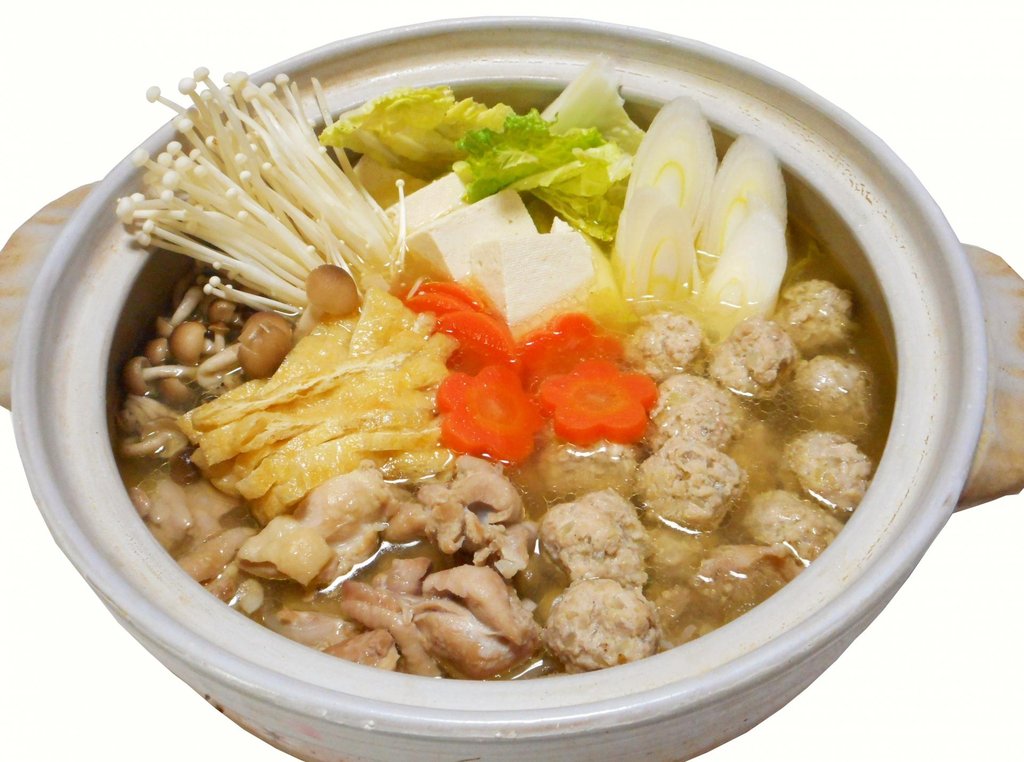
A visit to the Sumo Museum takes only twenty to thirty minutes, which can leave some travelers wanting more. In this section, we cover some nearby sightseeing spots to pair with the museum for a deeper taste of sumo culture.
Options include a same-day plan with Grand Tournament viewing, a browse through Ryogoku Kokugikan’s souvenir stands, and lunch options. Mix and match activities based on your available time and interests, and you can enjoy the Ryogoku area for anywhere from half a day to a full day.
Visit on the Same Day as a Grand Tournament
If you hold a tournament ticket, the most satisfying way to spend the day is to go from the museum to the souvenir stands and then on to the match.
The museum opens at 10 am, so visiting first thing in the morning is the way to go. Take your time looking at the kesho-mawashi, nishiki-e, and historic banzuke before the matches, and the bouts unfolding in front of you are certain to take on new depths. There’s a real pleasure in seeing what you learned in the exhibits come alive in the arena.
Use the following guide as a rough itinerary for your day in the Ryogoku area:
- 10:00 am-10:45 am: Tour the museum
- 10:45 am-11:00 am: Buy sumo goods at the first-floor stands
- 11:00 am-3:30 pm: Enjoy lunch and a stroll nearby
- From 3:30 pm: Take your seat in time for the ring-entering ceremony (during tournament periods only)
Top-division matches begin at around 4 pm, so finishing the museum in the morning leaves you plenty of breathing room in between sightseeing and spectating. Grand Tournaments in Tokyo are held three times a year—January, May, and September—so confirming dates in advance is essential if you plan to attend a match.
Shop for Sumo Goods at the Ryogoku Kokugikan Souvenir Stands
Ryogoku Kokugikan’s souvenir stands are a treasure trove of sumo goods. They carry a wealth of items found nowhere else, including towels printed with rikishi handprints, banzuke sheets, and even sumo calendars.
One thing to be aware of is that the stands operate differently during tournament times and off-seasons:
- During tournaments: only ticket holders can enter and shop. The selection is at its fullest, and includes limited-edition goods.
- Off-season: the permanent shop operates from 10 am to 4 pm, but closes on private-event days and during New Year’s holidays. You don’t need a ticket to enter during the off-season.
An especially popular item here is Kokugikan Yakitori, grilled chicken skewers that are made on-site and taste good even cold, perfect for snacking on during the bouts or taking home as a souvenir.
Off-season operating days can be irregular, so checking the latest schedule on the Kokugikan’s official website before your visit is recommended.
Pair Your Visit with Chanko-nabe for Lunch
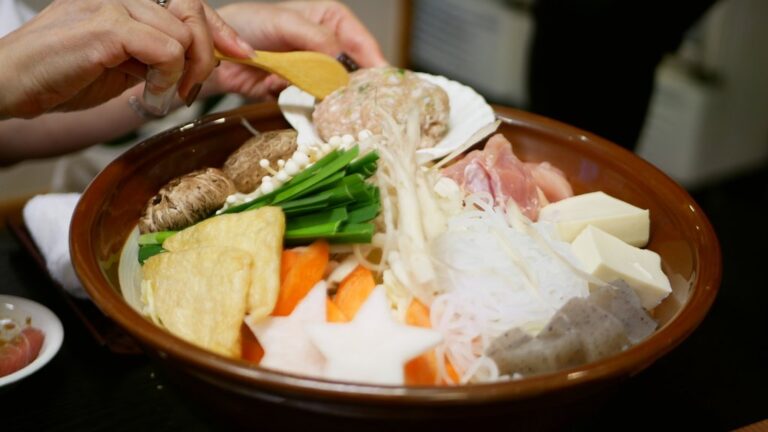
After learning about the sumo wrestler’s diet at the museum, treat yourself to lunch at a chanko-nabe specialty restaurant near Ryogoku Station. Tasting the food the actual athletes eat brings sumo culture to life in a way that museum exhibits alone cannot.
Ryogoku is home to a cluster of chanko-nabe restaurants run by former rikishi, such as Sumo-Chaya Terao. Here, you can enjoy authentic chanko with playful, sumo-inspired touches, such as daikon radish cut into a star-shape to symbolize a sumo victory.
Ryogoku Edo NOREN, directly connected to JR Ryogoku Station, is another convenient lunch spot. This large complex is themed after Edo-period food culture and houses restaurants serving chanko, sushi, and soba. Hours vary by restaurant, so we recommend checking the official website in advance.
In just a half day in Ryogoku, you can study sumo history at the museum and taste the same dishes enjoyed by Japan’s sumo wrestlers at a chanko-nabe restaurant. Lunch here is a great chance to retrace the lives of the rikishi you saw in the museum through your taste buds.
Common Questions About the Sumo Museum
Here are answers to the questions visitors most often ask about the Sumo Museum in Ryogoku Kokugikan. The topics cover visiting Ryogoku with children, getting close to the sumo ring, spotting rikishi in the neighborhood, and where to store your luggage. Check these in advance to help you enjoy your visit with confidence.
Is the Sumo Museum Fun for Children?
With free admission and no age restrictions, the museum is a convenient option for families with children. The exhibition room is compact, too, so it takes only twenty to thirty minutes to cover everything. This ensures you can fully enjoy the venue before the kids get restless—although the richly colored sumo belts and dramatic nishiki-e paintings are engaging enough to draw even kids in.
Ryogoku Kokugikan is equipped with stroller parking and ramps for wheelchair access as well, so moving around inside the venue is hassle-free.
Can I See the Sumo Ring from the Museum?
You cannot enter the arena from the museum to see the ring (or dohyo). The museum and the arena are separate, and the arena is not open to the general public. The only way to see the real dohyo is to get a ticket to a Grand Tournament.
If you want to see a model sumo ring, Ryogoku- Edo NOREN (directly connected to the West Exit of JR Ryogoku Station) is a good alternative. A full-sized replica in the building’s atrium allows for visitors to view it up close for free.
Can I See Rikishi Around Ryogoku?
Sumo stables dot the area around Ryogoku Station, so your chances of spotting a rikishi in traditional garb (yukata) are quite good. Between 11 am and noon in particular, you may see athletes out and about, heading for lunch or taking care of errands. Note that the area around Kokugikan-dori offers somewhat better odds for an encounter.
If you’d like a photo with a rikishi, asking politely first is the proper etiquette: always be considerate of their private time.
Where Can I Store My Luggage?
The Sumo Museum has no lockers and no cloakroom, and the exhibition room is compact so it’s best to avoid bringing in large bags. For luggage storage, the coin lockers inside JR Ryogoku Station are the most convenient option. The museum is only a 2-minute walk away, so you can drop off your bags and head over unencumbered.
Station lockers are limited in number and can fill up early in the day, so remember that leaving your luggage at your hotel’s front desk is a reliable backup option.
Make the Sumo Museum the Start of Your Day in Ryogoku
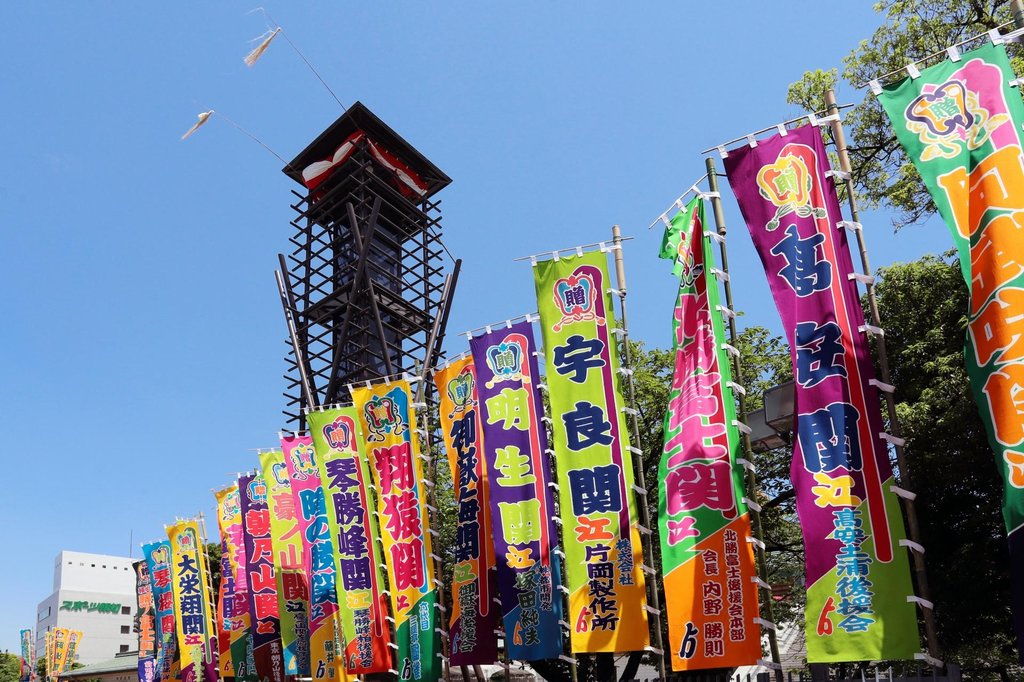
From portraits of past yokozuna to nishiki-e prints, the Tokyo Sumo Museum is a free facility on the first floor of Ryogoku Kokugikan where you can view valuable and historical exhibits up close. Just note that a tournament ticket is required to get in during Grand Tournament periods. The Ryogoku area is also dotted with renowned chanko-nabe restaurants, so you can easily build a memorable half-day plan around the Sumo Museum.


![Where to Watch Sumo in Japan: 3 Ways to See Sumo & How to Get Tickets [Complete Guide]](https://sumowrestlingshow.jp/wp-content/uploads/2026/08/where-to-watch-sumo-in-japan_1-300x200.jpg)