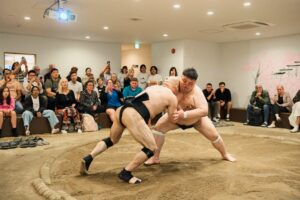
Four Recommended Sumo Shows in Tokyo: Tips on How to Choose Based on Length, Meals, and Show Content
No two of Tokyo’s sumo shows run quite the same way. Some serve a full meal while others skip it, and start times range from morning to evening. This guide first explains what a sumo show is. It then compares four venues by location, meals, and program.
Five checks follow, from start times and meal options to participation rules and cancellation policies. Run through them before you book so the show fits the day you have planned.
Contents
- How Sumo Shows in Tokyo Differ from Grand Tournament Matches
- Four Places to Enjoy a Sumo Show in Tokyo
- Five Things to Check Before Choosing a Sumo Show in Tokyo
- Other Sumo Show Venues in Japan
- Recommended Tours to Combine with a Sumo Show in Tokyo
- Frequently Asked Questions About Sumo Shows in Tokyo
- Summary
How Sumo Shows in Tokyo Differ from Grand Tournament Matches
A sumo show isn’t an official competition. It’s a performance in which the cast is made up of mainly former professional sumo wrestlers who demonstrate techniques and put on matches with English commentary. This section explains how sumo shows differ from Grand Tournament matches.
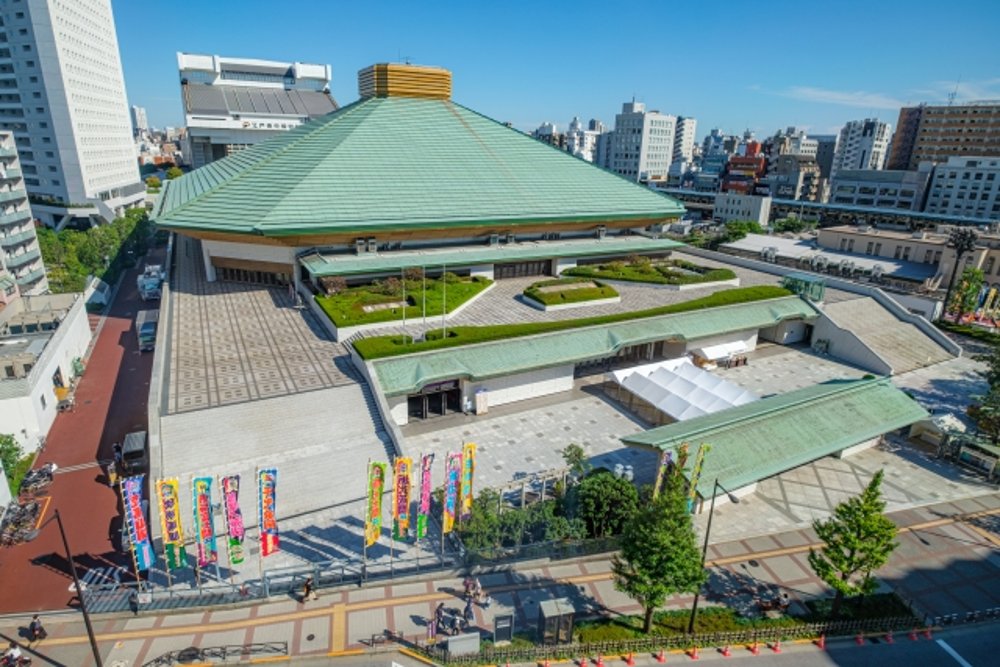
During the Grand Tournaments, currently active sumo wrestlers compete for their place on the official ranking board, and these tournaments are organized by the Japan Sumo Association. In Tokyo, tournaments are held at Ryogoku Kokugikan for a duration of fifteen days each in January, May, and September.
| Category | Grand Tournament | Sumo show |
|---|---|---|
| Event Content | Official competition that determines wrestlers’ rankings | Entertainment showcasing techniques and matches |
| Performers | Currently active sumo wrestlers | Former professional sumo wrestlers |
| Dates (Tokyo) | 15-day tournaments in January, May, and September | Year-round; determined by each venue’s show dates |
| Audience participation | None | Yes, with participants chosen by lottery or another method |
The matches in a sumo show are demonstrations designed to show off sumo techniques, but the performers are former sumo wrestlers who trained professionally for many years. From a seat close to the ring, you’ll be able to hear the dull thud of bodies colliding at the initial charge that starts each match, and even the sound of the wrestlers’ feet shuffling in the ring. Up close, you can see for yourself just how big the wrestlers are and how fast they move, which can be difficult to appreciate on a screen.
Four Places to Enjoy a Sumo Show in Tokyo
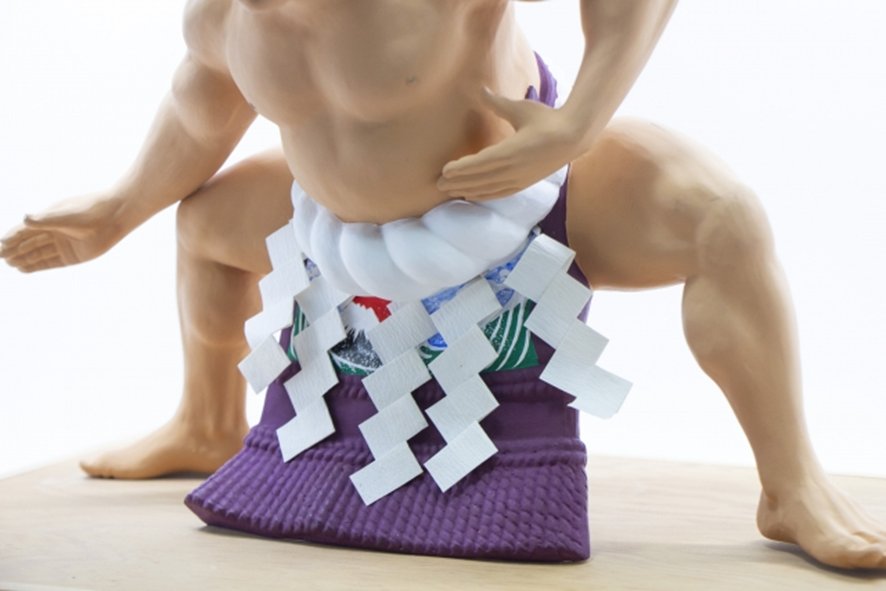
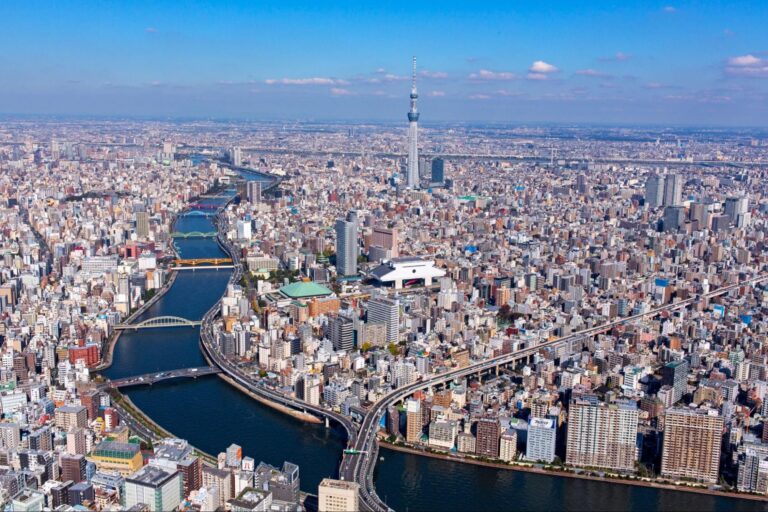
The majority of Tokyo’s sumo show venues are located in four main areas: Shinjuku, Asakusa, Ginza, and Ryogoku. The following section introduces each venue’s location, meal options, and what to expect during each program, so that you can compare each option with the area you’re staying in and your travel plans.
Shinjuku Sumo Club: An Hour-and-a-Half Show Without a Meal
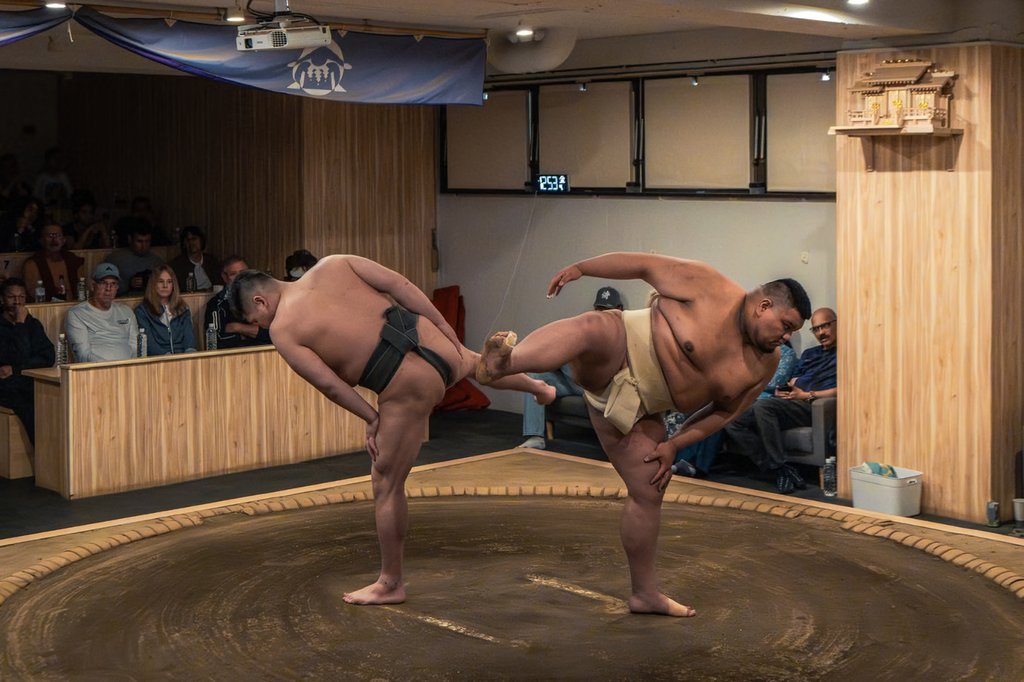
Shinjuku Sumo Club is a sumo show venue on the second floor of a building in Okubo, Shinjuku Ward. In October 2026, the operator of Shinjuku Sumo Club opened Shinjuku Sumo Club Kabukicho (about a two-minute walk from Exit A1 of Higashi-Shinjuku Station) so there are now two venues with the same name in Shinjuku. Since the venues are at different locations, be sure to check the address of the venue you booked before heading there.
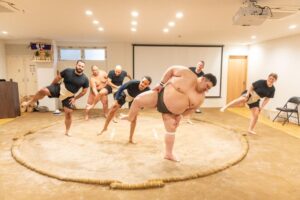
The show lasts about an hour and a half. It begins with a host who introduces the history and etiquette of sumo in both English and Japanese. Former professional sumo wrestlers then demonstrate techniques and matches right in front of you. In the second half, audience members chosen by lottery step into the ring and take on the wrestlers in mock matches. The show ends with photos with the wrestlers.
The show doesn’t include a meal, so you’re free to enjoy a meal at a restaurant in Shinjuku before or after the show. We recommend trying Korean food in nearby Shin-Okubo before the show or stopping by a casual Japanese-style pub in Kabukicho afterward.
Details
| Address | Okubo venue: Sekisaku Building 2F, 2-5-22 Okubo, Shinjuku-ku, Tokyo / Kabukicho venue: 1F, 1-8-4 Okubo, Shinjuku-ku, Tokyo |
| Show times | Okubo venue: 10:00 am / 12:30 pm / 3:00 pm / 5:30 pm / 8:00 pm Kabukicho venue: 1:00 pm / 3:30 pm / 6:00 pm / 8:30 pm start times |
| Closing days | Check closures via the booking page |
| Official website | https://travelingjapan.com/brands/sumo-show/ |
| Ideal for | Guests who don’t want to eat at the show, or who want to enjoy evening sightseeing in Shinjuku afterwards |
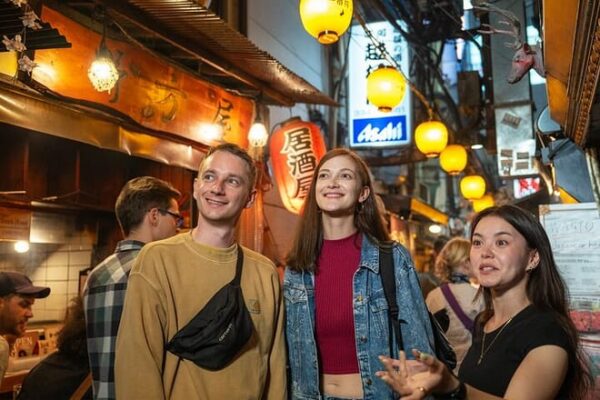
Shinjuku: Food Tour – 15 Dishes at 4 Eateries
Up to 15 recommended Japanese dishes and 2 drinks • 4 unique eateries favored by Tokyo locals • Fresh sushi, crispy kushikatsu, Juicy gyoza, and a variety of Japanese sake
Asakusa Sumo Club: A Show with Chanko-Nabe and Entertainment from a Geisha
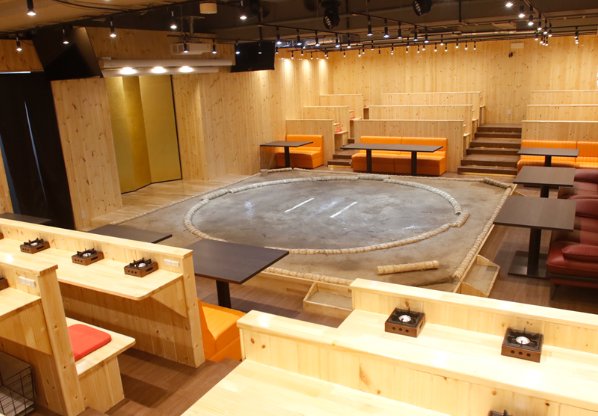
Asakusa Sumo Club is a sumo show restaurant within walking distance of Senso-ji in Asakusa. The club has two venues, the main venue and the ANNEX venue, and the nearest station for both is Asakusa Station via the Tsukuba Express train. From Asakusa Station (Tokyo Metro Ginza Line or the Tobu Line), the walk takes more than ten minutes, and we recommend setting the venue’s address as your destination in a map app to help you find your way.
The show at the main venue opens with a dance performed by a geisha, a female entertainer who performs traditional arts at banquets. Asakusa Sumo Club has added this section so that visitors can see two forms of Japanese culture at once. Afterward, you’ll watch former professional sumo wrestlers demonstrate basic sumo moves and compete in matches while you eat chanko-nabe, the same hot pot cuisine that Japanese sumo wrestlers eat.
Every ticket includes a meal, so the show also serves as your lunch or dinner. After walking around the Senso-ji area, you can sit down and enjoy a meal and a show at the same time, making this venue easy to fit into a day of sightseeing in Asakusa.
Details
| Address | Main venue: Asakusa Rockza Building 1F, 2-10-12 Asakusa, Taito-ku, Tokyo / ANNEX: B1, 2-11-7 Asakusa, Taito-ku, Tokyo |
| Show times | 12:00 pm / 3:00 pm / 6:00 pm / 8:30 pm (same for the main venue and ANNEX) |
| Closing days | Irregular closures |
| Official website | Main venue: https://asakusa-sumo.com/ ANNEX: https://asakusasumo-annex.com/ |
| Ideal for | Enjoying a meal and a show during a day of sightseeing in Asakusa, and for seeing both sumo wrestlers and a geisha |
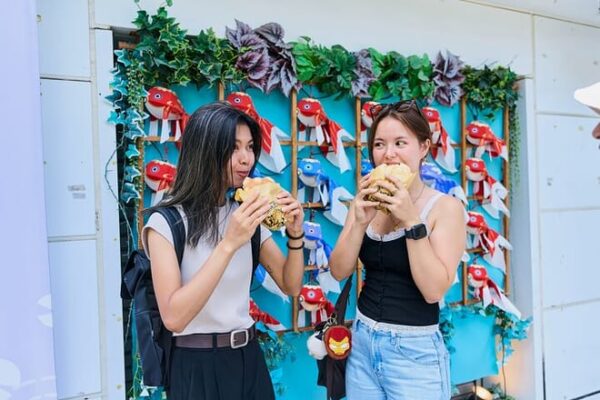
Tokyo: Asakusa & Sensoji ー Oldest Temple Walking Tour (2hrs)
Senso-ji Temple – Tokyo’s oldest temple • A rare place where a Buddhist temple and Shinto shrine coexist • Local street food with tasting
HIRAKUZA GINZA TOKYO: A Theater-Style Show with a Full-Course Meal
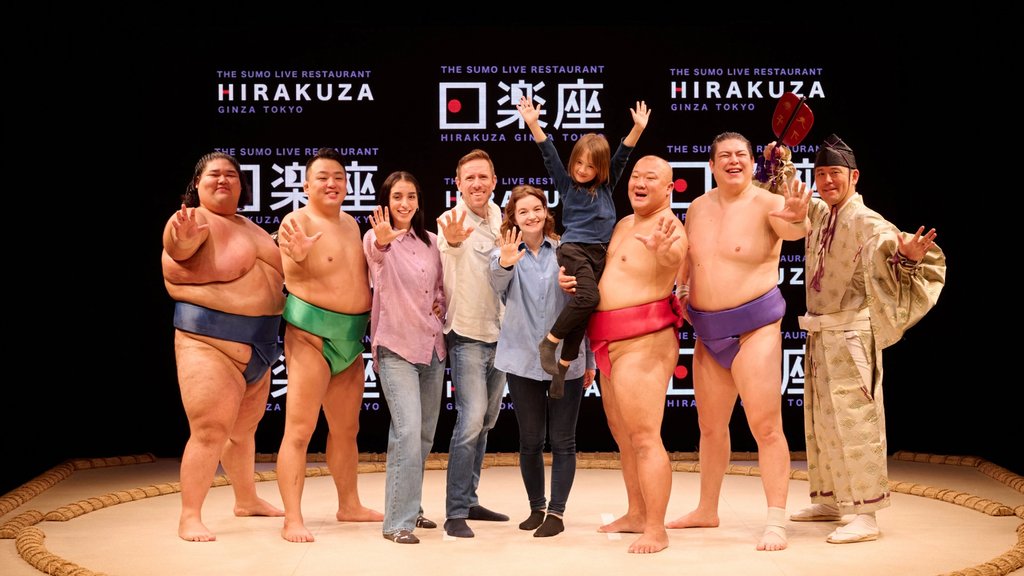
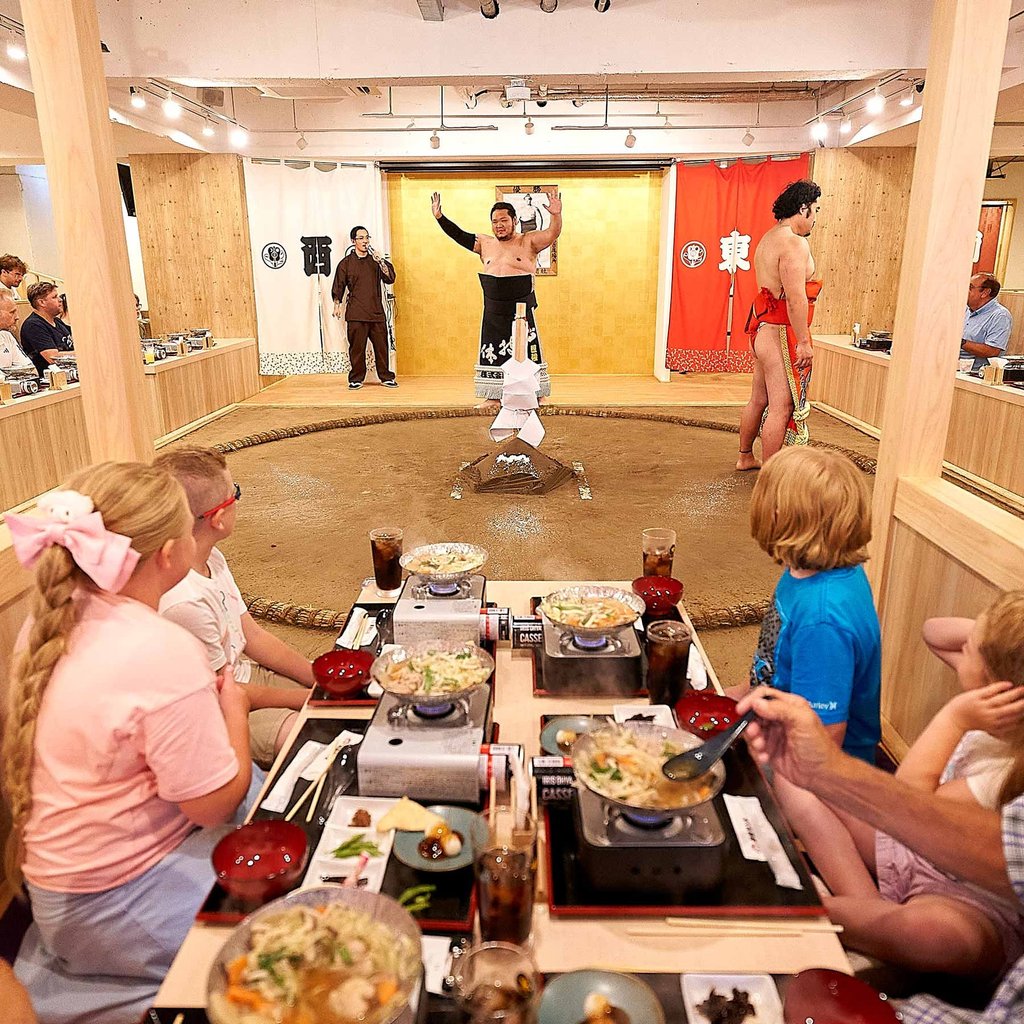
HIRAKUZA GINZA TOKYO, officially named THE SUMO LIVE RESTAURANT HIRAKUZA GINZA TOKYO, is a theater-style sumo show restaurant located a one-minute walk from Exit 10 of Ginza-Itchome Station on the Tokyo Metro Yurakucho Line. In a theater-like space surrounding the ring, the show unfolds with lighting, sound, and video effects, and one hundred and fifty seats require reservations.
The performance runs for about two hours and begins with a full-course Japanese meal, served one dish at a time, during the first forty-five minutes of the show. At the 5 pm show, the standard meal is tempura, white rice, and chanko-nabe. After the meal, former professional sumo wrestlers demonstrate sumo techniques and matches as an English-speaking host explains the rules and the names of the techniques.
Most shows at HIRAKUZA GINZA TOKYO start at 5 pm, though on some days there is also a 12:00 pm or 8:30 pm performance. This means that you can go straight to dinner after shopping in Ginza, making it an activity that’s easy to fit into evening plans in Ginza.
Details
| Address | Prime Ginza Yanagi-dori Building B1, 1-9-13 Ginza, Chuo-ku, Tokyo |
| Show times | 5:00 pm (12:00 pm and 8:30 pm shows on some dates) / Sake bar open from 1:00 pm |
| Closing days | Irregular closures |
| Official website | https://hirakuza.net/tokyo/ |
| Ideal for | Enjoying dinner and a show with theater-style effects in Ginza |
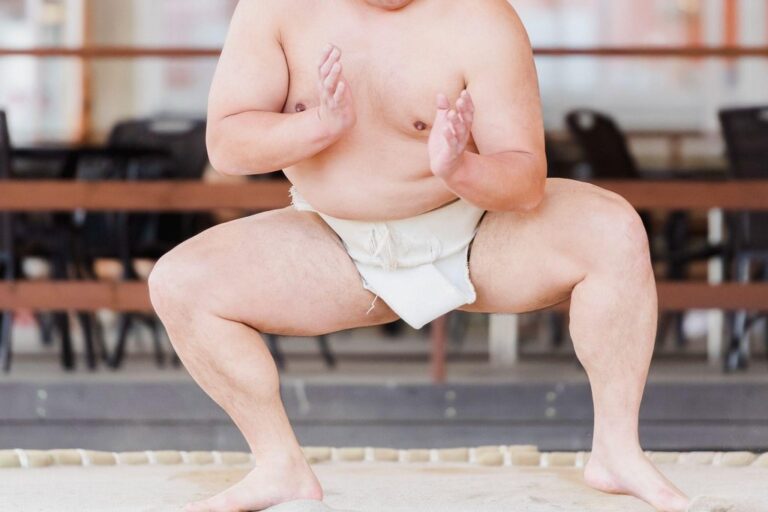
SUMOLAND: A Sumo Show Venue Designed by a Former Grand Champion
SUMOLAND is a sumo show venue designed by Asahifuji, the 63rd sumo Grand Champion. SUMOLAND has two venues in Ryogoku—in the same neighborhood as the arena where the Grand Tournaments take place in Tokyo—and both venues are a few minutes’ walk from the East Exit of JR Ryogoku Station. The performers are former professional wrestlers who have experience competing in the top division.
SUMOLAND TOKYO SIGNATURE includes a meal and is about two hours in duration. You’ll watch the show while eating chanko-nabe, and can even take part in rice-cake pounding, a tradition in which steamed sticky rice is pounded into rice cakes using a mallet and mortar. You’ll also receive a souvenir on your way out. SUMOLAND TOKYO EXPRESS doesn’t include a meal, so it’s shorter in duration (about an hour long), and focuses on the show and the experience. Participants for the audience participation segment and rice-cake pounding are chosen at the venue on the day via lottery.
If you walk around the Kokugikan area in the morning and then join the 11 am performance at SUMOLAND TOKYO SIGNATURE, you can spend a half day in Ryogoku devoted entirely to sumo.
Details
| Address | SIGNATURE: Takashima Ryogoku Mansion 1F, 4-32-19 Ryogoku, Sumida-ku, Tokyo / EXPRESS: Eiko Building 2F–3F, 3-25-8 Ryogoku, Sumida-ku, Tokyo |
| Show times | SIGNATURE: 11:00 / 14:30 / 18:00 EXPRESS: 10:00 / 12:00 / 15:00 / 17:00 / 19:00 |
| Closing days | Irregular closures |
| Official website | https://sumoland.jp/ |
| Ideal for | Travelers sightseeing around Ryogoku Kokugikan, and for enjoying activities like rice-cake pounding |
Five Things to Check Before Choosing a Sumo Show in Tokyo

Start times, meal options, and cancellation conditions vary by venue. This section covers five points to check before booking, so you can know what to look out for when buying your ticket.
1. Start Times
Some venues have shows in the morning, some only have offerings starting from midday, and others offer evening shows only. The venues you can choose from depend on the time you want to see a show, so check start times against your plans for that day. The main start times as of October 2026 are as follows:
| Venue | Show times |
|---|---|
| SUMOLAND TOKYO EXPRESS | 10:00 am / 12:00 pm / 3:00 pm / 5:00 pm / 7:00 pm |
| SUMOLAND TOKYO SIGNATURE | 11:00 am / 2:30 pm / 6:00 pm |
| Shinjuku Sumo Club Okubo | 10:00 am / 12:30 pm / 3:00 pm / 5:30 pm / 8:00 pm |
| Shinjuku Sumo Club Kabukicho | 1:00 pm / 3:30 pm / 6:00 pm / 8:30 pm |
| Asakusa Sumo Club (main venue and ANNEX) | 12:00 pm / 3:00 pm / 6:00 pm / 8:30 pm |
| HIRAKUZA GINZA TOKYO | 5:00 pm (12:00 pm or 8:30 pm on some days) |
For example, if you visit Senso-ji in the morning, you can see a show afterward at Asakusa Sumo Club, which has shows from noon onward. At venues offering only a few shows a day, such as HIRAKUZA GINZA TOKYO, it’s a good idea to check availability as soon as your dates are set, since show times are limited.
2. Meal Options
Some sumo shows include a meal, and others don’t. Shows with a meal, like Asakusa Sumo Club, HIRAKUZA GINZA TOKYO, and SUMOLAND TOKYO SIGNATURE, take about two hours and include lunch (for a daytime show) or dinner (for an evening show) at the venue. Many of these venues don’t sell show-only tickets, so they won’t work on a day when you’ve booked a meal at another restaurant.
Shows without a meal, like Shinjuku Sumo Club and SUMOLAND TOKYO EXPRESS, are shorter—about an hour to an hour and a half—and free you up to eat at a restaurant of your choosing before or after the performance. If you already have a restaurant in mind for the day, or if you have dietary restrictions and want to choose a particular restaurant, a venue without a meal might be the more practical choice.
3. Requirements for Audience Participation
Even if a show includes an audience participation segment, participants are usually chosen by lottery or a show of hands, so not everyone can take part when there are multiple volunteers. At HIRAKUZA GINZA TOKYO, for example, participants are selected by drawing lottery cards about thirty minutes after the show starts.
For safety reasons, participation may be restricted for people who have been drinking or for women who are pregnant. Children may also be turned down depending on their age or size. If you want to step into the ring, it’s a good idea to avoid alcohol until after the show.
4. Booking Deadlines
Some venues accept same-day participants if seats are available, while others require reservations and don’t accept walk-ins. At SUMOLAND, you can buy same-day tickets on the ticket page if seats are available, and Shinjuku Sumo Club Kabukicho may also accept walk-ins depending on availability.
At venues that require reservations, evening shows and weekends tend to fill up first, and shows can sell out several weeks in advance. Some venues, such as HIRAKUZA GINZA TOKYO, set the online booking deadline to 3 pm on the day of the show. If you decide to visit a venue on short notice, make sure to check the booking deadline and whether or not same-day tickets are available.
5. Cancellation Policies
Cancellation deadlines vary. At some venues, reservations can be cancelled up to twenty-four hours before the start of the show with no extra charge, while others charge a fee if you cancel within three weeks of the show. The main policies as of October 2026 are as follows:
| Venue name (website) | Free cancellation deadline | Notes |
|---|---|---|
| HIRAKUZA GINZA TOKYO (official website) | Up to 21 days before | A fee of 50% of the ticket price applies to cancellations made 20 to 7 days before the show; no refund for cancellations within 6 days before the show |
| Shinjuku Sumo Club, Asakusa Sumo Club (Viator and other booking sites) | Up to 24 hours before the show | No refund for cancellations within 24 hours of the show |
| SUMOLAND | Varies by booking method | Check the cancellation information when booking |
At venues that don’t allow date or time changes (like HIRAKUZA GINZA TOKYO), you’ll need to cancel and rebook your reservation if your plans change. Also, cancellation fees can differ between official websites and booking sites, even for the same venue, so we strongly recommend checking when cancellation fees start to apply before booking.
Other Sumo Show Venues in Japan
If your itinerary includes a stop in Osaka, you can enjoy a sumo show there as well. This section introduces a sumo show about ten minutes from Namba.
If You’re Visiting Osaka, Consider Sumo Studio Osaka
Sumo Studio Osaka is a sumo show venue right in front of Exit 4 of Hanazonocho Station via the Osaka Metro Yotsubashi Line. The trip from Tokyo Station to Shin-Osaka Station takes about two and a half hours on the Nozomi service of the Tokaido Shinkansen. From Shin-Osaka Station, you can reach Hanazonocho Station by subway. The venue offers storage for large luggage and suitcases, so you can stop by to see a show even before checking in at your hotel.
There are five shows a day between 10 am and 8 pm, and the venue is open every day of the year. You can make a reservation, or (if seats are available) you can drop in without a reservation. This makes the performances easier to fit into your itinerary on a day when you’re traveling and your schedule is hard to predict.
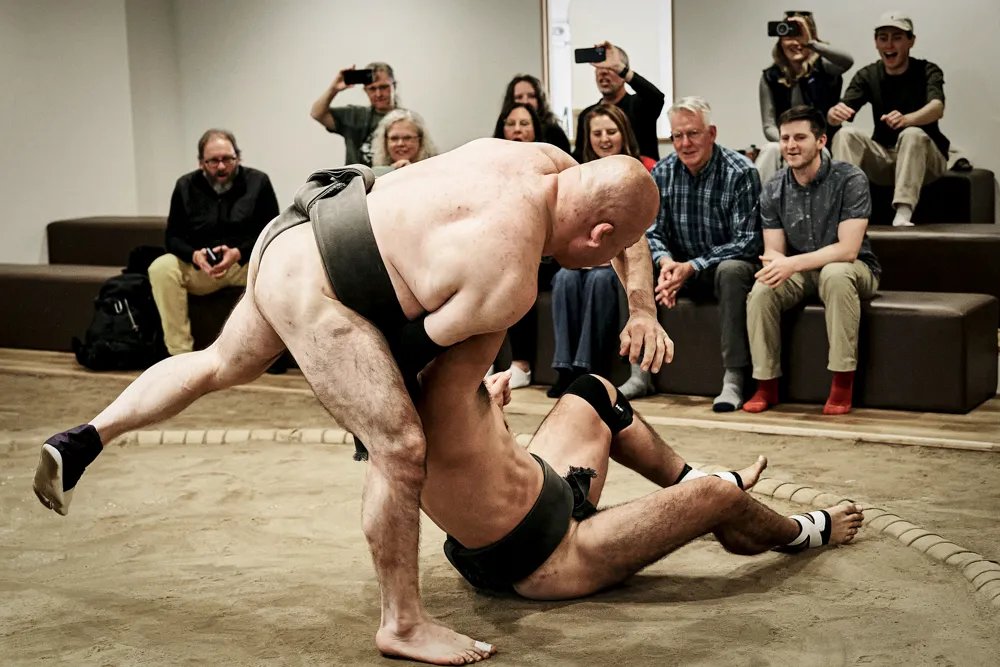
Over about 90 minutes, a host, speaking clearly in English, first explains the history of sumo. Former professional and top amateur wrestlers then show basic moves, winning techniques, and prohibited actions, and fight a real five-minute bout a few meters from the audience. Next comes the Sumo Challenge: up to eight guests per show, by lottery when more volunteer, charge head-on into a wrestler as the room cheers. If you have been drinking, you can still try the moves and poses but cannot wrestle. Everyone then gets five minutes of photos with the wrestlers.
The venue is a small theater, with seats arranged around a sumo ring made to traditional specifications. The show doesn’t include a meal, but you can bring your own food and drinks into the venue (for example, a meal you bought at the train station). Alternatively, at the bar inside the venue, you can purchase Japanese beer and umeshu, a sweet plum liqueur, and relax before or after the show.
Cancellation through the official booking page is free up to 24 hours before your show; within 24 hours it is not refundable. To move a booking, contact the venue as early as possible.
“i got to play with the wrestler himself” — Utkarsh G, on Tripadvisor
Google Maps users give it 4.9, and more than 1,800 Tripadvisor reviews average 5.0. Read what happens in the Sumo Challenge.
Since the show doesn’t include a meal, consider enjoying Osaka cuisine during a tour of local restaurants with an English-speaking guide. If you schedule the sumo show and a food tour on the same day, you’re guaranteed to experience a day that’s distinctly “Osaka.” You can find a list of Osaka tours operated by Japan Guide Star here.
Details
| Address | Hanazonocho AI Building 1F, 1-5-1 Asahi, Nishinari-ku, Osaka-shi, Osaka |
| Show times | 10:00 am / 12:30 pm / 3:00 pm / 5:30 pm / 8:00 pm |
| Closing days | None |
| Official website | https://sumowrestlingshow.jp/ |
| Ideal for | Travelers who want to see a sumo show before heading to the train station, watch wrestlers up close in a small venue, or have a chance to join the Sumo Challenge |
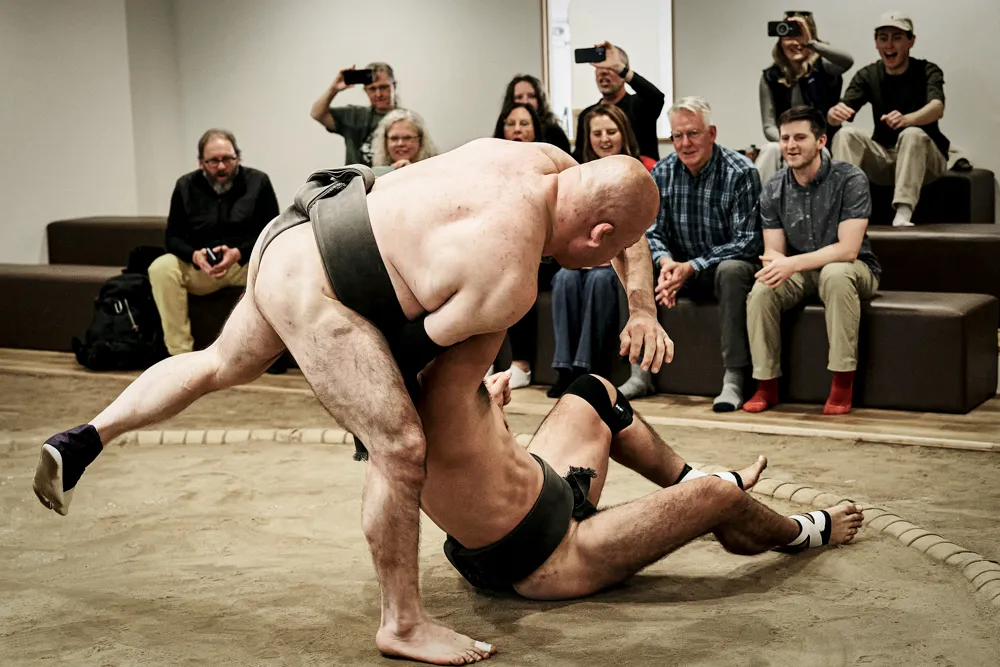 Hands-On
Watch a real bout, and maybe step into the ring yourself
A five-minute bout a few meters from your seat, then the Sumo Challenge, where up to eight guests per show push against one of the wrestlers. Every show is in English.
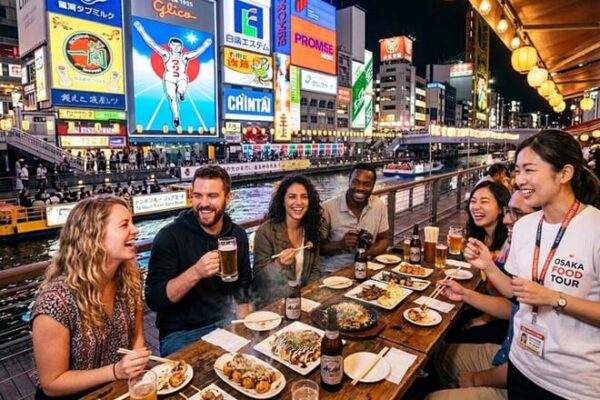
Osaka: Guided Food Tour with 12 Dishes at 4 Local Eateries
12 unique Japanese dishes for the first time • Skip the tourist traps and visit Izakaya -Japanese casual drinking restaurants • Street food featured in the Michelin Guide
Recommended Tours to Combine with a Sumo Show in Tokyo
Sumo shows require about one to two hours of your time, so if you plan to see the sights before or after the show, you can enjoy both a walk around the city and sumo in a single day. This section introduces three of Japan Guide Star’s English-guided walking tours that are easy to schedule around performance start times. You can find the full list of walking tours, including others, here.
Senso-ji Walking Tour
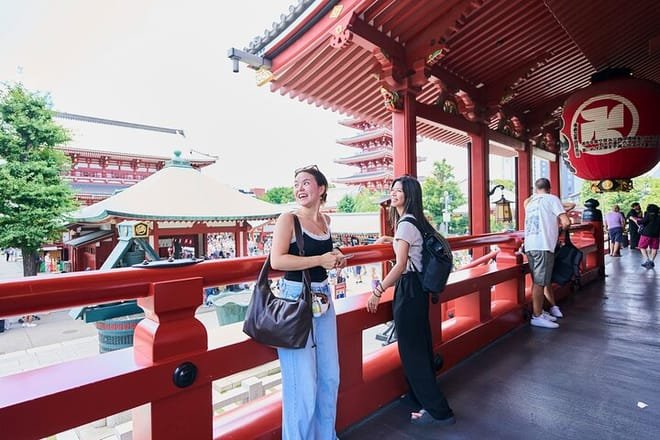
On Japan Guide Star’s “Tokyo: Asakusa & Sensoji ー Oldest Temple Walking Tour (2hrs),” you’ll meet in front of the Kaminarimon police box and spend about two hours exploring Sensoji and the surrounding area with an English-speaking guide. As you learn about the history of Sensoji—said to be the oldest temple in Tokyo—you’ll sample snacks on Nakamisedori (the shopping street lined with souvenirs and sweet shops) and browse a specialty knife shop.
If you join the 9 am tour, you can walk straight to the 12 pm sumo show at Asakusa Sumo Club after the tour ends. There’s no cancellation fee up to twenty-four hours before the start of the tour, and participant reviews praise the guide’s extensive knowledge.
Details
| Meeting point | In front of the Kaminarimon police box, 1-3-1 Asakusa, Taito-ku, Tokyo |
| Duration | About 2 hours |
| Included in the price | English guidance by a local guide |
| Booking site | https://japanguidestar.com/tour/tokyo-asakusa-sensoji-ー-oldest-temple-walking-tour-2hrs/ |
| Ideal for | Exploring Senso-ji in the morning and seeing a show at Asakusa Sumo Club at noon |
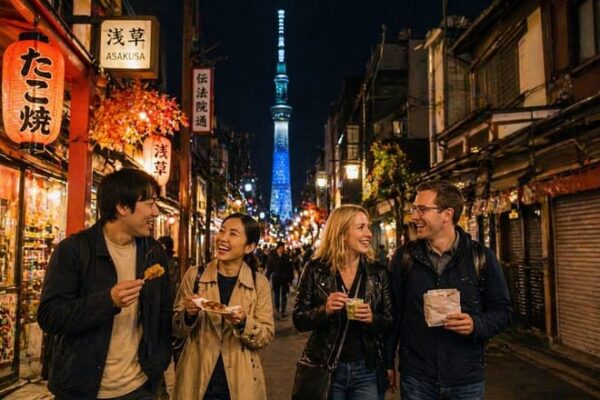
Asakusa: Guided Food Tour with 12 Dishes at Local Eateries
12 unique Japanese dishes for the first time • Sake bars loved by locals • A stroll through Hoppy Street
Shinjuku Walking Tour
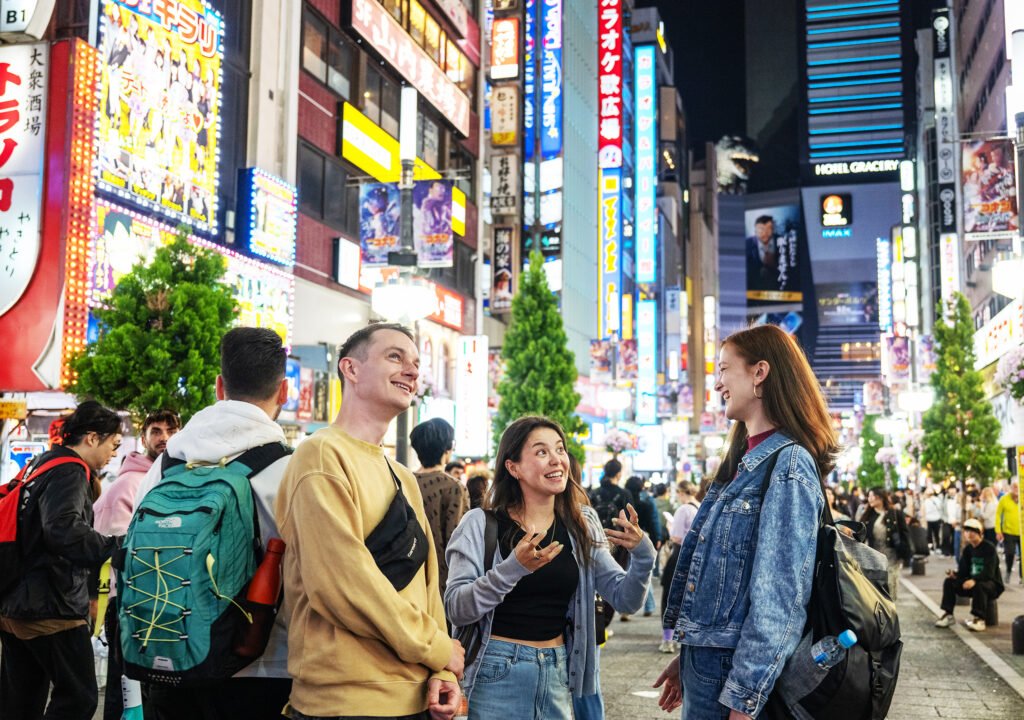
You’ll meet in front of the police box at the East Exit of JR Shinjuku Station and spend about an hour and a half exploring the backstreets of Shinjuku during the “Tokyo: Shinjuku Historical Walking Tour & Secret Backstreets” tour. A local guide will show you places you might otherwise walk past on your own, such as a drinking district with three hundred bars and restaurants, as well as a shrine at the end of a narrow alley. Along the way, you’ll also get to try one vending-machine drink recommended by the guide, a treat unique to this tour.
The 3 pm tour ends around 4:30 pm, so you can head straight to an evening show at Shinjuku Sumo Club Kabukicho for the 6 pm performance. After the show, you could have dinner at a restaurant the guide told you about during the tour. There are no cancellation fees up to twenty-four hours before the start of the tour.
Details
| Meeting point | In front of the police box, JR Shinjuku Station East Exit, 3-38-1 Shinjuku, Shinjuku-ku, Tokyo |
| Duration | About 1.5 hours |
| Included in the price | English guidance by a local guide, one vending-machine drink recommended by the guide |
| Booking site | https://japanguidestar.com/tour/tokyo-shinjuku-historical-walking-tour-secret-backstreets/ |
| Ideal for | Walking Shinjuku’s backstreets in the afternoon then attending a sumo show at Shinjuku Sumo Club Kabukicho in the evening |
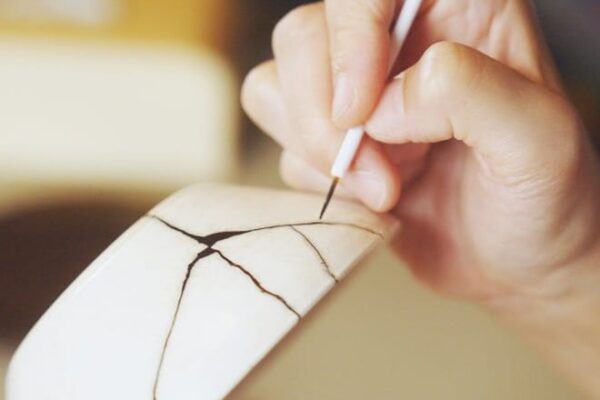
Tokyo: Japanese Gold Repair Kintsugi Workshop in Shinjuku
Learn the traditional Japanese art of Kintsugi in a 1.5-hour workshop • Discover the Japanese "Mottainai" culture and the art of Kintsugi • Follow step-by-step instructions from an English-speaking…
Imperial Palace Walking Tour
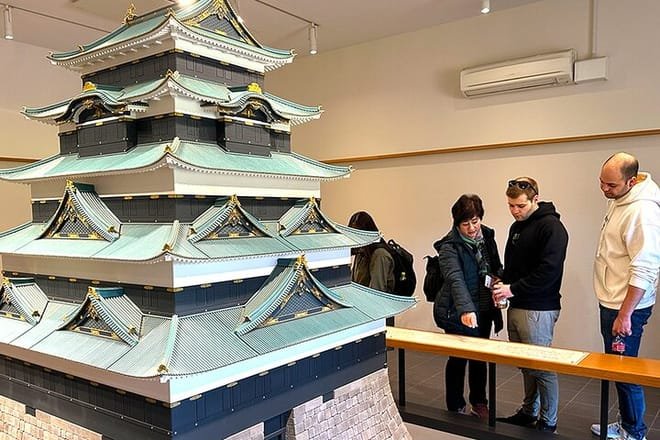
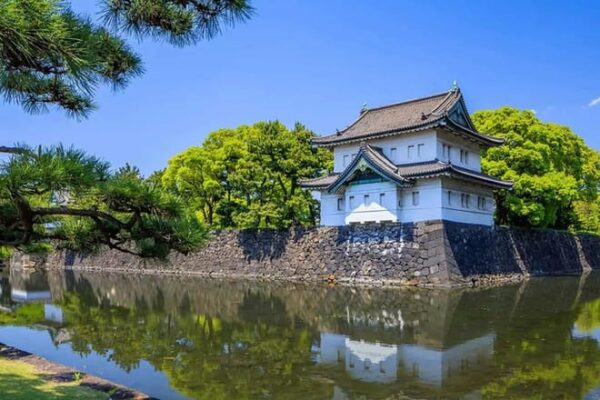
On the “Tokyo Castle & Imperial PalaceーShogun Walking Tour,” you’ll meet at the Starbucks Coffee in Wadakura Fountain Park in the Kokyo Gaien National Garden and spend about two hours walking around the site of Edo Castle and the Imperial Palace. As you see the stone walls and gates of Edo Castle, once the residence of the Tokugawa shoguns, an English-speaking guide will explain the history of the samurai and shoguns in easy-to-understand language.
If you join the 1:30 pm tour, it ends at around 3:30 pm. Ginza is just a few subway stops away, giving you plenty of time to get to the 5 pm sumo show at HIRAKUZA GINZA TOKYO. The Imperial Palace imposes mandatory bag checks (knives and alcohol aren’t allowed), so pack light on the day of the tour. Cancellation is free up to twenty-four hours before the start of the tour. Participant reviews have mentioned the guide’s clear explanations and thoughtful answers to questions as a plus.
Details
| Meeting point | In front of Starbucks Coffee Kokyo Gaien Wadakura Fountain Park, 3-1 Kokyo Gaien, Chiyoda-ku, Tokyo |
| Duration | About 2 hours |
| Included in the price | Guidance by an English-speaking guide |
| Booking site | https://japanguidestar.com/tour/tokyo-castle-imperial-palaceーshogun-walking-tour/ |
| Ideal for | Learning a little history before heading to an evening sumo show in Ginza |
Tokyo Castle & Imperial PalaceーShogun Walking Tour
Small group for a personal experience • Discover the Hidden World of Edo Castle • Japan's 2,600-year imperial system
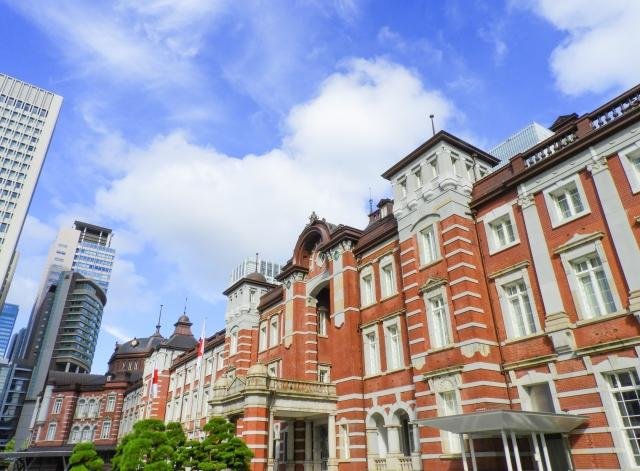
Tokyo Station and Imperial Palace 1 Hour Guided Tour
Learn the essentials in just one hour • History of the Samurai and the Shogun • Discover insights beyond a typical self-visit
Frequently Asked Questions About Sumo Shows in Tokyo

Finally, in this section we’ll briefly answer questions that travelers sometimes ask about sumo shows.
Can I Enjoy a Sumo Show Even If I Don’t Speak Japanese?

Yes. All of the venues introduced in this article have English commentary and explain the rules and the meaning of sumo techniques in English. The only exception is Shinjuku Sumo Club, where the English-speaking host also uses some Japanese.
Can I Bring Children to a Sumo Show?
Yes. However, the age limits for children’s tickets and the policies for infants and toddlers vary by venue. At HIRAKUZA GINZA TOKYO, children’s prices apply to ages three to twelve, and kids under two can watch for free if they sit on an adult’s lap. At Shinjuku Sumo Club, infants can also watch from an adult’s lap. SUMOLAND TOKYO SIGNATURE has tabletop burners, so if you’re with a baby, you’ll need to choose box seats instead of regular seats.
Do the Venues Offer Vegetarian or Halal Meals?
Meal options vary by venue. Asakusa Sumo Club can prepare vegetarian and vegan meals if you make a request at least two days in advance. HIRAKUZA GINZA TOKYO accepts requests for halal meals until 11 pm three days before the show (for vegan full-course meals: until 3 pm on the day of the show). SUMOLAND TOKYO SIGNATURE offers vegetarian meals, but you’ll need to check in advance whether vegan meals are available.
Can I Take Photos or Videos During the Show?
Yes. However, photography and recording without permission are prohibited at HIRAKUZA GINZA TOKYO, except for private, noncommercial photos taken with a smartphone or similar device. Follow each venue’s guidance on photography rules, flash, and whether live streaming is allowed. After the show, you can take photos with the wrestlers.
Is There a Dress Code?
Many venues don’t mention a dress code, and HIRAKUZA GINZA TOKYO officially states that it doesn’t have one. For audience participation, you might be required to wear a sumo outfit over your clothes, so we recommend avoiding skirts and shorts if you want to participate.
Which Venues are Barrier-free?
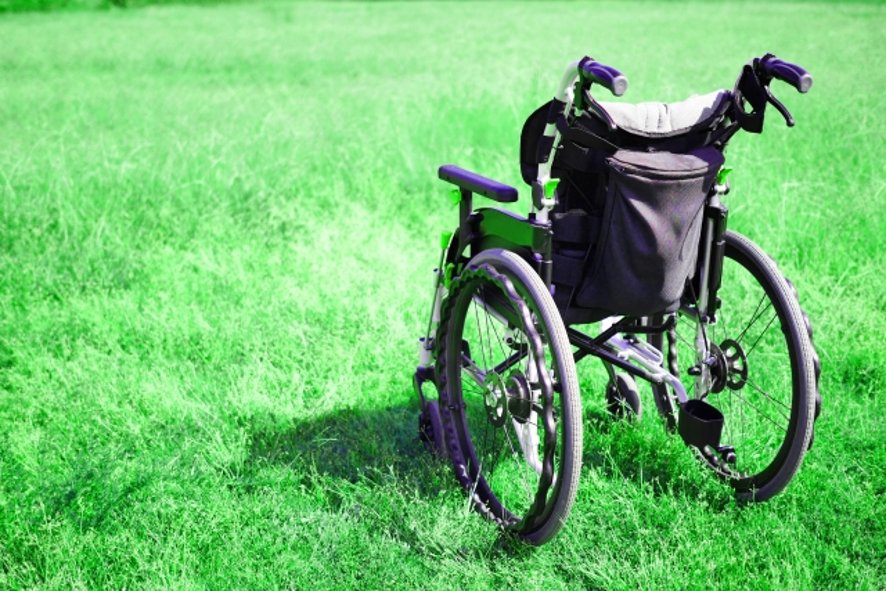
At HIRAKUZA GINZA TOKYO, there’s an elevator from the building entrance to the reception desk, and the venue has wheelchair seating and an accessible restroom with enough space for a wheelchair. The main venue of Asakusa Sumo Club is also wheelchair accessible. Both venues have a limited number of these seats, though, so inform the venue about your needs when booking.
The ANNEX venue of Asakusa Sumo Club is underground, so you’ll need to inquire about barrier-free access at this venue before booking. Shinjuku Sumo Club is listed as not accessible by wheelchair on booking sites.
Summary
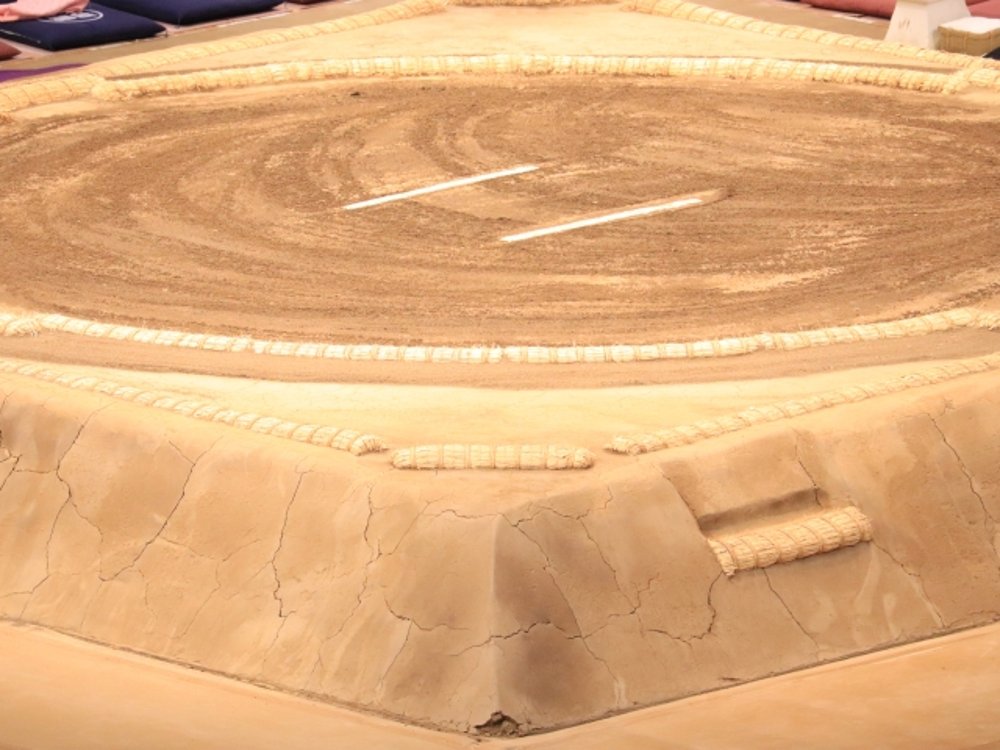
The right sumo show for you can vary greatly depending on show length, meal options, and show content. If you’d rather not eat at the venue, consider Shinjuku. In Asakusa, you can sightsee and have a meal and a show, while HIRAKUZA GINZA TOKYO is a good option for those spending the evening in Ginza. SUMOLAND is another option if you want to explore the Ryogoku area, known for its ties to sumo. In any case, select the venue that fits your travel plans.
Once you find a show you’re interested in, it’s a good idea to check the cancellation policy and availability and then make a reservation early. If you’re interested in watching sumo wrestlers compete at close range, eating chanko-nabe, and maybe even stepping into the ring yourself, consider adding a sumo show to your plans during your stay in Tokyo.
Hands-OnWatch a real bout, and maybe step into the ring yourself
A five-minute bout a few meters from your seat, then the Sumo Challenge, where up to eight guests per show push against one of the wrestlers. Every show is in English.