Is Osaka Castle Worth Visiting? 4 Strengths Compared with Himeji and Nijo Castles, and How to Enjoy It
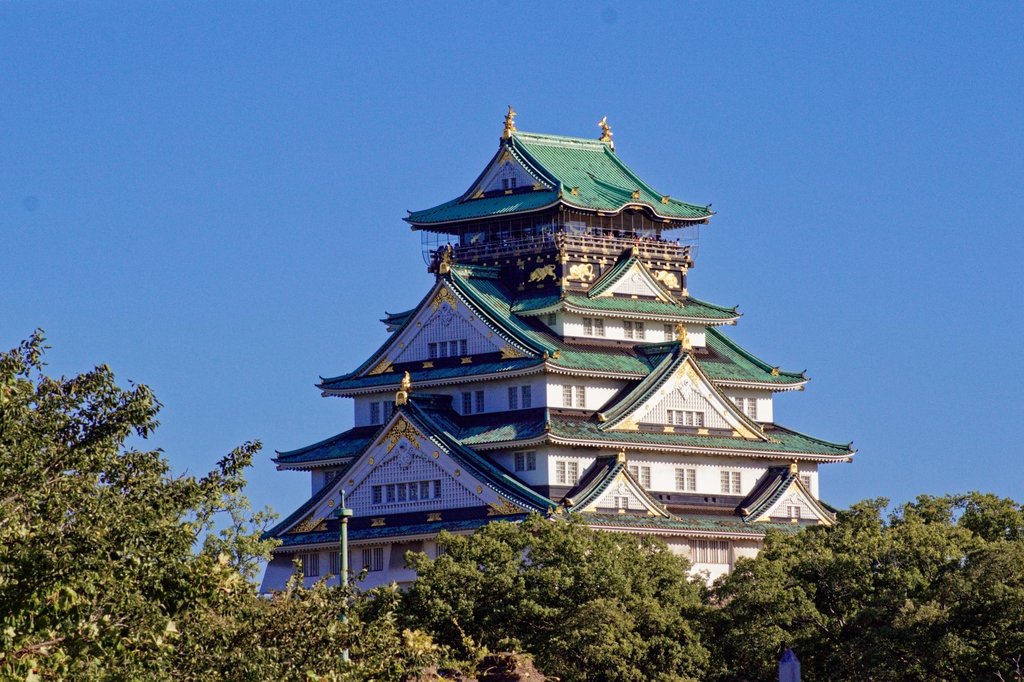
Wondering whether Osaka Castle is truly worth visiting? When you learn that the Main Tower is a reinforced-concrete reconstruction, it is natural to question whether it deserves a place in a limited itinerary. Reviews are mixed, and some visitors even describe the experience as underwhelming.
However, Osaka Castle offers its own unique appeal, with strengths that differ from those of Himeji Castle and Nijo Castle. By understanding what each castle provides, along with practical details such as what to see inside and how much time to allow, you can decide with confidence whether Osaka Castle is the right choice for your trip.
Contents
- What Makes Osaka Castle Worth Visiting? 3 Features to Know
- 4 Reasons Osaka Castle Is Worth Visiting: Compared with Himeji and Nijo Castles
- The History of Osaka Castle from the 16th Century to Today
- Practical Information to Know Before Visiting Osaka Castle
- Common Questions About Visiting Osaka Castle
- Osaka Castle Is Worth Visiting for Its History, Museum, and Free Grounds
What Makes Osaka Castle Worth Visiting? 3 Features to Know
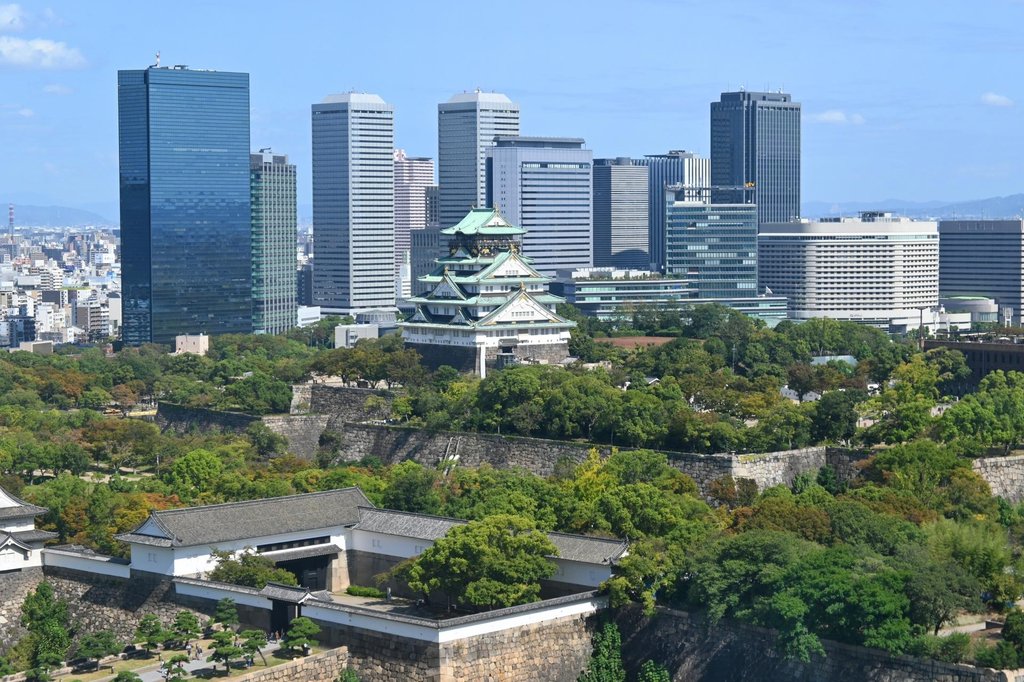
Many travelers assume that a reconstructed castle is not worth visiting. However, the true appeal of Osaka Castle lies in three key areas: its officially recognized cultural value, the history museum inside the Main Tower, and the extensive castle grounds that can be explored for free.
Understanding these three points makes it much easier to decide whether Osaka Castle deserves a place in your itinerary.
1. The Rebuilt Main Tower Is Itself a Designated Cultural Property
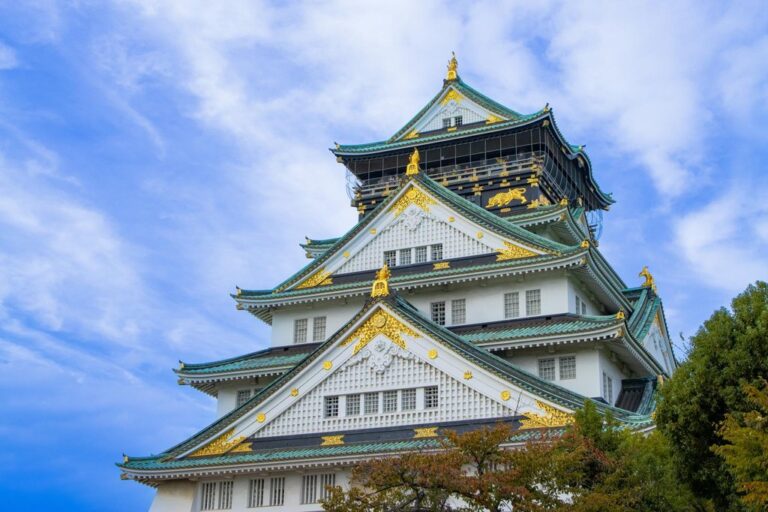
The current Main Tower was rebuilt in 1931 using steel-framed reinforced concrete, funded entirely through donations from the citizens of Osaka. Its history is fundamentally different from Japan’s 12 surviving original wooden castle keeps, but that does not mean it lacks cultural value.
Many visitors assume that a reconstructed keep has little historical significance. However, the Japanese government and local authorities have officially recognized Osaka Castle’s Main Tower as an important part of modern heritage.
- 1997: Registered as a national Tangible Cultural Property
- 2025: Designated as a Landscape-Important Building by the City of Osaka under the Landscape Act
These designations reflect how the rebuilt tower has developed its own historical importance over nearly a century. The story of Osaka citizens coming together to restore their castle with their own funds is a remarkable example of modern architectural heritage. The tower also preserves the construction techniques and ambitions of the prewar era.
Rather than viewing it simply as “not a real castle,” consider Osaka Castle’s Main Tower as a different kind of heritage site, one that represents the connection between history, architecture, and the people who chose to rebuild it for future generations. Osaka Castle looks different once you do
2. Enjoy Exhibits and City Views in the History Museum Inside
The interior of the main tower is a history museum with exhibits on Toyotomi Hideyoshi and the Siege of Osaka. Many displays use videos, dioramas, and scale models, making the history easy to follow even for visitors with little prior knowledge of Japanese history.
The typical flow of a visit is as follows:
- The elevator goes up to the 5th floor; from there, you climb stairs to the 8th-floor observation deck.
- The exhibits are arranged so you view each floor while working your way down, making for an efficient route.
- The 8th-floor observation deck offers indoor views across the city of Osaka, all the way to Abeno Harukas and Tsutenkaku.
The 8th-floor deck also has an open-air corridor that wraps around the tower, giving you a full 360-degree panorama. The contrast between Osaka Castle Park below and the high-rise skyline makes for excellent photos.
If steep stairs are a concern, you can still enjoy the museum by taking the elevator to the 5th floor and focusing on the exhibitions rather than continuing to the observation deck.
3. Stroll the Castle Grounds and Historic Park for Free
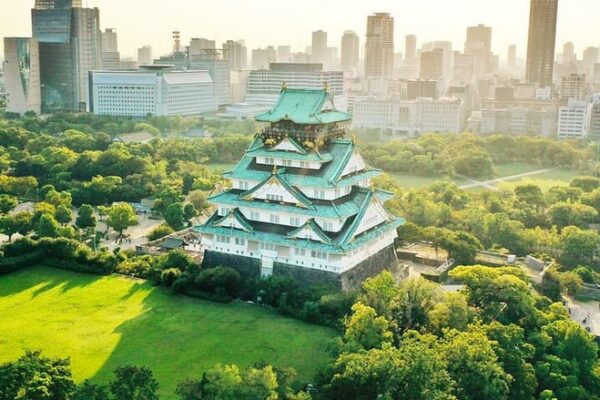
Even without entering the Main Tower, you can still appreciate the impressive scale of Osaka Castle. Covering approximately 105 hectares (about 260 acres), Osaka Castle Park is open to visitors free of charge, making a walk through the grounds a worthwhile experience even for travelers on a tight schedule.
The historic structures and defensive features throughout the park are arguably the castle’s greatest attractions:
- Stone walls: Built during the Tokugawa era, these massive walls surround the castle and showcase the incredible scale of early Edo-period engineering.
- Otemon Gate, Sengan-yagura Turret, and Tamon-yagura Turret: Built in the 1620s and designated Important Cultural Properties, these structures allow you to observe the castle’s defensive design up close.
- Inner and outer moats: Popular photography locations where the Main Tower is reflected on the water, creating some of Osaka Castle’s most iconic views.
If you have extra time, combining a walk through the grounds with a visit inside the Main Tower (adult admission: ¥1,200) allows you to experience both the castle’s history and its panoramic views. While some facilities within the park require admission, the free areas alone offer plenty to see.
For visitors with limited time in Osaka, choosing only the free castle grounds is still a smart and rewarding option.
Osaka Castle Walking Tour and Castle Tower Admission
Skip the line access to Osaka Castle • City view from the top of the castle • The castle’s military design and defenses
4 Reasons Osaka Castle Is Worth Visiting: Compared with Himeji and Nijo Castles
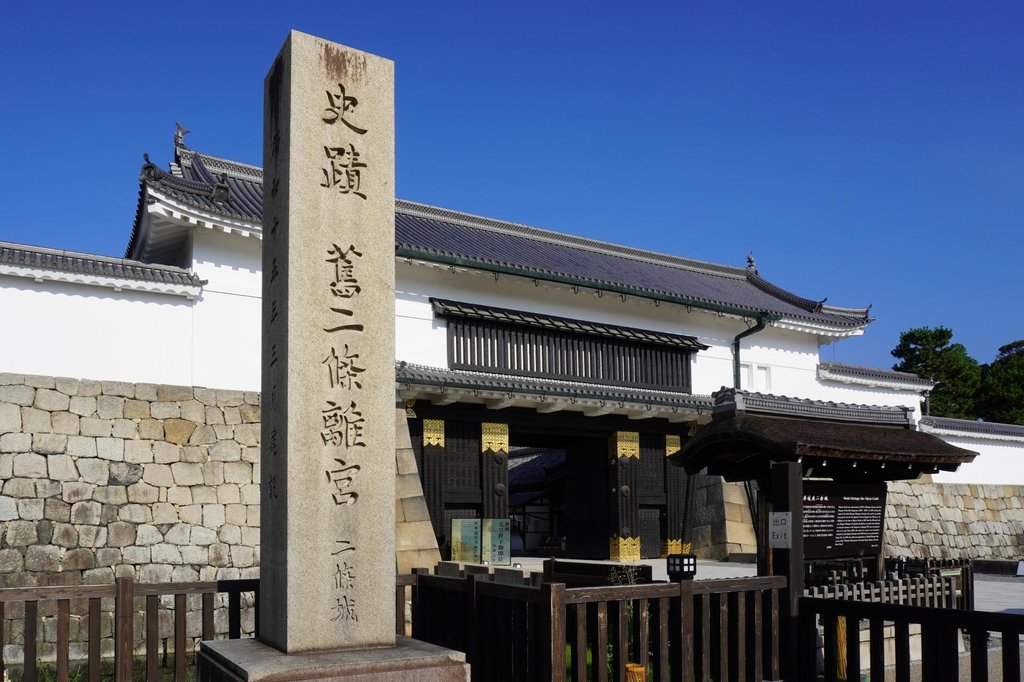
If you can only include one Japanese castle in your itinerary, you may wonder whether Osaka Castle deserves a place on your shortlist. Comparing it with Himeji Castle and Nijo Castle across four key points, including the type of experience, historical atmosphere, and views, makes the differences much easier to understand.
This comparison will help you quickly determine whether Osaka Castle matches what you want from a castle visit and whether it fits your travel plans.
1. A Museum Experience Unlike Himeji Castle’s Wooden Architecture
Himeji Castle is a National Treasure with an original wooden keep dating from the early Edo period. As you climb its steep stairs and move through narrow passages, you can feel the texture and craftsmanship of the historic timber structure firsthand. It is a castle you experience through its architecture. The interior requires careful footing, and exploring the keep alone can take more than an hour.
By contrast, Osaka Castle’s Main Tower, rebuilt in 1931, functions as an eight-story history museum. Exhibits, videos, and models make the history easy to understand, while the elevator makes the visit more comfortable for a wider range of travelers.
- If you want to experience wooden architecture with all your senses: Himeji Castle is by far the better choice
- If you want to learn history efficiently and enjoy the views too: Osaka Castle’s museum-style visit is a great fit
- If your itinerary is tight: Osaka Castle’s main tower takes only 1 to 1.5 hours, making it easy to slot in
Rather than deciding which castle is “better,” it is more useful to see them as offering different experiences. Once you move beyond the idea that Osaka Castle is simply “not a real castle,” its unique value as a modern historical landmark becomes much clearer.
2. Panoramic Tower Views Unlike Nijo Castle’s Palace Interiors
If you are traveling between Kyoto and Osaka, understanding the difference between Nijo Castle and Osaka Castle makes it easier to decide how to spend your limited time.
Nijo Castle centers on the Ninomaru Palace, where the main attraction is the chance to admire approximately 3,600 painted wall panels and intricately carved transoms. Because the castle keep no longer survives, it is not a destination for panoramic views. A typical visit takes around 60 to 90 minutes, allowing time to explore the palace and gardens.
Osaka Castle, closely associated with Toyotomi Hideyoshi, offers a different experience built around the history museum inside the Main Tower and the 360-degree panorama from the 8th-floor observation deck. While no palace interiors remain to showcase, the tower visit can be completed efficiently in about 50 to 60 minutes.
Experiencing both palace culture and tower views reveals just how varied Japanese castles can be.
| Comparison | Nijo Castle | Osaka Castle |
|---|---|---|
| Core experience | Architectural and decorative beauty of the palace | Museum exhibits and panoramic views |
| Historical background | A palace displaying the authority of the Tokugawa family | The mighty castle built by Toyotomi Hideyoshi |
| Typical visit time | About 60-90 min | About 50-60 min (tower only) |
3. The Most Affordable Admission of the Three Castles
Comparing the admission fees of the three castles, Osaka Castle stands out as the most budget-friendly option. The combined ticket for the Main Tower and the Toyotomi Stone Wall Museum costs ¥1,200 (about $8 USD), less than half the admission fee of Himeji Castle.
A visit is also relatively compact, usually taking around 60 to 90 minutes, making it easy to fit another sightseeing spot into your afternoon schedule.
For travelers who want to experience a Japanese castle while keeping both time and budget in mind, starting with Osaka Castle is a practical choice. It offers a convenient introduction to castle history without requiring a major commitment.
| Comparison | Osaka Castle | Nijo Castle | Himeji Castle |
|---|---|---|---|
| Admission (adults) | ¥1,200 | ¥1,300 | ¥2,500 |
| Typical visit time | 60-90 min | 60-120 min | 90-180 min |
| Main attractions | History museum + observation deck | National Treasure palace + gardens | National Treasure wooden tower |
| Accessibility | Elevator serves all floors | Some restrictions inside the palace | Difficult due to many steep stairs |
| From the nearest station | 15-20 min walk | About 5-min walk | About 15-min walk |
4. Wheelchair Users Can Visit Every Floor
If you are traveling with older companions or anyone with mobility concerns, Osaka Castle’s accessibility is a major advantage. The Main Tower has an elevator, and by asking staff for assistance, wheelchair users can reach the upper floors without having to navigate the steep stairs. Wheelchair rentals and accessible restrooms are also available, making Osaka Castle the most accessible option among the three castles.
By comparison, Himeji Castle is difficult to visit by wheelchair because of its steep, continuous stairways inside the original keep. Nijo Castle is more accessible overall, but some areas can be challenging due to gravel paths and uneven surfaces.
One point to keep in mind is that elevator lines can become long during busy periods. Wheelchairs available for rental are offered on a first-come, first-served basis, so visiting shortly after opening or during the quieter early afternoon period is recommended.
Before your visit, check the official website for the latest accessibility information to help ensure a smoother and more comfortable experience.
The History of Osaka Castle from the 16th Century to Today
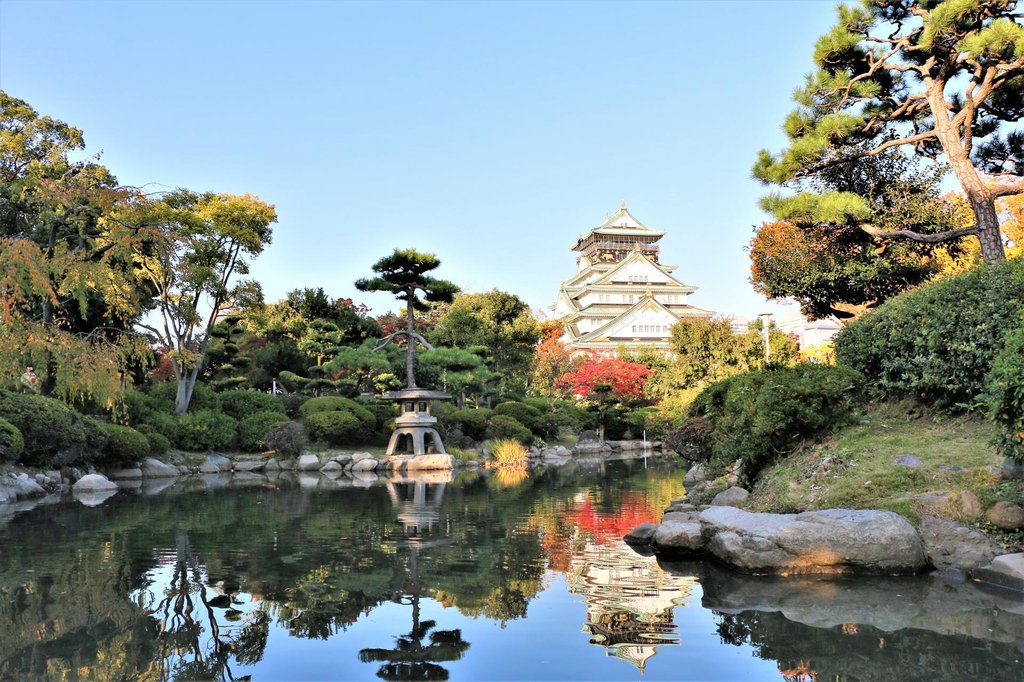
Osaka Castle’s role has transformed with each era of Japanese history. Toyotomi Hideyoshi built the original castle as a symbol of his power, the Tokugawa shogunate later rebuilt it completely, and Osaka citizens restored the Main Tower through donations in the modern era. In 2025, the opening of a new facility added another layer to the castle’s ongoing story.
Understanding this history reveals why Osaka Castle is more than simply a reconstructed castle.
1583 | Toyotomi Hideyoshi Begins Construction
In 1583, as he moved closer to unifying Japan, Toyotomi Hideyoshi ordered the construction of a new castle on the site of Ishiyama Hongan-ji Temple. Completed around 1585, the original Main Tower featured black-lacquered walls decorated with gold leaf, creating a magnificent structure designed to showcase Hideyoshi’s power and prestige.
That Toyotomi-era tower, however, was destroyed during the Summer Siege of Osaka in 1615 and no longer survives today.
The stone walls and buildings visible above ground now were rebuilt during the Tokugawa era, while the remains of Hideyoshi’s original castle lie buried deep underground. When you stand before the reconstructed Main Tower, understanding that the foundations of the Toyotomi castle still rest beneath your feet adds another layer of meaning to the experience.
1620s | The Tokugawa Shogunate Rebuilds the Castle from the Ground Up
The magnificent castle built by Toyotomi Hideyoshi was destroyed during the Summer Siege of Osaka in 1615. The Tokugawa shogunate’s reconstruction was not simply a rebuilding project—it was a political statement intended to erase the influence of the Toyotomi clan and demonstrate the power of the new regime.
Beginning in the 1620s, the shogunate buried the remains of the Toyotomi-era castle beneath vast amounts of earth and constructed entirely new stone walls from the ground up. Almost all of the stone walls visible above ground today date from the Tokugawa era, while Hideyoshi’s original walls remain buried about 7 meters (roughly 23 feet) underground.
Recent excavations confirmed the existence of these hidden remains, and part of the Toyotomi-era stone walls is now open to visitors. Knowing that an entire 400-year-old castle lies directly beneath the ground you are standing on transforms the way you see Osaka Castle and reveals the depth of history hidden beneath its reconstructed appearance.
1931 | Citizens’ Donations Restore the Main Tower
After the Tokugawa-era tower burned down in a lightning strike in 1665, the castle stood without a main tower for about 266 years. It was the citizens of Osaka who filled that void. In 1931, roughly 78,000 donations poured in over just six months to fund the tower’s restoration. The project used steel-framed reinforced concrete, the most advanced construction method of the day, and the new tower appeared in November of that year.
Many consider this tower the pioneering example of a restored castle tower in Japan. It was revived not by government order but by citizens pooling their own money. Knowing that the building embodies the pride and affection of Osaka’s people gives it new meaning.
2025 | The Toyotomi Stone Wall Museum Opens
On April 1, 2025, the Osaka Castle Toyotomi Stone Wall Museum opened its doors. The facility displays the actual Toyotomi-era stone walls that the Tokugawa shogunate buried beneath layers of earth during its reconstruction of the castle. Their existence was confirmed in 1959, and after full-scale excavation, these historic remains are now open for visitors to see.
Admission to the museum is included with your Main Tower ticket, so there is no need to purchase a separate ticket. In a single visit, you can explore the restored tower and learn about Osaka Castle’s later history before seeing, with your own eyes, the original castle remains built by Toyotomi Hideyoshi and preserved underground for centuries.
These authentic 430-year-old stone walls offer a rare connection to the Toyotomi era and add a new dimension to the Osaka Castle experience.
Practical Information to Know Before Visiting Osaka Castle
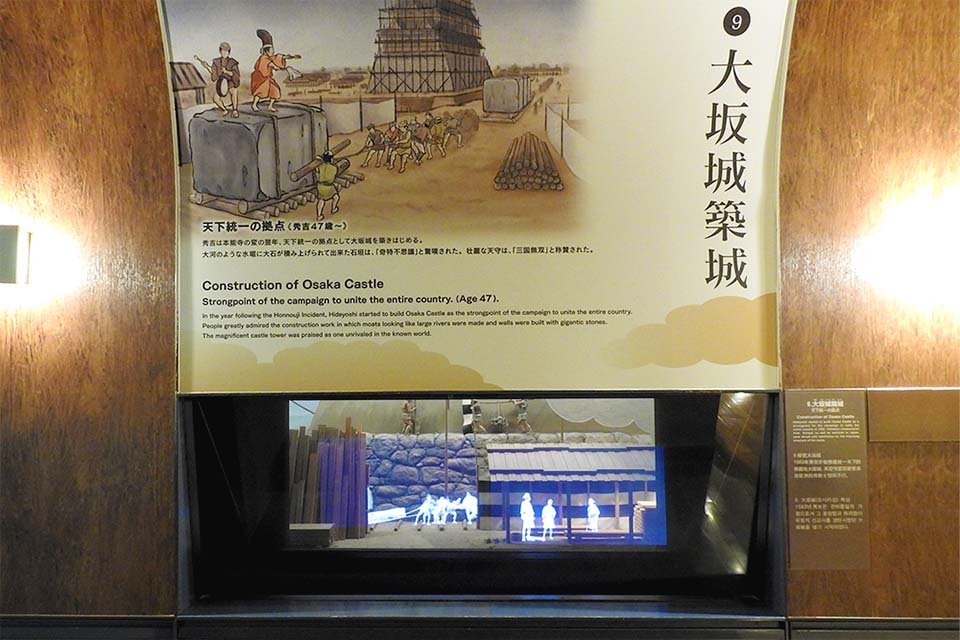
Once you have decided to visit Osaka Castle, the next step is planning the practical details: admission costs, how much time to allow, ticket options, the best times to avoid crowds, and how to get there.
Knowing these details in advance helps you organize your itinerary efficiently and make the most of your limited time in Osaka.
Admission Is ¥1,200 for Adults and Free for Children
Following a fee revision in April 2025, admission to Osaka Castle’s Main Tower increased as part of improvements to the visitor experience and the opening of the Toyotomi Stone Wall Museum. The current admission rates are as follows.
| Category | Fee | Notes |
|---|---|---|
| Adults | ¥1,200 | Previously ¥600 |
| High school and university students | ¥600 | Student ID required |
| Junior high school students and younger | Free | Proof of age required |
Students must present a student ID to receive the discounted rate, while children of junior high school age or younger may need to show a document verifying their age.
For families traveling with children, the cost remains reasonable because only adults are charged admission, making Osaka Castle an affordable choice even for a family visit.
How Do You Get Your Money’s Worth from the Osaka Amazing Pass?
Consider the Osaka Amazing Pass, which covers admission to about 40 facilities across the city, including Osaka Castle. A 1-day pass costs ¥3,500 and a 2-day pass ¥5,000, so it pays off if you plan to visit multiple spots. As a rule of thumb, the 1-day pass offers value if you visit three or more paid facilities.
Skip the Ticket Line by Buying Online in Advance
Long lines often form at the ticket counter by the main tower entrance. Buying your ticket online in advance through the official website allows you to skip the ticket-purchase queue entirely, which is a major advantage for travelers with a tight schedule.
However, note that an online ticket only eliminates the ticket-buying line. The entry queue and the elevator waiting line are separate, so some waiting may still be required.
To make the most of your advance ticket, combine it with an early morning visit right when the tower opens, when all lines are typically at their shortest. Check the official website before your visit for the latest ticketing details and procedures.
Allow 1 to 1.5 Hours for the Main Tower Alone
Exploring the exhibits inside Osaka Castle’s Main Tower and enjoying the views from the 8th-floor observation deck usually takes about 60 to 90 minutes. Even with a visit to the Toyotomi Stone Wall Museum, which opened in 2025, you can generally stay within that timeframe.
If you have more time, expanding your visit into a half-day itinerary that includes Sakuramon Gate, the massive stones around the castle grounds, and other outdoor highlights makes for a more complete experience. A relaxed visit covering both the tower and the surrounding grounds takes about 3 to 4 hours.
When planning your schedule, be aware of seasonal crowds. During cherry blossom season and Golden Week, entrance lines can exceed 30 minutes, so allowing 2 to 3 hours gives you a comfortable buffer during peak periods.
| Plan | Estimated Time |
|---|---|
| Main tower only (off-season) | About 1-1.5 hours |
| Main tower only (peak season) | About 2-3 hours |
| Half-day plan including the park | About 3-4 hours |
The 9 am Hour Right After Opening Is the Quietest
If you want to avoid crowds at Osaka Castle’s Main Tower, the best time to arrive is around 9:00 am, right after opening. Tour groups have usually not arrived yet, so waiting times for the elevator and other areas inside the tower are generally shorter.
The busiest period is typically between 10:00 am and 2:00 pm, when tour groups and individual visitors concentrate at the castle. During peak seasons, especially cherry blossom season, crowds can continue throughout the day, making an early-morning visit the best strategy.
After 4:00 pm, visitor numbers drop and you can browse at a more relaxed pace. However, keep in mind that the entry is 5:30 pm, so arriving too late may not leave enough time to explore comfortably. Visiting at opening and then strolling the park afterward is the most comfortable approach.
- Hours: 9:00 am-6:00 pm (last entry 5:30 pm)
- Closed: December 28-January 1
The Main Tower Is a 15-20 Minute Walk from the Nearest Stations
Whichever station you choose, the walk to Osaka Castle’s Main Tower takes approximately 15 to 20 minutes. Convenient options include Tanimachi 4-chome Station and Morinomiya Station on the Osaka Metro, as well as Osakajokoen Station on the JR Line. The walking distance is roughly similar from each station.
Because Osaka Castle Park includes long stretches of gravel paths and stone paving, comfortable sneakers are the best choice for your visit.
If you are carrying a suitcase or other large luggage, consider leaving it in a coin locker at the station before heading to the castle. For detailed route guidance and station-by-station access information, see the dedicated access article.
Details
| Item | Information |
| Address | 1-1 Osakajo, Chuo-ku, Osaka 540-0002 |
| Hours | 9:00 am-6:00 pm (last entry 5:30 pm) |
| Closed | December 28-January 1 |
| Official website | https://www.osakacastle.net/ |
| Recommended for | Anyone interested in Sengoku-era history or panoramic views of Osaka |
Common Questions About Visiting Osaka Castle

Even after comparing Osaka Castle with other famous castles, you may still have a few questions before making your decision. Here are answers to the questions travelers ask most often before visiting, to help you settle on the plan that best fits your itinerary.
When Is the Best Season to Visit Osaka Castle?
The most popular time to visit Osaka Castle is during cherry blossom season, typically from late March to early April. Seeing the Main Tower surrounded by roughly 3,000 cherry trees is a spectacular experience, but the park also becomes extremely crowded during this period. To enjoy the castle more comfortably, arriving at 9:00 am right when the tower opens is the best strategy.
Other seasons offer their own unique scenery:
- Early summer (May-June): Fresh green foliage, reflections on the moat, and mild weather make this an ideal time for a relaxed walk through the grounds.
- Autumn (October-November): Fall colors create a beautiful backdrop around the Main Tower, offering excellent photo opportunities.
- Winter (December-February): With fewer leaves on the trees, sightlines open up, and views from the observation deck are often at their clearest.
Opening hours may be shortened during certain periods, so check the latest information before your visit. No matter the season, Osaka Castle offers different ways to enjoy its history, scenery, and atmosphere.
Can You Enjoy Osaka Castle Without Entering the Main Tower?
Osaka Castle Park offers plenty to enjoy even without entering the Main Tower. Beyond Otemon Gate, an Important Cultural Property, and the massive stone walls lined with enormous boulders, the view of the Main Tower rising across the inner moat is one of the castle’s most iconic photo spots.
Hokoku Shrine is also free to visit, and its good-luck charms for career success make meaningful souvenirs for travelers looking for a small piece of Osaka culture to take home.
At MIRAIZA Osaka-jo, a complex beside the main tower, you can dine and shop, easily spending 1 to 2 hours with breaks in between. If you want to dig deeper into the history, the Toyotomi Stone Wall Museum, where you can see the Toyotomi-era stone walls underground, is also worth a look.
A practical approach is to explore the free areas first and decide afterward whether you want to enter the Main Tower.
Are There English-Guided Tours?
English-guided tours are available for visitors who want to better understand Osaka Castle. Since many of the exhibits inside the Main Tower are presented mainly in Japanese, an English-speaking guide can greatly enhance how much you learn from the experience.
On the Osaka Castle Walking Tour by Japan Guide Stars, an English-speaking guide explains the history behind features that are easy to overlook, including the origins of the massive stones and the castle’s defensive design. Admission is included, and you can also skip the ticket counter line, making it a convenient option for travelers on a tight schedule.
If you’re heading on to Kyoto, Japan Guide Stars also offers a Nijo Castle guided tour with admission. Visiting both makes the contrast between a palace-centered castle and a tower-centered one genuinely clear.
For travelers planning to include Osaka Castle in a 2–3 day Osaka itinerary, be sure to check the recommended model course article as well.
Osaka Castle Walking Tour and Castle Tower Admission
Skip the line access to Osaka Castle • City view from the top of the castle • The castle’s military design and defenses
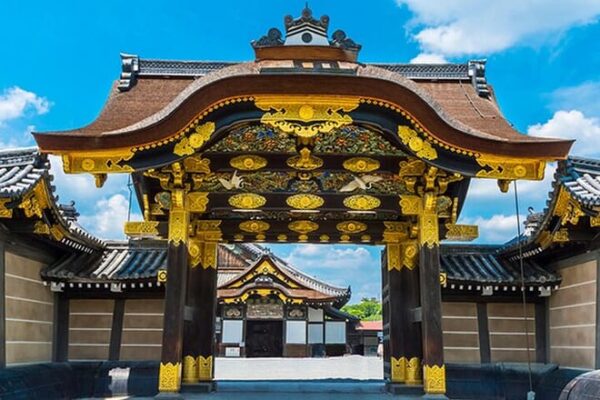
Kyoto: Nijo Castle World Heritage Guided Tour with Admission
Small group of up to 10 people • Nijo Castle Admission included • Shogun vs. Emperor rivalry

What Japanese Cultural Experiences Can You Enjoy During Your Stay in Osaka?
After exploring the history of Osaka Castle, those who want to experience more of Japanese culture can continue with the Osaka Sumo Experience by Japan Guide Stars.
Beyond a live show performed by former rikishi (professional sumo wrestlers), the hands-on program lets participants try shiko (the ritual leg stamp performed to drive away evil spirits) and tachiai (the initial charge) themselves.
With English support available, international visitors can enjoy the experience without worrying about the language barrier. A well-balanced itinerary is to visit Osaka Castle in the morning and join the sumo experience in the afternoon. Combining the two creates a full day that connects feudal history with one of Japan’s most iconic traditional sports.
Details
| Item | Information |
| Address | 1-5-1 Asahi, Nishinari-ku, Osaka |
| Hours | Shows at 10:00 am / 12:30 pm / 3:00 pm / 5:30 pm / 8:00 pm (5 shows daily, about 90 min each) |
| Closed | Open year-round |
| Official website | https://japanguidestar.com/tour/osaka-sumo-experience-with-live-show-and-audience-challenge/ |
| Recommended for | Anyone who wants both history and hands-on experiences |
 Hands-On
Get hands-on with sumo in Osaka
Watch former professional sumo wrestlers demonstrate authentic sumo techniques. Learn the history, rituals, and rules of Japan’s national sport, then step into the ring for a hands-on sumo experience in Osaka.
Osaka Castle Is Worth Visiting for Its History, Museum, and Free Grounds
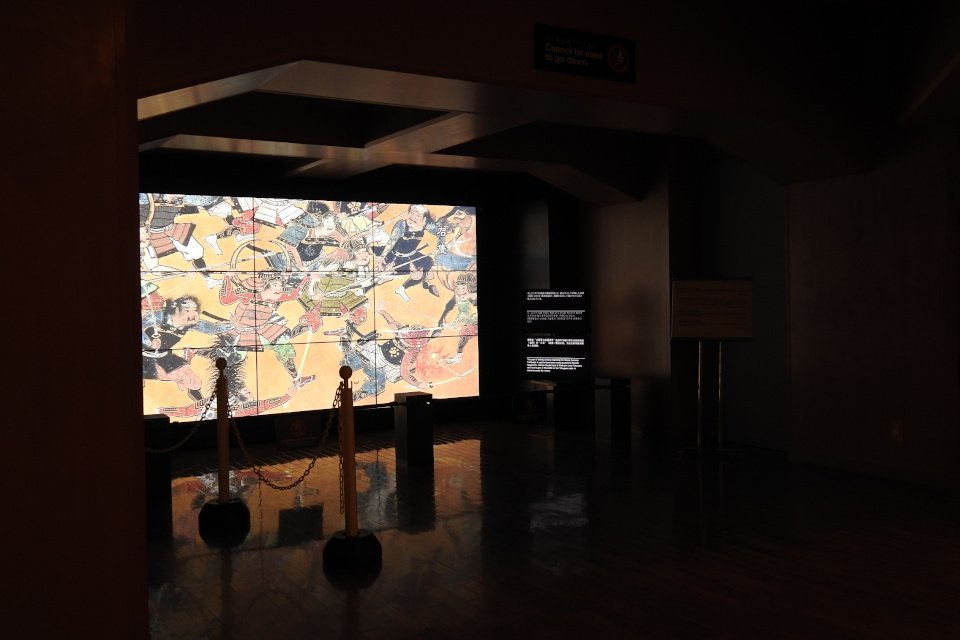
Osaka Castle combines the historical value unique to its restored tower, the exhibits of its museum, and the appeal of castle grounds you can stroll for free. Admission to the Main Tower is relatively affordable, and arriving right at opening time allows you to enjoy the exhibits and views while avoiding the heaviest crowds.
However, it is important to set the right expectations. The current tower is a reinforced-concrete reconstruction, so it may not match the image of an original wooden castle keep. Rather than viewing it as a traditional castle preserved exactly as it was, approach Osaka Castle as a museum of historical artifacts, and you’ll find plenty of value that only this castle can offer.