The Complete Guide to Osaka Street Food: Must-Try Eats In 4 Famous Districts
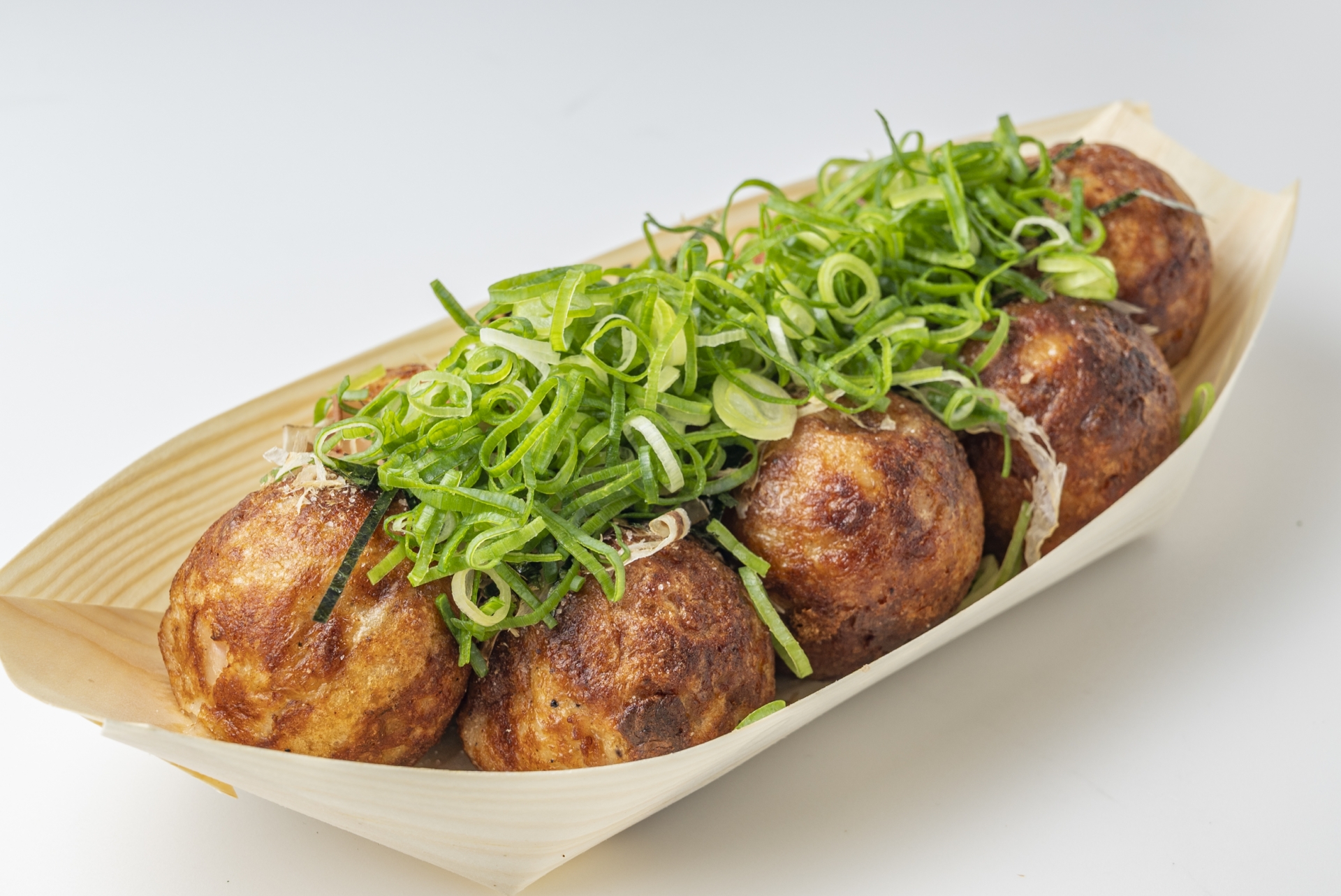
Planning an Osaka trip and wondering where to eat? Most guides funnel you straight to Dotonbori, but Osaka’s street food scene runs much deeper than one neon-lit strip. Osaka lives by a word: kuidaore—eat yourself broke. With limited time, you’ll want to efficiently visit the spots that won’t disappoint.
The four districts we highlight here are: Dotonbori, Shinsekai, Kuromon Market, and Tsuruhashi Koreatown. Each area offers something distinct, from classics like takoyaki and kushikatsu to seafood and Korean street food.
Along with each dish’s characteristics and price range, we’ve included sample routes so you can plan an efficient visit to the city. From signature dishes in each neighborhood to guided tour options, we’ve collected everything you need to know before you go.
Contents
Street Food to Try in Dotonbori
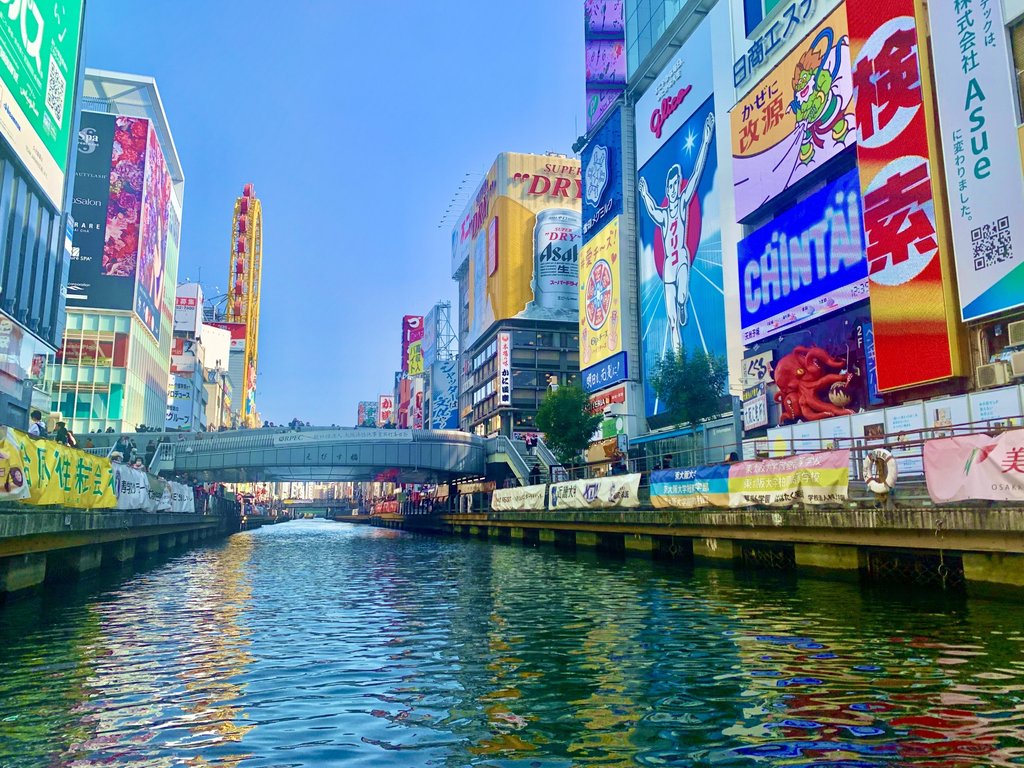
Dotonbori is the gateway to Osaka and a perfect starting point for first-time food explorers. With so many tourist-oriented shops, choosing where to eat can feel overwhelming. Below are four essential dishes to try in Dotonbori, including characteristics and price ranges, so you can head into the city with a plan.
Takoyaki: The Iconic Osaka Snack
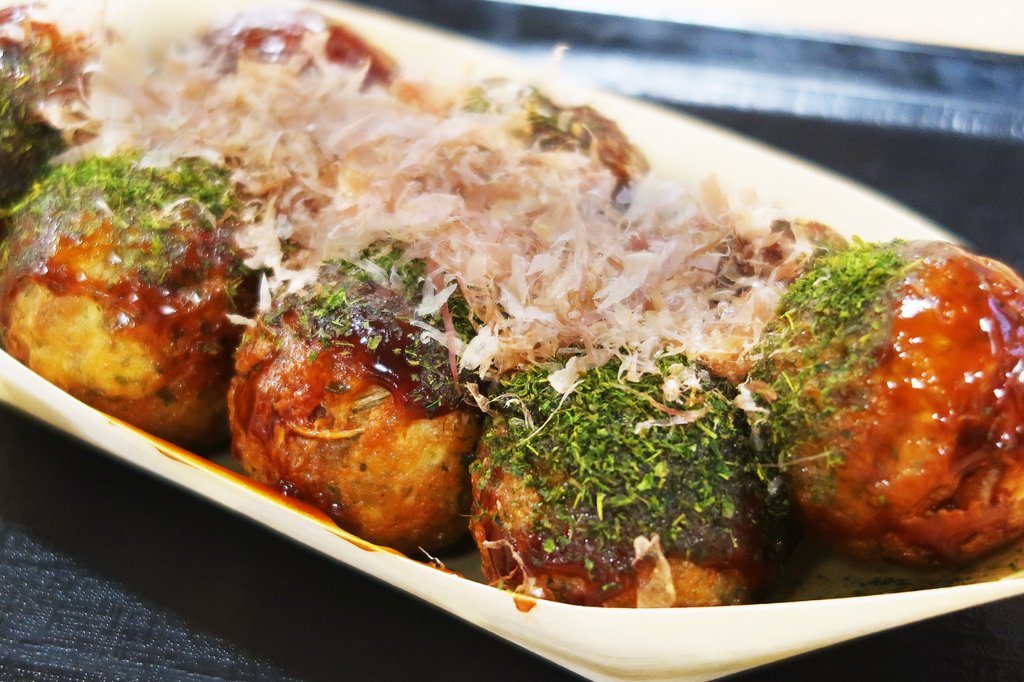
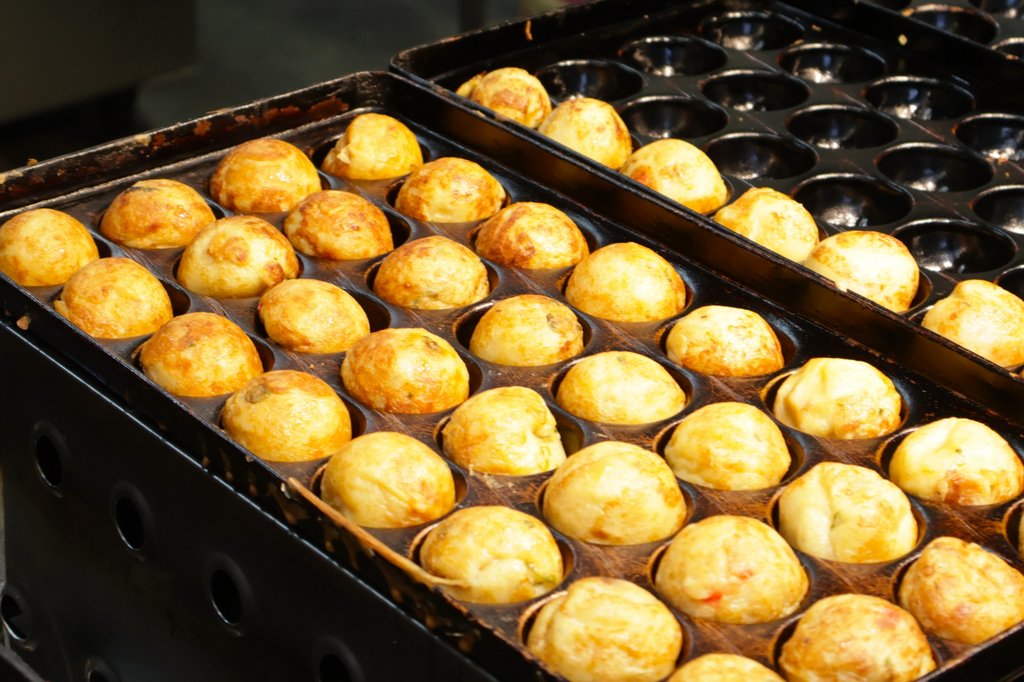
Takoyaki (grilled flour-based batter balls with a piece of octopus in the middle) is Osaka’s signature konamon (flour-based dish). The original version dates back to 1935, when a shop called Aizuya in Nishinari Ward added octopus and chicken egg to a dish inspired by egg-rich dumplings from Akashi.
Watch the cooks flip and spin each ball with metal picks—that constant rotation is what gives takoyaki its crispy shell and molten, creamy center. Freshly made takoyaki captures the essence of Osaka’s food culture. In Dotonbori, you can enjoy takoyaki starting at about ¥300 ($2 USD) for 8 pieces. Established, well-known shops often charge ¥720 or more for 8 pieces, reflecting the use of larger octopus chunks and more refined batter preparation.
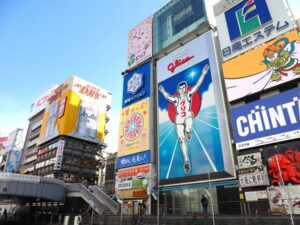
If you’re unsure where to go in Dotonbori, consider Takoya Dotonbori Kukuru Main Store. Located near the famous Glico sign, Kukuru has earned consistent praise for its reliable quality.
Details
| Address | 1F Hakua Building, 1-10-5 Dotonbori, Chuo-ku, Osaka |
| Hours | 10 am-9 pm |
| Closed | Open year-round |
| Website | https://kukuru.info/ |
| Best for | Anyone who wants hot takoyaki to eat while exploring |
10-Yen Bread: Cheese-Filled Sweets That’re Great for Posting
Juen-pan (10-yen bread) is a handheld sweet shaped like a ¥10 coin. This snack originated in Korea and has gained popularity in Dotonbori thanks to its signature cheese pull: break open a fresh one and mozzarella stretches out in long strings. At ¥500 ($3 USD) per piece, june-pan is affordable, and the warm cheese pull is a thrill in itself. Once cooled, the dough firms up and becomes easier to eat while walking.
For social media content, take pictures right after purchasing: the few seconds when the cheese stretches make for great posts. Weekend lines can be long, so check real-time wait times before you go.
Details
| Address | 1F TN Dotonbori Building, 1-10-6 Dotonbori, Chuo-ku, Osaka (near Don Quijote Dotonbori) |
| Hours | 10 am-10:30 pm |
| Closed | Open daily |
| Website | http://10yenpan.jp |
| Best for | Content creators and cheese lovers |
551 Horai Butaman: Juicy Pork Buns That Make Tasty Souvenirs
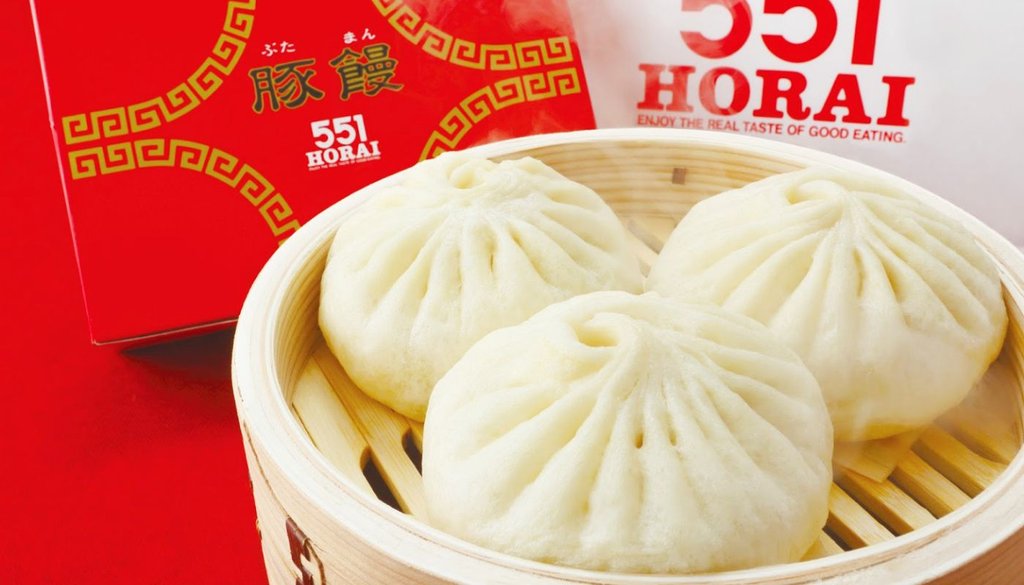
551 Horai’s butaman (steamed Chinese-style buns filled with pork and vegetables) are a famous Osaka souvenir. The buns are prepared with a simple filling of diced pork and onion, made fresh at their factory every day. Break one open and juicy broth pours out—their secret is using pork fat that stays melted even when cooled. The buns remain juicy whether hot or cooled, which makes them ideal for eating while exploring.
At ¥500 for a pack of two (¥250 per bun), a bun fits neatly in one hand. The main shop produces about 10,000 buns daily, and you can pick up freshly steamed ones. The main shop is just a 2-minute walk from Namba Station, so you can drop by between sightseeing stops. Eat one on the spot, then pick up a bulk order as a souvenir on the way back to your hotel.
Details
| Address | 3-6-3 Namba, Chuo-ku, Osaka |
| Hours | 10 am-9:30 pm (main store takeout counter) |
| Closed | 1st and 3rd Tuesdays (in December, closed only on December 31) |
| Website | https://www.551horai.co.jp/ |
| Best for | Families combining snacking with souvenir runs |
Mitarashi Dango: An Affordable Japanese Sweet
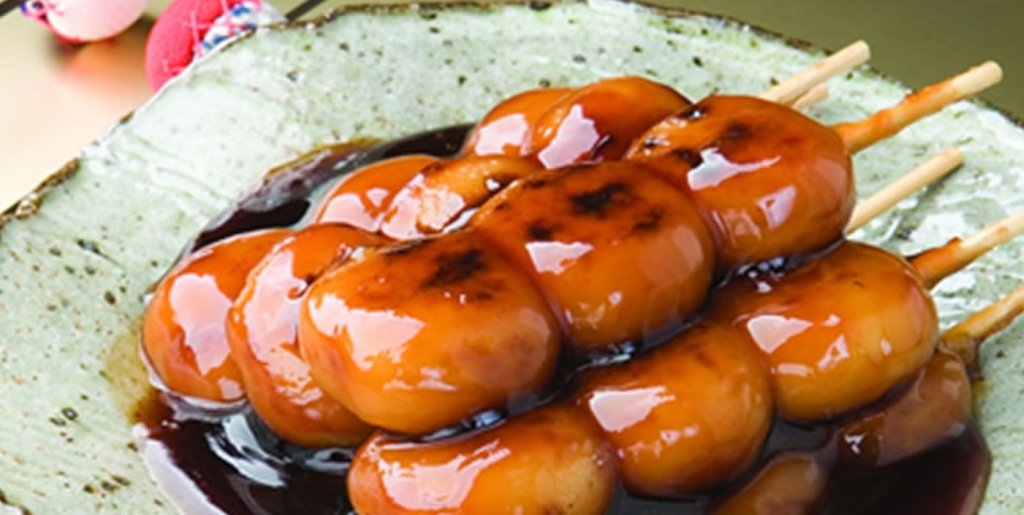
Mitarashi dango (skewered rice flour dumplings glazed with a sweet-savory soy sauce) makes a fitting end to a street food crawl. Hot from the grill, the chewy texture and fragrant soy glaze fills your mouth. Once cooled, the dumplings take on a firmer bite and offer a different kind of enjoyment. At around ¥100 to ¥150 per skewer, mitarashi dango is affordable for most budgets.
Amato Maeda at Namba Walk is a traditional Japanese confectionery shop with more than 70 years of history. Directly connected to the underground shopping arcade at Namba Station, Amato Maeda is easy to reach even on rainy days.
Details
| Address | Namba Walk Sanbangai 5-12, 1-chome Sennichimae, Chuo-ku, Osaka |
| Hours | 10 am-9:30 pm |
| Closed | Open year-round (same as mall hours) |
| Website | None |
| Best for | A quiet finish to a food crawl, traditional Japanese sweets enthusiasts |
Stand-and-Eat Street Food in Shinsekai and Jan-Jan Yokocho
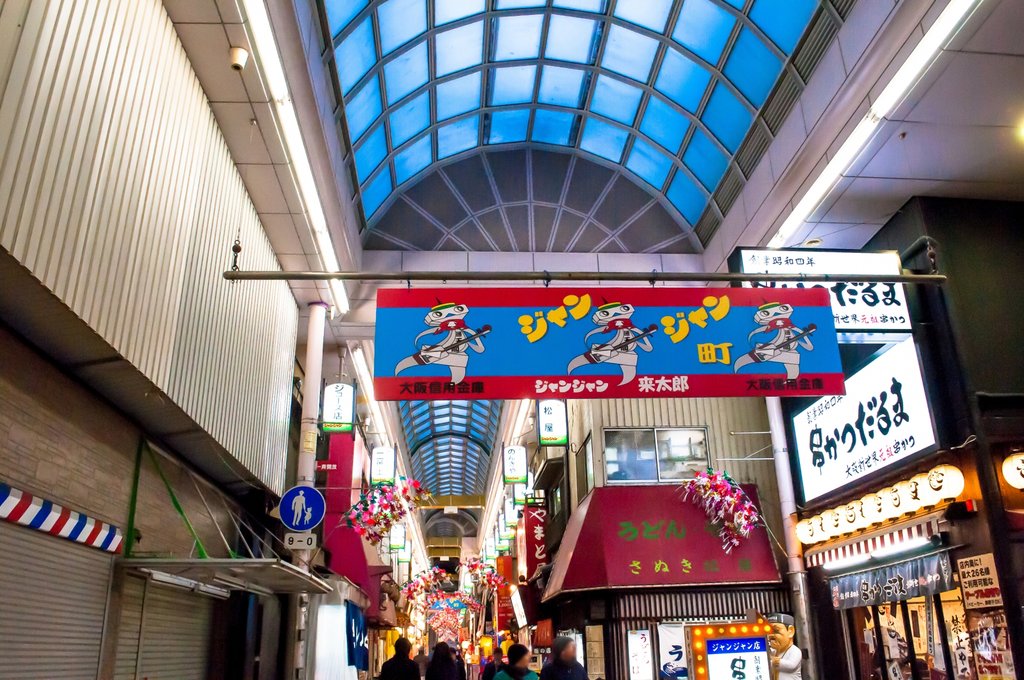
For travelers who want a contrast to Dotonbori’s bright lights and a taste of Osaka’s old-town atmosphere, Shinsekai delivers. Standing-style street food in Shinsekai and Jan-Jan Yokocho (a narrow alley lined with traditional shops) includes three classics: kushikatsu (deep-fried vegetable and meat skewers), dote-yaki (beef tendon simmered in miso), and horumon-yaki (grilled offal). Knowing a bit about each dish’s history and etiquette will make your experience smoother.
Kushikatsu: Skewers Born in Shinsekai
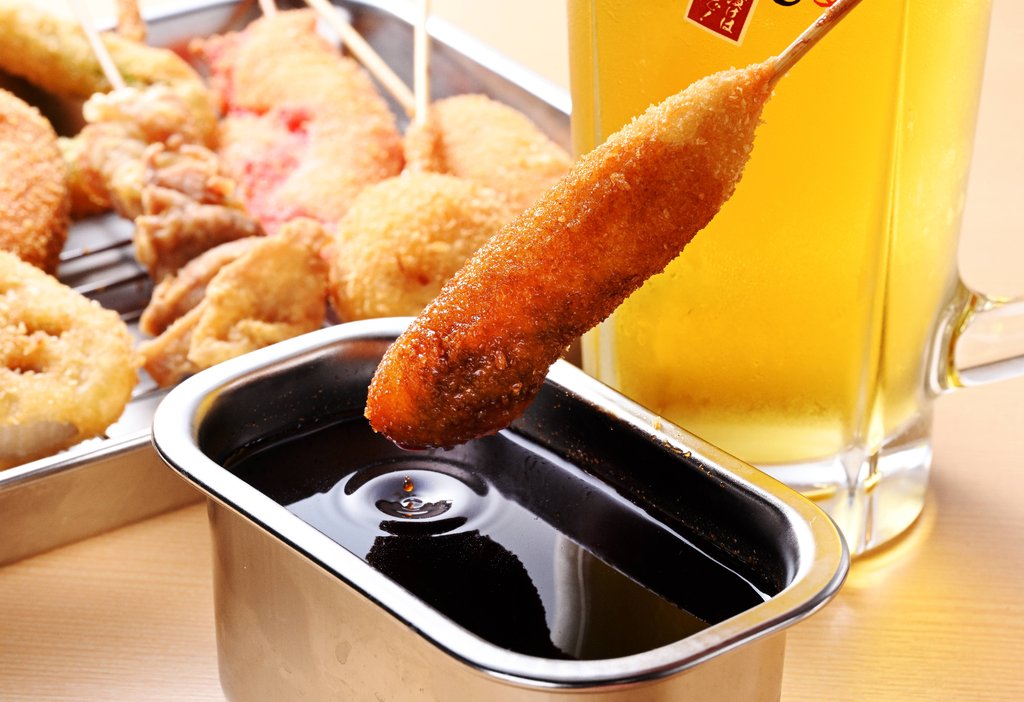
Kushikatsu consists of meat, seafood, or vegetables cut into bite-size pieces, skewered, lightly battered, and then deep-fried. The dish originated in 1929 in Shinsekai, when a shop proprietress created it for day laborers in the area.
When eating kushikatsu, remember not to double-dip. Everyone shares the same sauce container, so never re-dip a skewer you’ve already bitten into—it’s a serious breach of etiquette. Instead, use the provided cabbage leaves as a spoon to ladle sauce onto your skewer.
At ¥100 to ¥200 per skewer (less than $2 USD each), kushikatsu is affordable enough to sample widely. To experience the original, head to Kushikatsu Daruma Shinsekai Main Store, founded in 1929. Daruma has English menus, so you can walk in and order without worrying about the language barrier.
Details
| Address | 2-3-9 Ebisu-Higashi, Naniwa-ku, Osaka |
| Hours | 11 am-10:30 pm (last order at 10 pm) |
| Closed | Irregular |
| Website | https://www.kushikatu-daruma.com/ |
| Best for | First-timers and groups who want to try a bit of everything |
Dote-Yaki: Beef Tendon Simmered in Miso
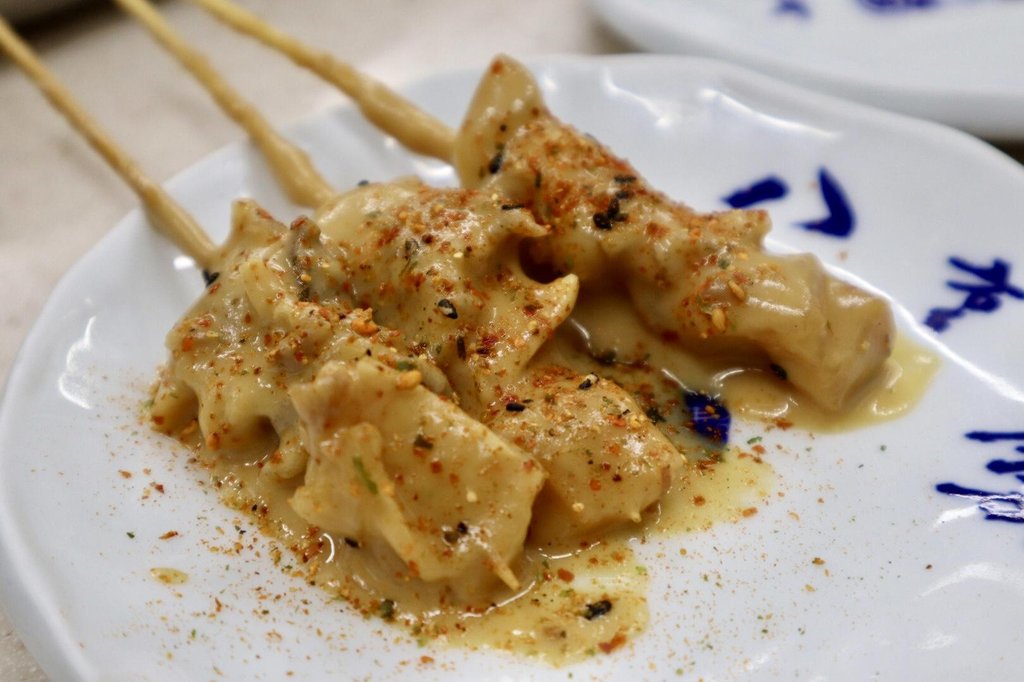
Dote-yaki features beef tendon skewered and simmered in shiro miso (a mild, slightly sweet miso from Kyoto). The dish originated from street-stall cooking during the Taisho era (1912-1926).
The beef tendon practically falls off the skewer, with rich, sweet white miso soaked all the way through. The heavy, savory flavor of dote-yaki contrasts with the light crunch of kushikatsu, and alternating between the two is the standard approach (the miso resets the palate between fried skewers). At Jan-Jan Yokocho, dote-yaki runs from ¥100 to ¥150 per skewer. Note that this dish pairs exceptionally well with beer.
For the authentic taste, head to Yaekatsu on Jan-Jan Yokocho—one of the area’s longest-running standing-style shops where dote-yaki and kushikatsu are sold side by side over the counter.
Details
| Address | 3-4-13 Ebisu-Higashi, Naniwa-ku, Osaka (south side of Shinsekai and Tsutenkaku) |
| Hours | Vary by shop (most open 11 am-9 pm) |
| Closed | Varies by shop |
| Website | See individual shop websites |
| Best for | Anyone wanting to try Osaka soul food at its birthplace |
Horumon-Yaki: A Stamina-Boosting Classic from the Old Neighborhood
Horumon-yaki has been served from Shinsekai to Nishinari for generations. With a meat processing facility nearby providing fresh offal, the dish became popular among working-class residents.
The offal hits the iron plate with a hiss, sending up a cloud of garlicky, miso-sweet smoke right in front of you. The standard sauce combines aged sweet-savory miso with chili and garlic. At ¥500 to ¥1,000 per plate, you can pair horumon-yaki with kushikatsu and dote-yaki and still keep the total for your meal at around ¥2,000. Eating at a standing counter is part of what makes this area feel like old Osaka.
Details
| Address | 3-2-23 Ebisu-Higashi, Naniwa-ku, Osaka |
| Hours | 11 am-4 pm |
| Closed | Tuesdays |
| Website | None |
| Best for | Hearty eaters who want a taste of Osaka’s old-town atmosphere |
Seafood at Kuromon Market
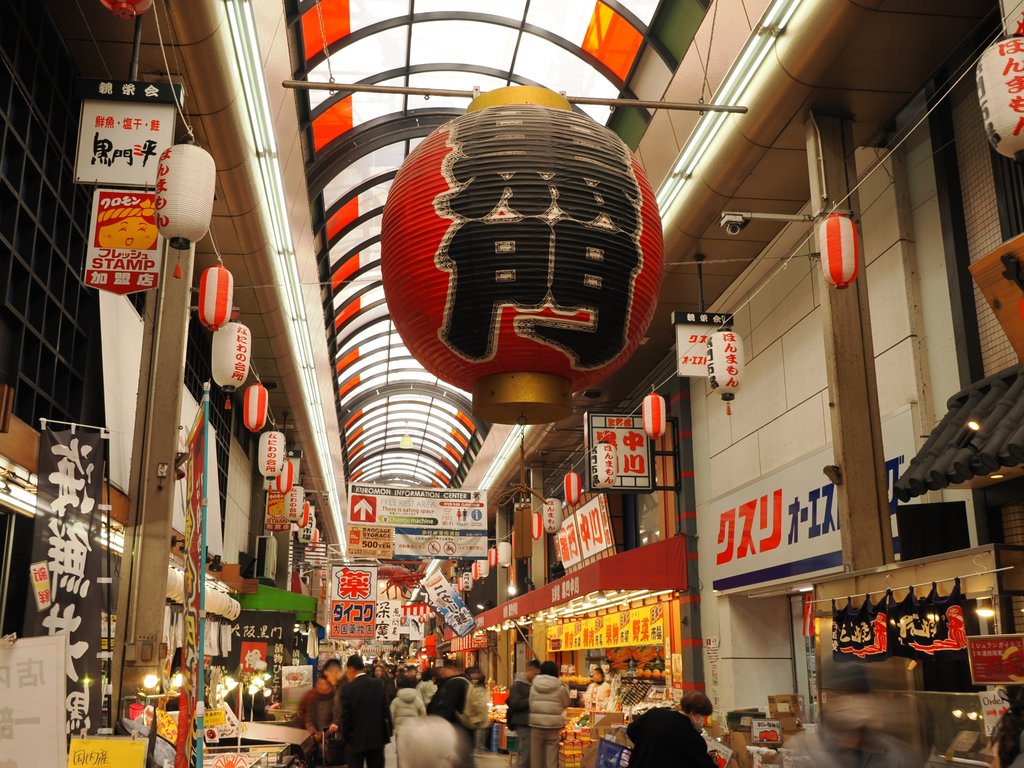
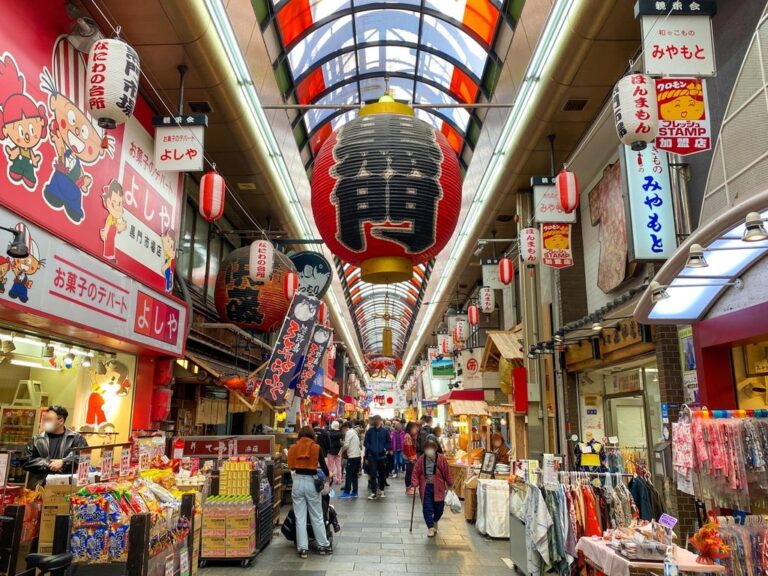
Kuromon Market (a food market with about 150 shops, and also known as “Osaka’s Kitchen”) offers a wealth of fresh seafood. Popular street food options at the market include seafood skewers, compact seafood rice bowls, charcoal-grilled wagyu beef skewers, and candied fruit. We’ve included information on these options along with recommended shops and price ranges. Use the following sections as a reference when planning a morning visit to the market.
Seafood Skewers: Market-Fresh Quality
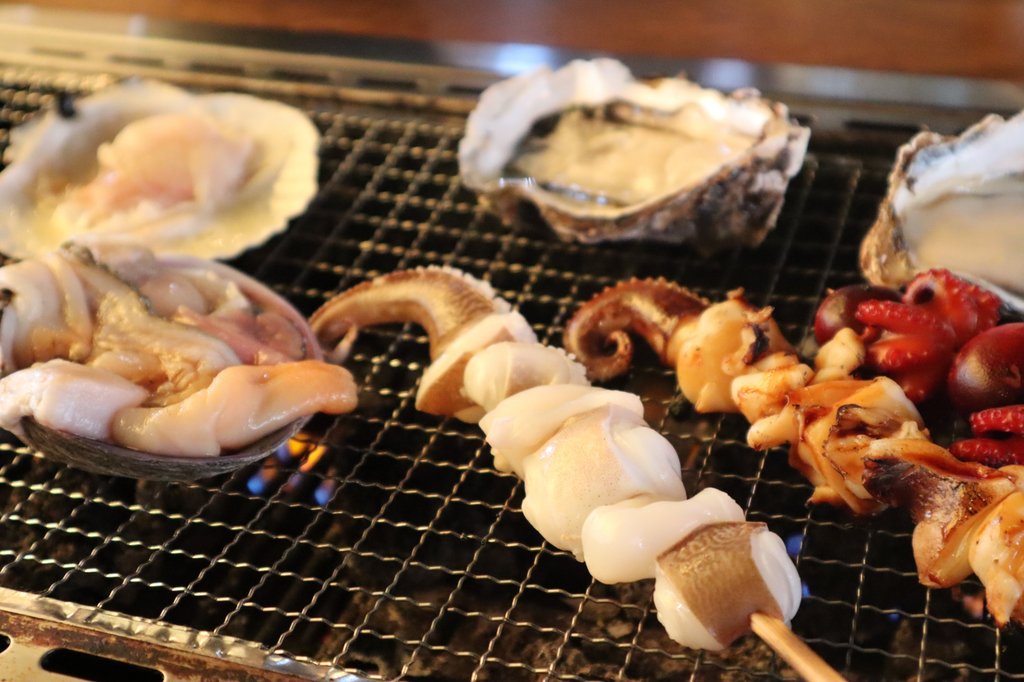
Kuromon’s seafood skewers are grilled on the spot from fish that’s brought in daily—you can’t get fresher than this. The standard grilled scallop skewer (about ¥500) features a plump, juicy scallop roughly 2 cm (about 0.8 inches) thick. Fatty tuna skewers are limited in quantity and can sell out early in the day. Baby octopus skewers come seasoned with a teriyaki-style glaze. Most skewers run from ¥300 to ¥500.
Having skewers grilled over charcoal at the storefront and eating them right there is part of the experience. To beat the crowds, aim to arrive by 10 am. If you eat while walking, finish up near a trash bin before moving on.
Details
| Address | 1-22-25 Nihombashi, Chuo-ku, Osaka |
| Hours | 9 am-5 pm (closes when sold out) |
| Closed | Irregular |
| Website | https://kuromon-sanpei.co.jp/ |
| Best for | Seafood fans who want the full market experience |
Uni and Ikura Bowls: Luxurious Mini Seafood Rice Bowls
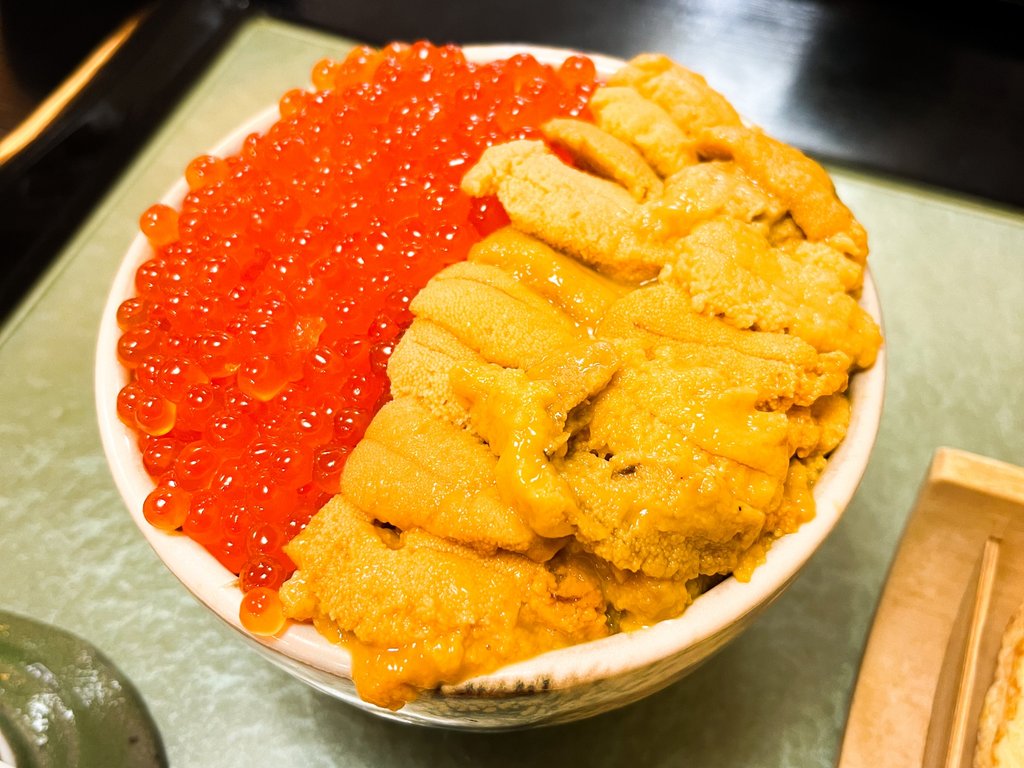
Mini seafood bowls topped with sea urchin and salmon roe have been turning heads at Kuromon Market lately. About half the size of a standard bowl, these mini versions let you indulge without filling up. Prices run from ¥1,000 to ¥2,000, making this splurge affordable.
For these mini seafood bowls, head to Maguroya Kurogin. Maguroya built its reputation on tuna, with the team hand-picking every fish they use (and it shows in every cut). Ordering a mini bowl alongside a seafood skewer makes for a luxurious pairing.
Details
| Address | 2-11-1 Nihombashi, Chuo-ku, Osaka |
| Hours | 9 am-4:30 pm |
| Closed | Open daily |
| Website | https://kurogin.co.jp/ |
| Best for | A small splurge on luxury seafood during exploration |
Wagyu Skewers: Charcoal-Grilled Japanese Black Beef
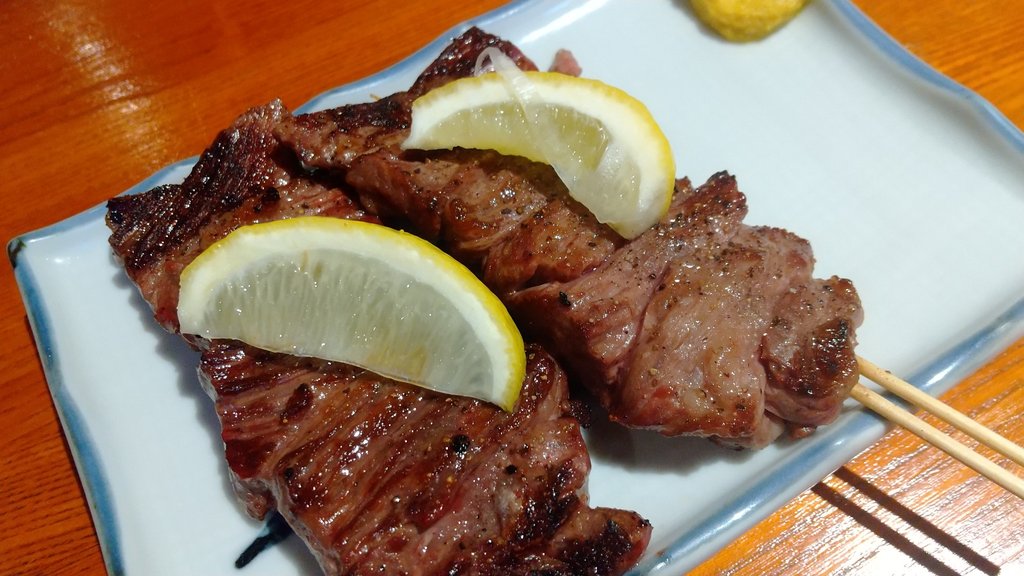
Although Kuromon Market is best known for seafood, charcoal-grilled kuroge wagyu (Japanese Black beef) skewers shouldn’t be overlooked. With butcher shops lining the market, vendors can grill fresh wagyu sourced daily from neighboring specialists.
The marbled wagyu, slow-grilled over charcoal, melts in your mouth. The ¥500 to ¥1,000 price range for this high level of quality reflects what Kuromon Market can offer.
Head to Kuromon Nakagawa, a butcher that sources and processes its own Japanese Black beef. The quality speaks for itself, and the counter welcomes casual walk-ins.
Details
| Address | 1-21-5 Nihombashi, Chuo-ku, Osaka |
| Hours | 24 hours |
| Closed | Irregular |
| Website | https://www.kuromon-nakagawa.net/ |
| Best for | Meat lovers taking a break from seafood |
Candied Fruit: A Popular Street Stall Sweet
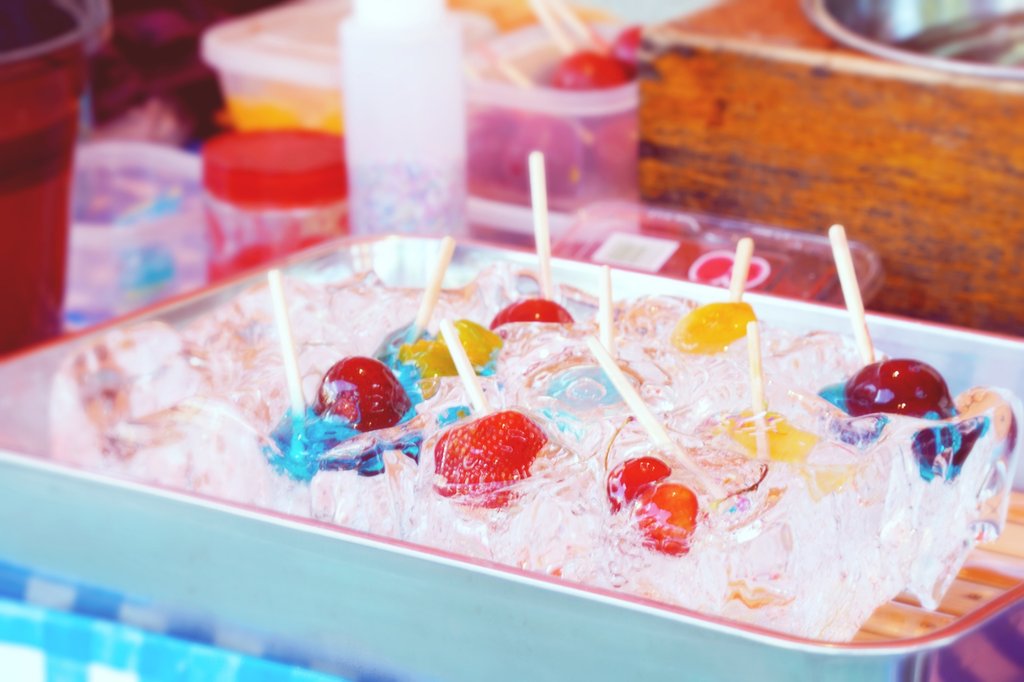
After sampling salty, savory bites, something sweet helps to reset your palate. Candied fruit (fresh fruit coated in a thin layer of hard sugar) fits perfectly at the end of a food crawl.
Strawberries, tangerines, and whatever fruits are in season are served coated in a glass-thin sugar shell that cracks with a satisfying snap, releasing the cold juices that were trapped inside. Each season brings different flavors to try, and the bright colors of the fruit also photograph well for social media posts. Daiwa Kaen Kuromon Market Shop has been making candied fruit for decades, and their professional buyers pick fruit so sweet it barely needs the sugar coating.
Details
| Address | 1-22-20 Nihombashi, Chuo-ku, Osaka |
| Hours | 8 am-5 pm |
| Closed | Open daily |
| Website | http://www.daiwa-kaen.co.jp/ |
| Best for | A sweet finale, or anyone who loves seasonal fruit |
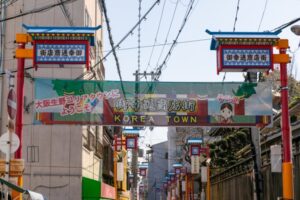
Korean Street Food in Tsuruhashi Koreatown
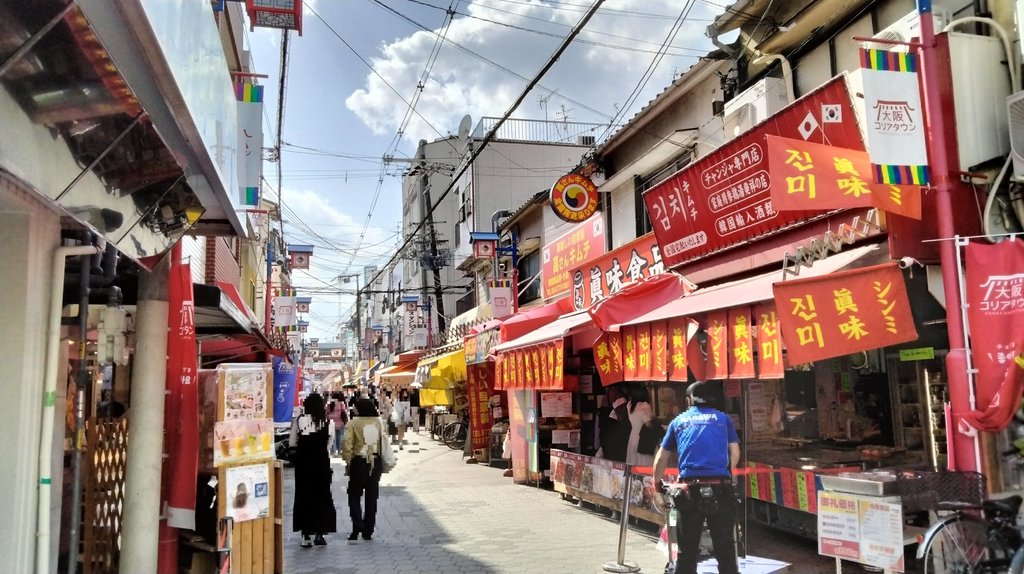
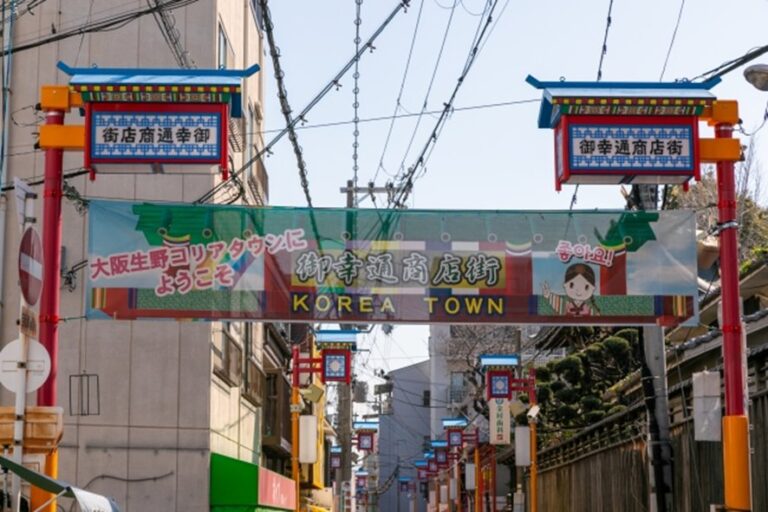
Many travelers want to walk through an area where authentic Korean culture thrives. Korean street food in Tsuruhashi Koreatown delivers that experience, with three dishes taking center stage: sweet-spicy tteokbokki (chewy rice cakes in a spicy sauce), savory pan-fried jeon (Korean savory pancakes), and brown sugar-filled hotteok (sweet pan-fried stuffed pancakes). Knowing a little about price ranges and the local atmosphere—a neighborhood where residents shop and eat daily—helps make the most of a visit to Koreatown.
Tteokbokki: Chewy Rice Cakes in Sweet-Spicy Sauce
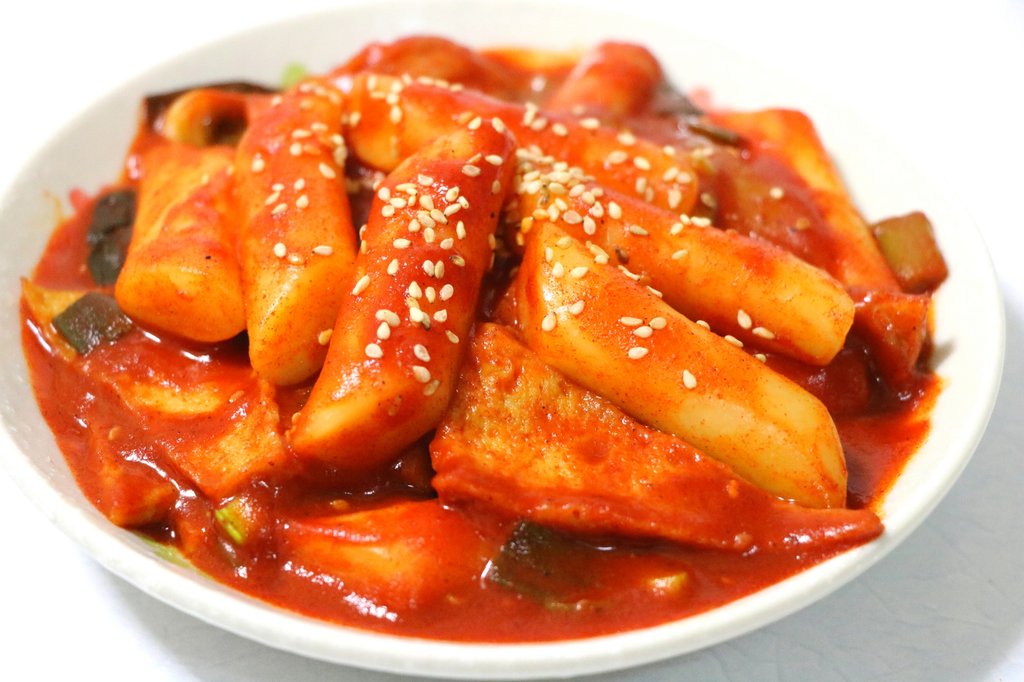
If you love sweet heat, tteokbokki is your dish: stick-shaped rice cakes simmered in gochujang-based sauce is a Tsuruhashi classic. The tteok (rice cake) made from non-glutinous rice has a springy, chewy texture.
At Yeopdduk Osaka, you can choose your desired amount of spice—from mild to scorching, across five levels—perfect for visitors easing into spicy foods or for those looking for some real heat.
Details
| Address | 2F, 3-7-16 Tsuruhashi, Ikuno-ku, Osaka |
| Hours | 11 am-8:45 pm |
| Closed | Open daily |
| Website | https://kdud200.gorp.jp/ |
| Best for | Spicy-food lovers and authentic Korean street food fans |
Jeon: The Korean Savory Pancake
Jeon is a thin Korean pancake—ingredients are mixed into a flour batter and pan-fried until the edges turn crisp. Common additions include garlic chives and seafood, with the finished pancake dipped in a light sauce.
For something you can eat on the move, stop by Doi Shoten. They grill jeon Korean street-stall style, with everything from seafood to spicy cod roe with cheese. At ¥200 to ¥500 per piece, jeon is cheap enough to try several varieties.
Details
| Address | 3-15-11 Higashi-Kobashi, Higashinari-ku, Osaka |
| Hours | 10 am-8 pm |
| Closed | Irregular |
| Website | None |
| Best for | A lighter alternative to okonomiyaki (savory Japanese pancakes) |
Hotteok: Korean-Style Sweet Pancakes with Brown Sugar
Bite into hot hotteok and molten brown sugar syrup spills out. This Korean snack wraps sugar and nuts in a wheat-and-glutinous-rice dough, then presses and pan-fries it. At ¥200 to ¥400 per piece, hotteok works well as a food crawl finale or a dessert break.
For hotteok in Tsuruhashi, head to Hotteok Living. Alongside the classic brown sugar version, they offer twists like curry cheese and kimchi. Travelers with a sweet-tooth should go for brown sugar, while those looking for a light meal might prefer kimchi flavor.
Details
| Address | 3-2-15 Momodani, Ikuno-ku, Osaka (inside Tsuruhashi Koreatown) |
| Hours | Tue-Fri 11 am-5 pm; Sat 12:30 pm-5 pm; Sun 12 pm-5 pm |
| Closed | Open daily |
| Website | None |
| Best for | Visitors with a sweet tooth, first-time Korean dessert eaters, and groups who love variety |
Sample Itineraries Combining Food and Sightseeing in Osaka
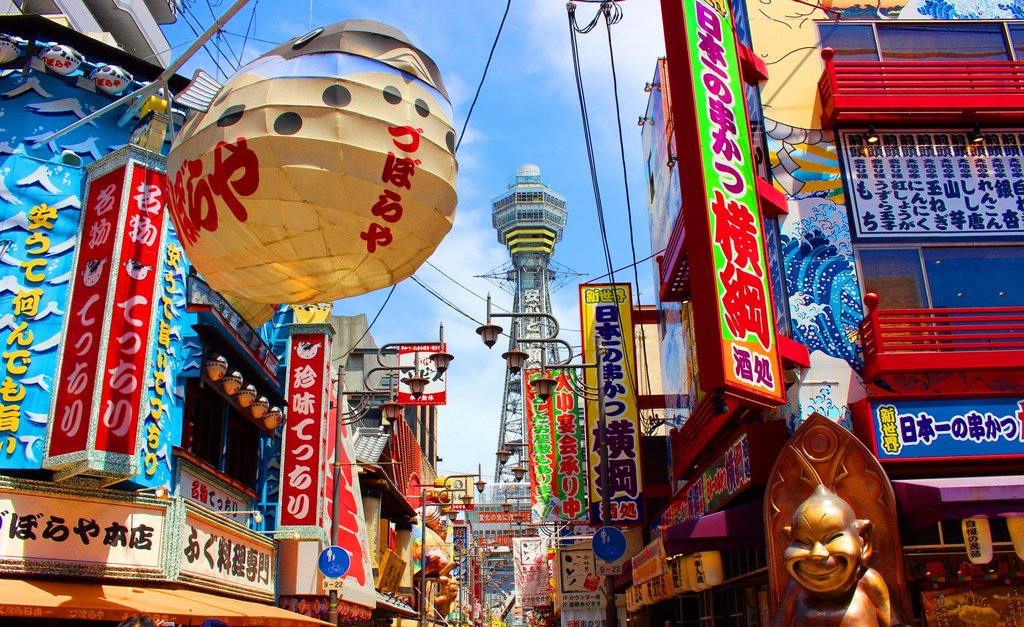
Once you’ve decided what to eat, the next question is how to structure your day to fit your meal into your schedule. Sample routes listed below pair street food exploration with sightseeing, and include a Shinsekai lunch combined with entertainment, as well as guided food tours that cover multiple districts. Pick the right route and even a short day in Osaka can pay off.
Kushikatsu Lunch in Shinsekai and Sumo Studio Osaka
Arrive at Dobutsuen-mae Station around noon and start with a kushikatsu lunch in Shinsekai and Jan-Jan Yokocho. Well-known shops are clustered within a few minutes’ walk from the station, and even if you visit two or three different spots, you’ll still finish by 2 pm. From there, activity options include visiting the Tsutenkaku Tower observation deck or wandering freely.
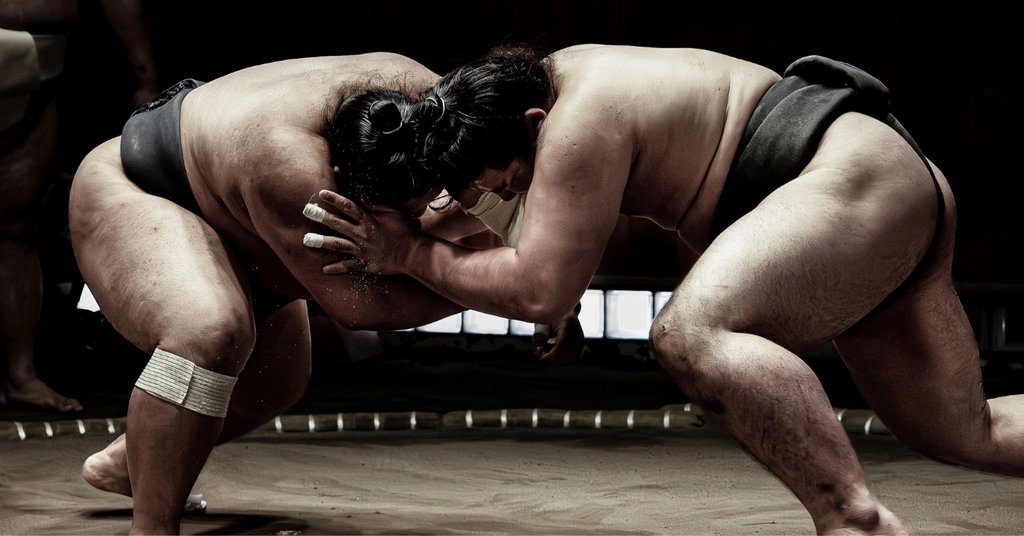
The evening’s main attraction is the sumo show at Sumo Studio Osaka, held regularly. Here, former professional sumo wrestlers perform live bouts, and attendees can even enter the sacred clay ring for a hands-on cultural activity. You’ll need to book in advance, though, so reserve your seats early.
Details
| Address | 1F Hanazonocho AI Building, 1-5-1 Asahi, Nishinari-ku, Osaka (near Hanazonocho Station) |
| Hours | 9 am-10 pm |
| Closed | Open daily (except holidays) |
| Website | https://sumowrestlingshow.jp/ |
| Best for | Anyone curious about Japanese culture and wanting a hands-on experience |
Japan Guide Star Food Tour
Japan Guide Star’s English-guided food tour covers Tsuruhashi, Shinsekai, and Dotonbori efficiently in a single day. The morning features Korean street food in Tsuruhashi, the afternoon kushikatsu in Shinsekai, and the evening wraps up with takoyaki in Dotonbori.
English-speaking guides explain menus, eating etiquette, and handle interactions with shop staff. Because the guides know the area inside and out, you’ll discover genuinely good spots you’d easily miss on your own. Check Japan Guide Star’s official website for current tour details and pricing (half-day tours typically start at around ¥8,000 per person).
Details
| Districts covered | Tsuruhashi, Shinsekai, Dotonbori |
| Duration | Full day (morning to evening) |
| Language | English |
| Price | From around ¥8,000 (see website for current rates) |
| Website | https://japanguidestar.com/ |
| Best for | First-time visitors wanting to cover multiple city districts in one go |
Osaka JOINER Food Crawl
For travelers who want to reach places they might not find on their own, Osaka JOINER’s small-group food tour is worth looking into. The Osaka Food Crawl is a three-hour guided experience from ¥7,000 per person, in small groups of up to eight guests, and the exact stops and dishes can vary. You can book through Osaka JOINER’s official website.
Common Questions About Osaka Street Food
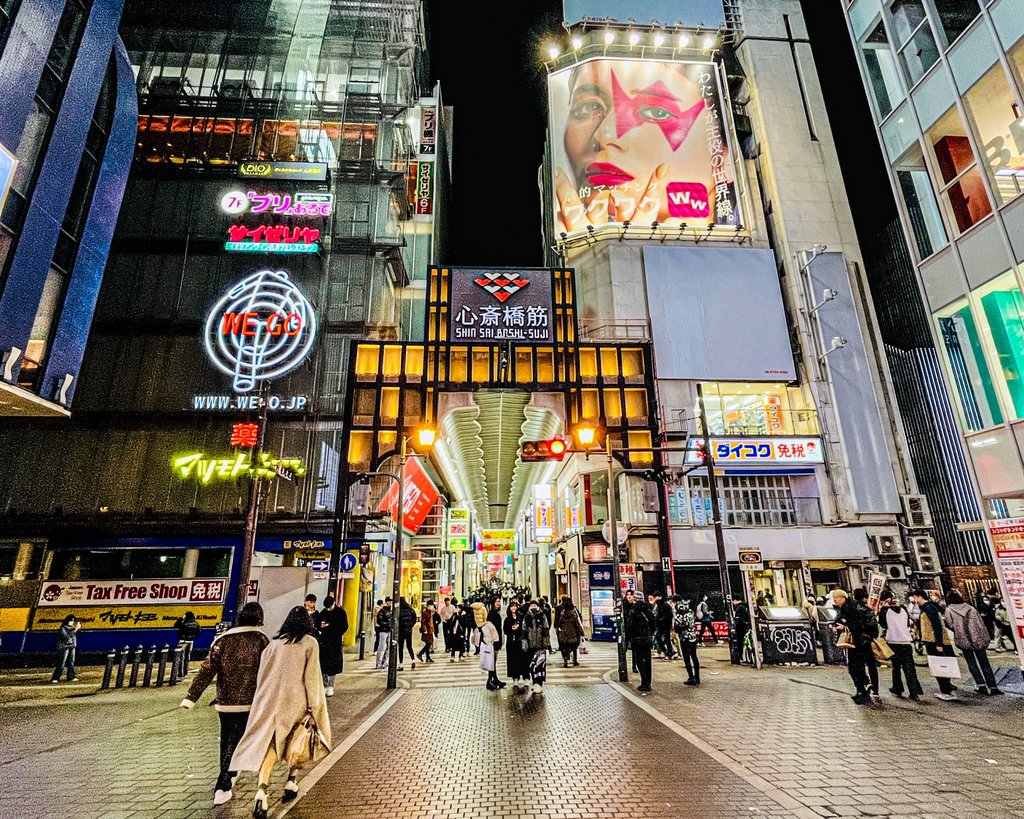
Got questions before you head out to eat? Here’s what you need to know about timing, budgets, menus, and more—a sort of pre-trip checklist.
When Are the Best Times for Street Food Exploration?
Weekday afternoons between 2 pm to 4 pm offer the most comfortable conditions for exploring. Even popular shops typically have wait times of 5 to 10 minutes. Weekends and holidays from 6 pm to 8 pm bring heavy tourist crowds, sometimes pushing wait times to 30 minutes or even an hour. Alternatives to the usual visiting times include Tsuruhashi’s morning market or an evening stroll in Dotonbori.
| Time | Crowd Level | Notes |
|---|---|---|
| 6 am-8 am | Low | Good for breakfast at Tsuruhashi’s morning market |
| 2 pm-4 pm | Low | Best weekday window |
| 6 pm-8 pm (weekends/holidays) | Very high | Long waits are common |
| 8 pm-10 pm | Moderate-low | Good for a late meal in Dotonbori |
If your days are limited, build your plan around a weekday afternoon.
How Much Money Should I Budget for a Day?
For a day centered on street food, budget around ¥3,000 to ¥5,000 ($20-$33 USD). With most individual items running from ¥500 to ¥1,000, sampling small portions at multiple shops works well within this range.
| Menu Item | Price Range |
|---|---|
| Takoyaki (6-8 pieces) | ¥300-¥960 |
| Kushikatsu (multiple skewers) | ¥800-¥1,200 |
| Pork bun (single serving) | ¥200-¥400 |
| 10-yen bread, mitarashi dango, and other snacks | ¥100-¥500 |
Dotonbori and Kuromon Market can feel slightly pricier due to tourist-oriented pricing. The backstreets of Tsuruhashi and Shinsekai, however, have local hangouts where prices are lower.
Are English Menus Available at Street Stalls?
In Dotonbori and Shinsekai, more and more shops are offering photo-illustrated English menus. That being said, in Tsuruhashi and other neighborhoods with a strong local character, Japanese-only menus remain the norm. In those areas, pointing at displays of food samples is the surest way to order.
Tips for ordering without Japanese language skills include:
- Use Google Translate’s camera function for real-time menu translation
- Learn romanized names of staple dishes, such as “takoyaki”
- Bring a point-and-order phrasebook with pictures
Osaka Prefecture also supports multilingual menu creation, so English-capable shops continue to spread.
Can I Cover Multiple Districts in One Day?
Osaka’s four main street food districts sit within 10 to 15 minutes of each other by subway. Spending 1.5 to 2 hours per district allows you to sample three to five shops in each area:
| Time | District | Activity |
|---|---|---|
| 10 am-12 pm | Kuromon Market | Seafood skewers and seafood bowls as a late breakfast |
| 12:30 pm-2:30 pm | Shinsekai | Kushikatsu and dote-yaki lunch |
| 3 pm-5 pm | Tsuruhashi | Korean street food sampling |
| 6 pm-8 pm | Dotonbori | Takoyaki and evening walks |
The Osaka Metro 1-Day Pass simplifies moving between districts: a single ticket makes travelling between districts easy.
Are Street Stalls and Shops in Osaka Safe to Eat At?
In Japan, even street stalls need food service permits and fall under health department supervision. Vendors follow HACCP-based sanitation plans, and they’re required to have handwashing stations and disinfectant on hand. Signs of a reliable shop include:
- Visible cooking areas that diners can observe from outside
- High customer turnover, which helps ensure fresh ingredients
Japan’s sanitation standards are high, so you can explore street food with confidence.
Make the Most of Osaka’s Street Food Scene
Osaka’s street food scene lends a distinct character to the dishes found in each district of the city. Multiple areas can be easily covered in a single day, and with single servings costing only ¥300 to ¥700, exploring Osaka cuisine is surprisingly approachable. With this guide in hand, you too can dive into Osaka’s kuidaore food culture and enjoy it to the fullest.