What to Eat in Osaka: Local Dishes, Seasonal Specialties, and Where to Find Them
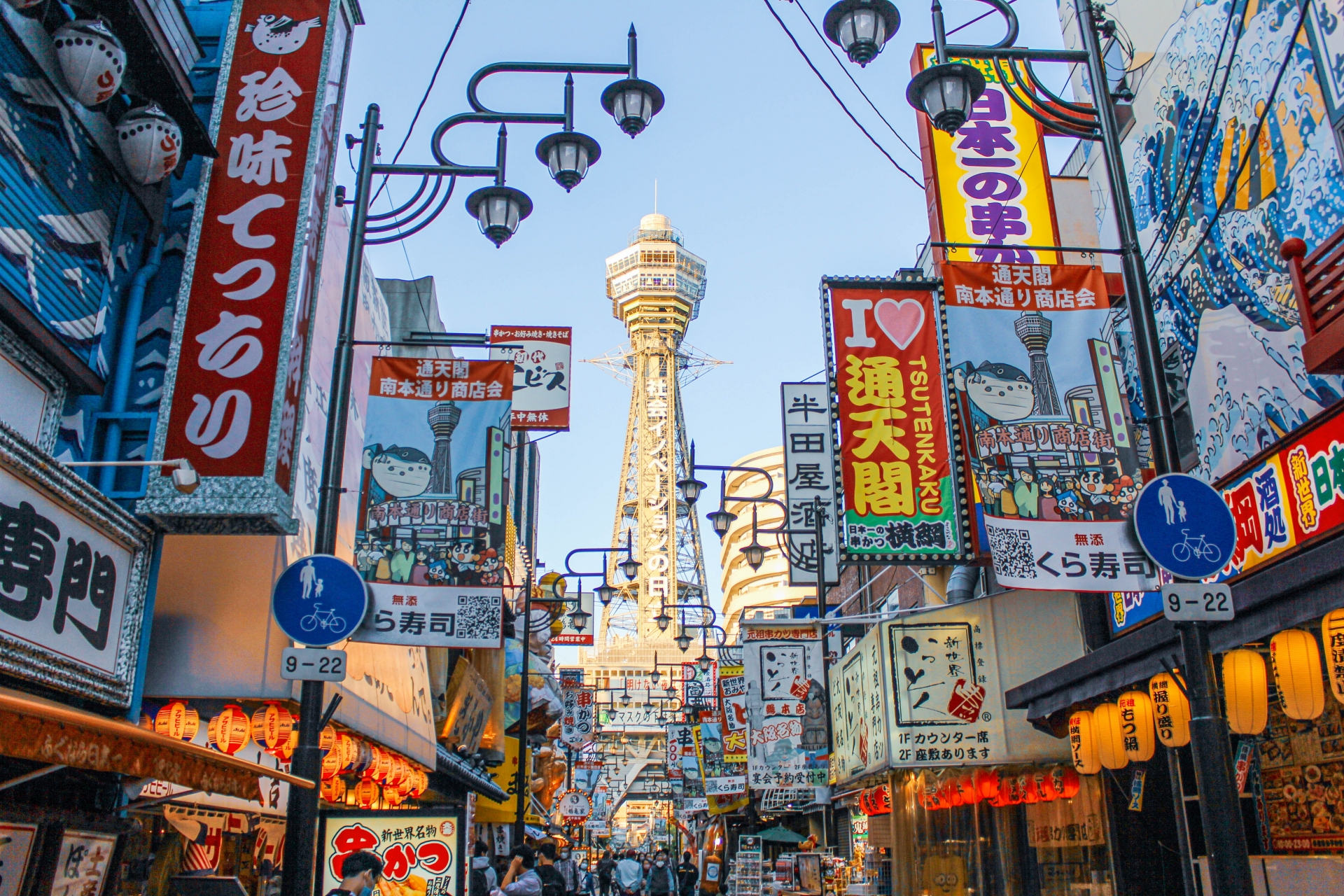
With so many local specialties, deciding what to eat first in Osaka can feel overwhelming. The city’s food culture is well-known throughout Japan and the Japanese phrase kuidaore—”eating yourself into ruin”—is synonymous with the city.
This Osaka food guide walks you through classic dishes, seasonal specialties, and four main food districts, offering information on prices and local tips along the way.
Contents
- Classic Local Foods You Should Try in Osaka
- Takoyaki: The Icon of Konamon Culture
- Okonomiyaki: A Savory Pancake Grilled to Order
- Kushikatsu: Deep-Fried Skewers from About ¥100
- Kitsune Udon: Kansai-Style Noodles with Sweet Fried Tofu
- Ikayaki: A Pressed Flour-and-Squid Griddle Snack
- Butaman: Juicy Steamed Pork Buns
- Kaiten-zushi: Fresh Sushi at Reasonable Prices
- Cheesecake: A Fluffy Osaka Sweet
- Seasonal Specialties: Dishes Worth Timing Your Visit For
- The Four Major Food Districts in Osaka
- Techniques for Eating Osaka’s Food Like a Local
- Common Questions About Eating in Osaka
- Plan Your Own Osaka Food Journey
Classic Local Foods You Should Try in Osaka
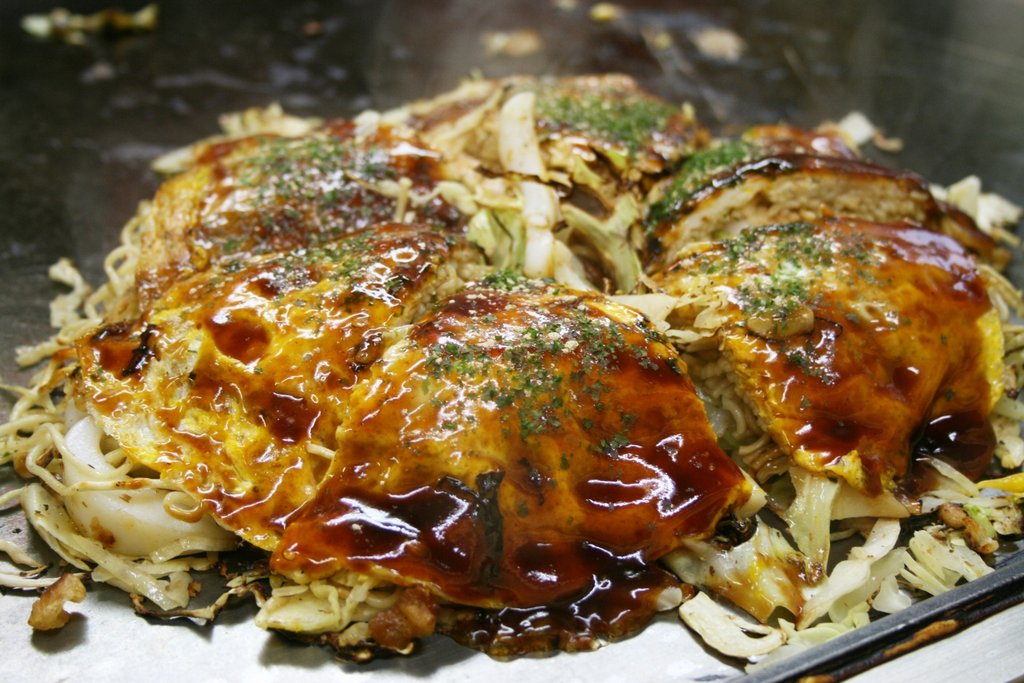
Eight signature dishes stand out as must-tries, and you can find them year-round.
The lineup spans konamon (flour-based dishes), kushikatsu (skewered and deep-fried ingredients), udon (wheat-flour noodles), and sweets. Each dish has its own character and recommended shops.
Even on a short visit, picking just a few dishes to try lets you experience Osaka’s food scene properly.
Takoyaki: The Icon of Konamon Culture
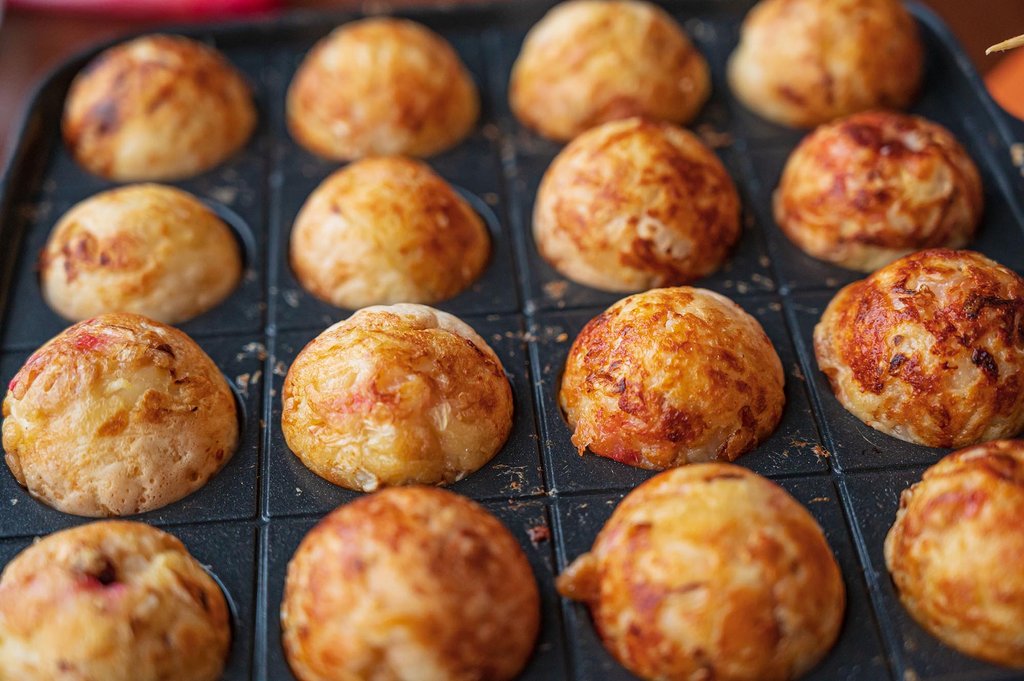
Takoyaki (ball-shaped savory snacks made from wheat-flour batter and stuffed with octopus) was born right here in Osaka. The secret to its great taste is in the batter itself, which is infused with dashi, a broth made from fish and kelp. Bite into one and you’ll experience a crisp shell wrapped around a soft, molten center.
For takoyaki that tastes authentic, head to Aizuya, which has been making takoyaki since 1935, when the shop’s founder adapted an earlier snack (called radio-yaki) into what became today’s takoyaki. While most places in Japan serve takoyaki covered in takoyaki sauce, at this restaurant they skip the sauce entirely—the dashi flavor does all the work.
A serving costs around ¥500 to ¥700 ($3 to $5 USD), and the KITTE Osaka branch is just a few steps from Osaka Station.
Details
| Address | KITTE Osaka B1F, 3-2-2 Umeda, Kita-ku, Osaka |
| Hours | 11 am–11 pm |
| Closed | Same as KITTE Osaka’s schedule |
| Website | https://www.aiduya.com/ |
| Best For | First-time foodies who prefer authentic flavors over photogenic presentation |
Okonomiyaki: A Savory Pancake Grilled to Order
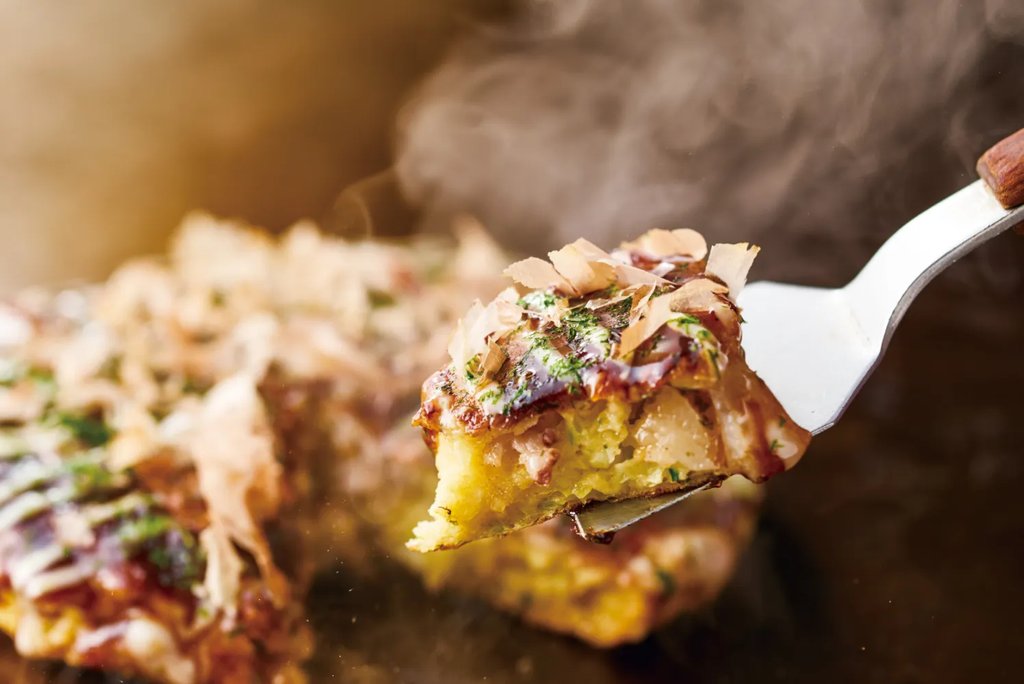
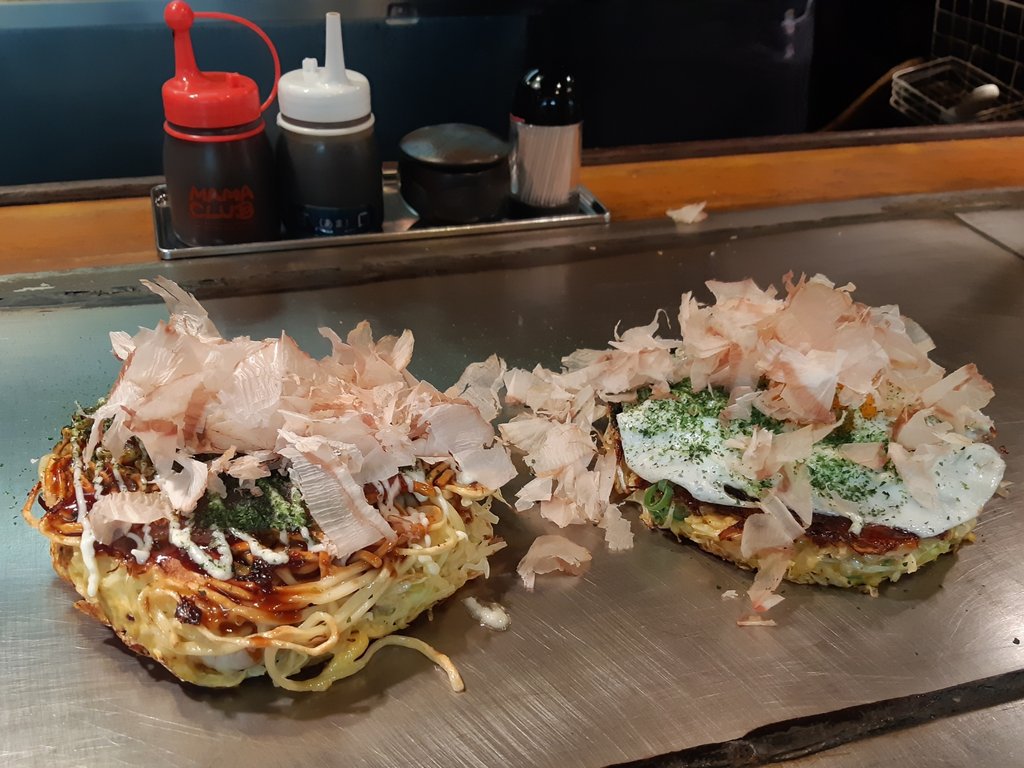
Okonomiyaki (a savory pancake packed with cabbage, pork, and other fillings) is about as ‘Osaka’ as it gets. Unlike Hiroshima-style okonomiyaki, which layers its ingredients, the Osaka version mixes everything into the batter before grilling. Watching the pancake sizzle on the iron griddle right in front of you is half the fun of eating this snack.
Chibo’s Dotonbori branch—in the city’s famous restaurant and entertainment district — occupies a six-floor building and is easy to walk into without a reservation. They also have English menus, plus vegan and halal-friendly options. The location is perfect for a sit-down break between sightseeing stops.
Details
| Address | 1-7-21 Dotonbori, Chuo-ku, Osaka |
| Hours | 11 am–11 pm (last order at 10:30 pm) |
| Closed | Open daily |
| Website | https://chibo.com/ |
| Best For | Travelers who want an English menu or vegan/halal-friendly food options |
Kushikatsu: Deep-Fried Skewers from About ¥100
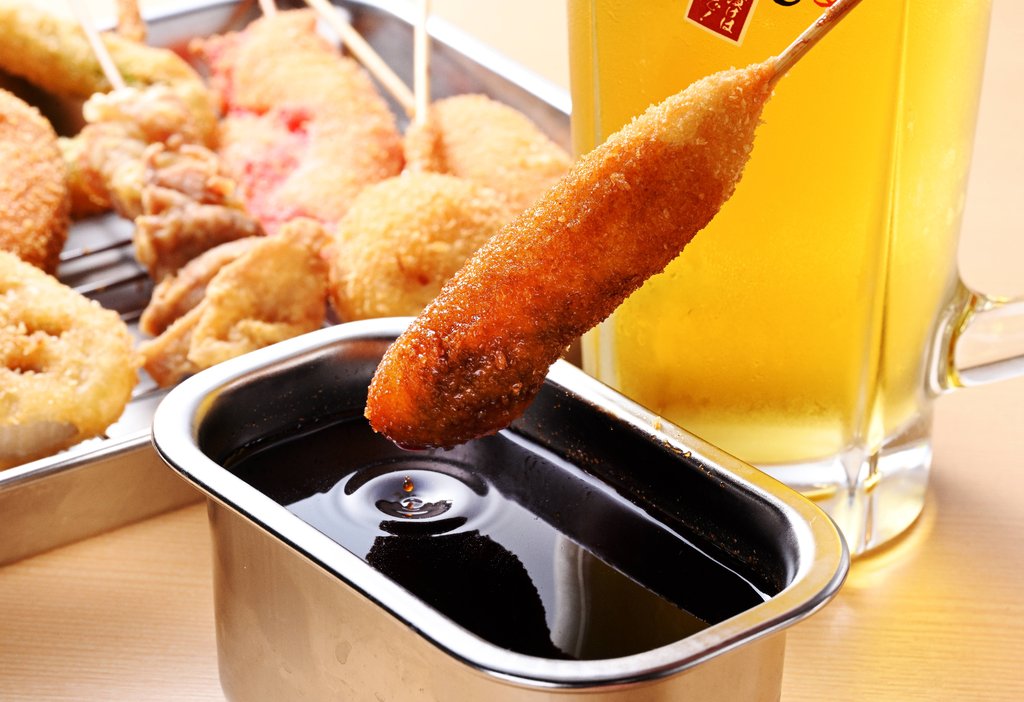
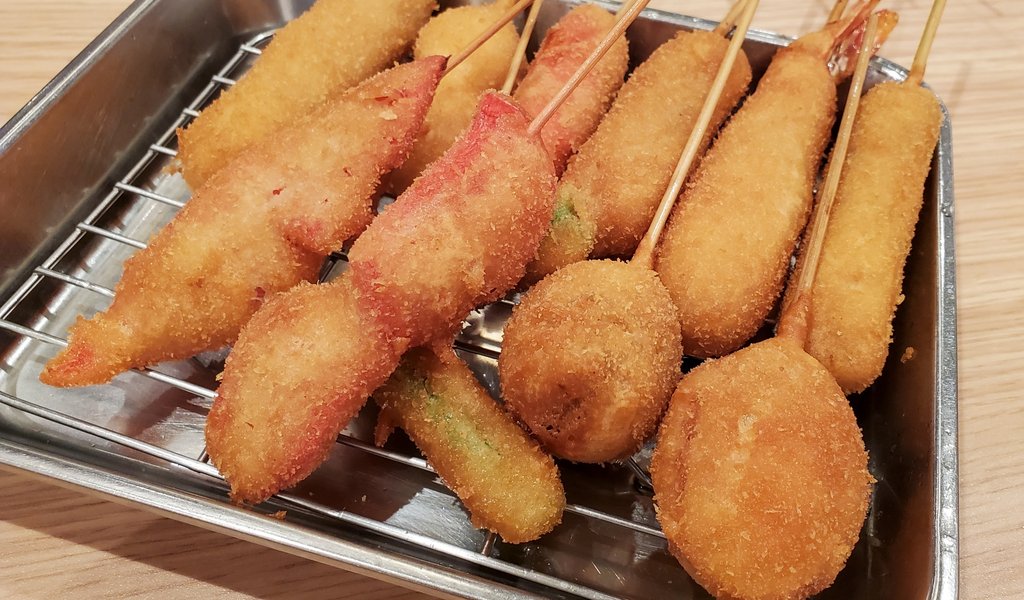
Kushikatsu got its start in Shinsekai. The idea is simple: bite-sized ingredients on skewers, battered, deep-fried, and dipped into a shared pot of sauce at the table. One rule to keep in mind: kushikatsu doesn’t allow double-dipping. Once a skewer has touched your lips, it can’t be dipped into the shared sauce again.
If you’ve already taken a bite but want more sauce on your skewer, take a piece of the complimentary cabbage and use it as a spoon. With skewers starting at about ¥100 (under $1 USD), you can sample a wide variety of ingredients in one sitting.
Ganso Kushikatsu Daruma in Shinsekai has multilingual menus, so ordering is no problem.
Details
| Address | 2-3-9 Ebisu-Higashi, Naniwa-ku, Osaka (Shinsekai main shop) |
| Hours | 11 am–10:30 pm (hours may vary by season) |
| Closed | Open year-round |
| Website | https://www.kushikatu-daruma.com/ |
| Best For | Visitors pairing kushikatsu with a visit to Tsutenkaku Tower |
Kitsune Udon: Kansai-Style Noodles with Sweet Fried Tofu
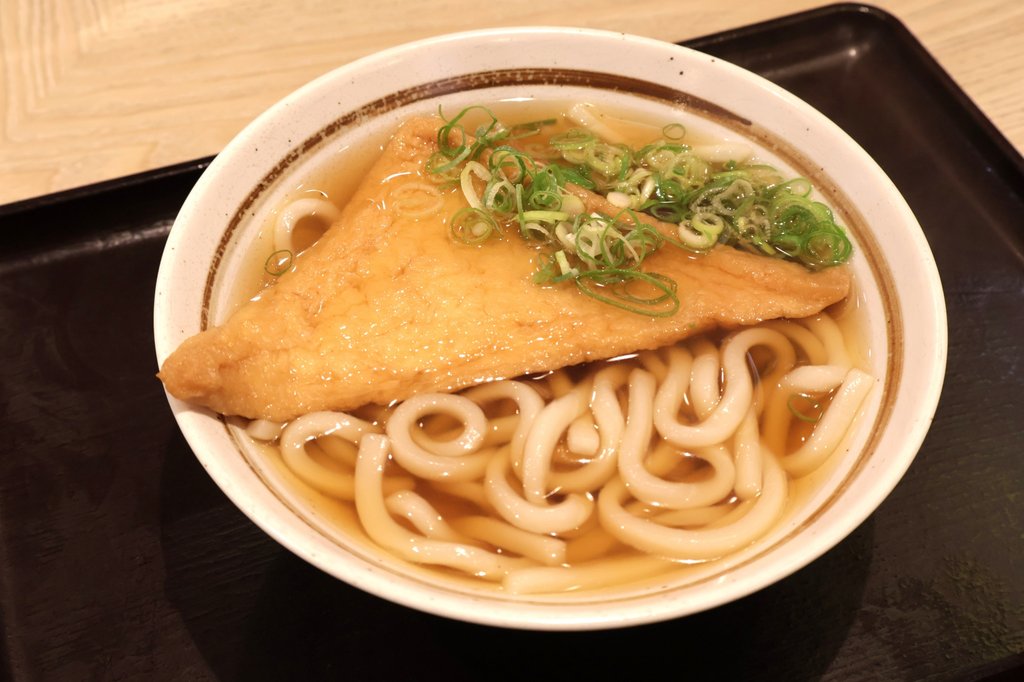
Kitsune udon is a noodle dish topped with abura-age (thinly sliced deep-fried tofu) simmered in a sweet broth. The Kansai-style broth is made with kelp and bonito flakes, resulting in a pale, delicate soup. The light flavor works as a reset button between heavier dishes.
Usamitei Matsubaya has been around since 1893. It’s where kitsune udon was born and they’ve stuck to the original recipe for over 130 years. It’s a short walk from Shinsaibashi, too, so you can easily slot a visit to this establishment into a day of shopping.
Details
| Address | 3-8-1 Minamisenba, Chuo-ku, Osaka |
| Hours | 11 am–4 pm (closes when sold out) |
| Closed | Sundays and public holidays |
| Website | None |
| Best For | Travelers curious about the origins of Osaka’s food culture; anyone looking for a lighter meal between heavier dishes |
Ikayaki: A Pressed Flour-and-Squid Griddle Snack
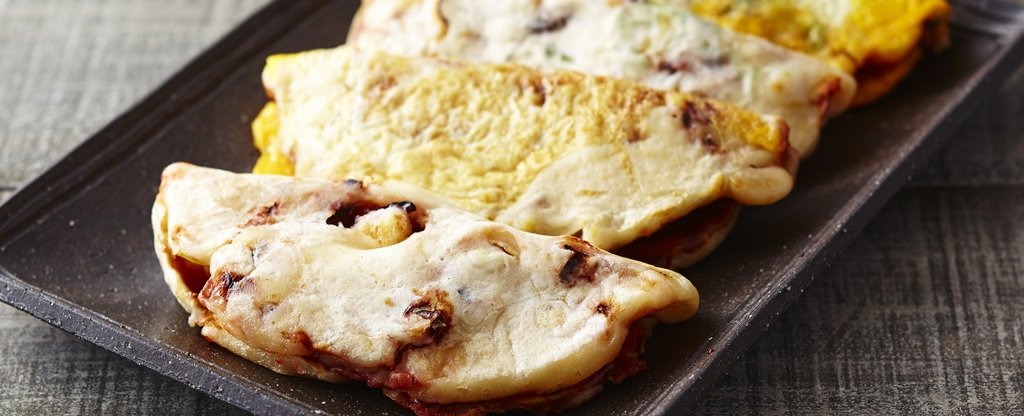
Ikayaki is one of Osaka’s original street snacks: squid folded into a wheat-flour batter, then pressed and grilled on a hot iron plate. Locals have loved it for decades, though it flies under the radar compared to takoyaki.
The batter includes grated yam, and a special press gives it a chewy, elastic texture. At around ¥200 ($1.50 USD) per piece, the sweet-savory sauce and the springy bite of squid hit just right.
Hanshin Umeda has kept customers lining up for its ikayaki for more than 60 years.
Details
| Address | Snack Park, B1F, Hanshin Umeda Main Store |
| Hours | 10 am–10 pm (same as building hours) |
| Closed | Same as Hanshin Umeda Main Store |
| Website | https://catalog.hankyu-hanshin-dept.co.jp/hankyu/brand/ |
| Best For | Anyone near Umeda who wants a quick taste of konamon culture |
Butaman: Juicy Steamed Pork Buns
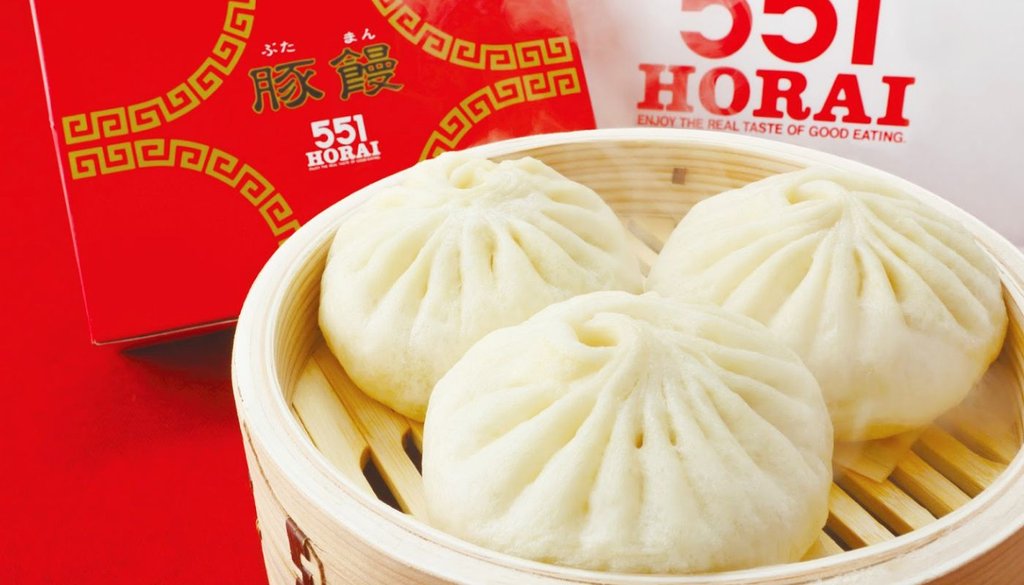
Butaman are steamed buns filled with seasoned pork and onion. Bite into a fresh one and hot, savory juice bursts out.
The main store of 551 Horai, on the Ebisubashi-suji shopping street, is about a minute’s walk from Namba Station. Locals usually grab a hot pork bun on the ground floor and eat it as they walk through the shopping arcade.
Chilled pork buns make great souvenirs—re-steam them at your hotel or lodgings and you can savor the taste of Osaka for a day or two after you’ve left the city.
Details
| Address | 3-6-3 Namba, Chuo-ku, Osaka |
| Hours | 10 am–9:30 pm (main store takeout counter) |
| Closed | 1st and 3rd Tuesdays (in December, closed only on December 31) |
| Website | https://www.551horai.co.jp/ |
| Best For | Travelers combining snack stops with souvenir shopping |
Kaiten-zushi: Fresh Sushi at Reasonable Prices
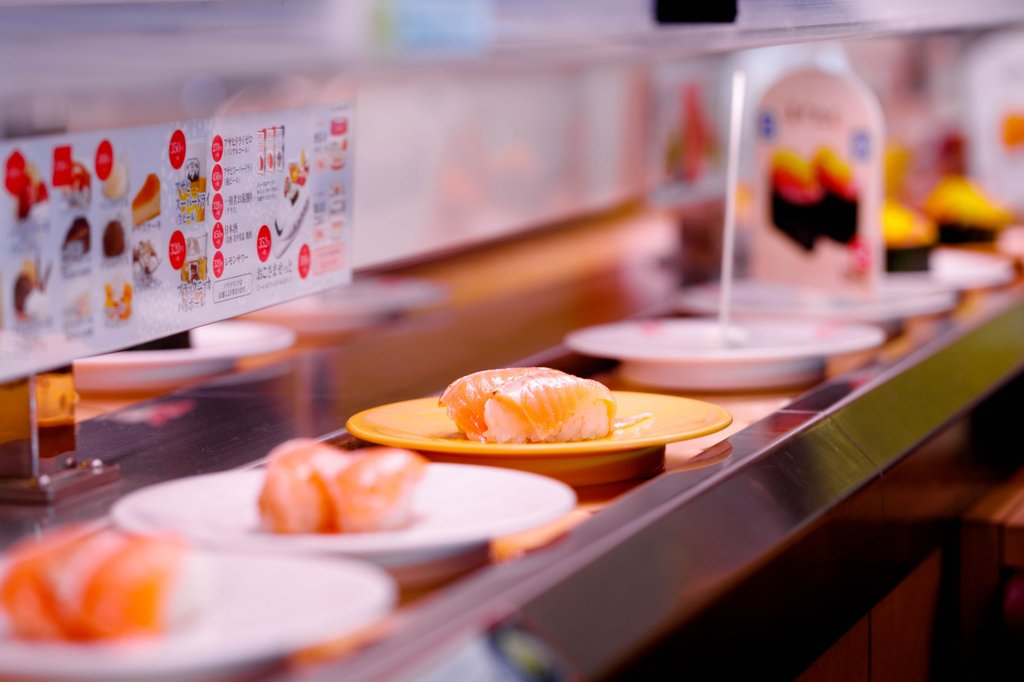
Kaiten-zushi (conveyor-belt sushi) was born in Osaka in 1958. Because you can see every plate as it glides by, it’s one of the easiest ways to order sushi if you’re new to Japan.
Head to Genrokuzushi, where it all started—single plates of sushi start at just ¥100 (under $1 USD). The giant tuna-nigiri sign out front is also a hit on social media. When you eat here, you’re literally eating a piece of Osaka’s food history.
Details
| Address | 1-12-1 Ajiro, Higashi-Osaka, Osaka |
| Hours | Weekdays 11:15 am–10 pm; Sat/Sun/Holidays 10:45 am–10:15 pm |
| Closed | Open year-round |
| Website | http://www.mawaru-genrokuzusi.co.jp/ |
| Best For | Families, visitors curious about the origin of conveyor-belt sushi, and anyone hunting for a good photo spot |
Cheesecake: A Fluffy Osaka Sweet
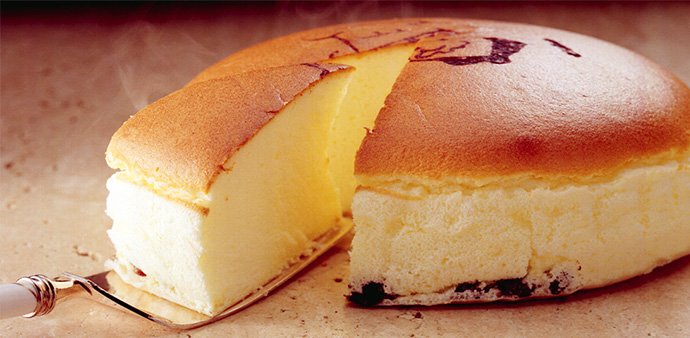
Rikuro Ojisan’s freshly baked cheesecake is one of the things every Osaka visitor takes home with them. This shop uses Danish cream cheese in their cakes and bakes them in small batches throughout the day, so every cake comes out fresh.
The cheesecake melts in your mouth, with raisins at the base adding a gentle accent. The cakes keep for three days in the fridge, and they travel well. The main shop in Namba has a cafe that doubles as a nice rest stop, too.
Details
| Address | 3-2-28 Namba, Chuo-ku, Osaka (inside Ebisubashi-suji Shopping Street) |
| Hours | 9:30 am–9:30 pm (baking times vary) |
| Closed | Irregular |
| Website | https://www.rikuro.co.jp/ |
| Best For | Dessert lovers and travelers looking for affordable souvenirs |
Seasonal Specialties: Dishes Worth Timing Your Visit For
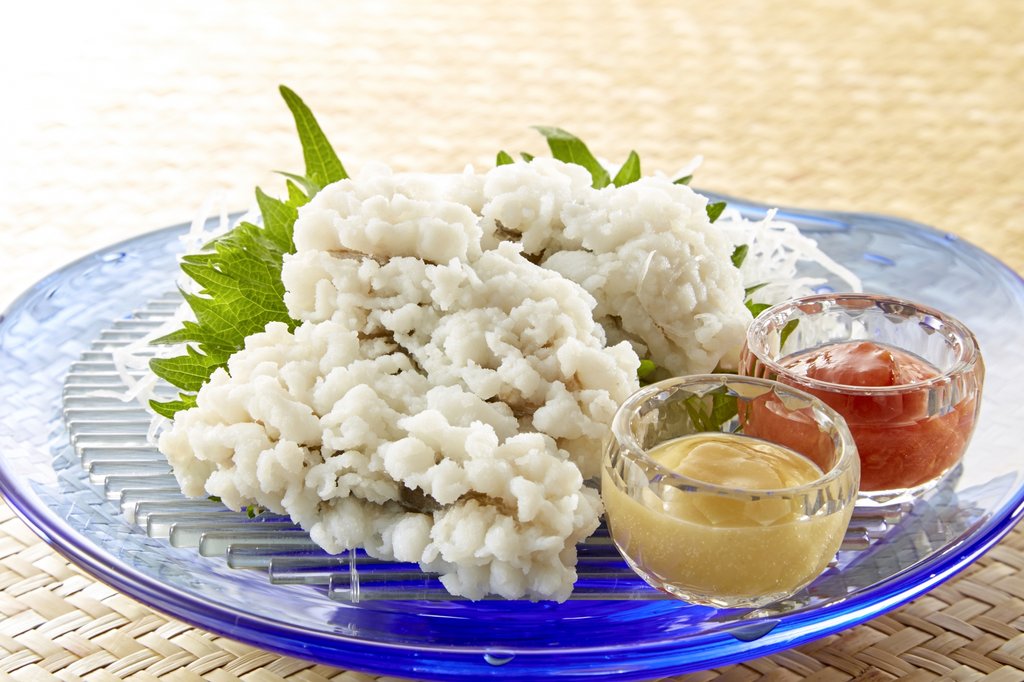
Osaka cuisine also shines with seasonal delicacies. Each season has its star: spring brings special wagashi (traditional Japanese sweets), summer is all about hamo (pike conger eel), autumn delivers matsutake mushrooms and newly-harvested rice, and winter is famous for fugu (pufferfish). Time your trip right and you’ll be able to taste dishes you won’t find at any other time of year.
Spring (March to May): Sakura Mochi and Strawberry Daifuku
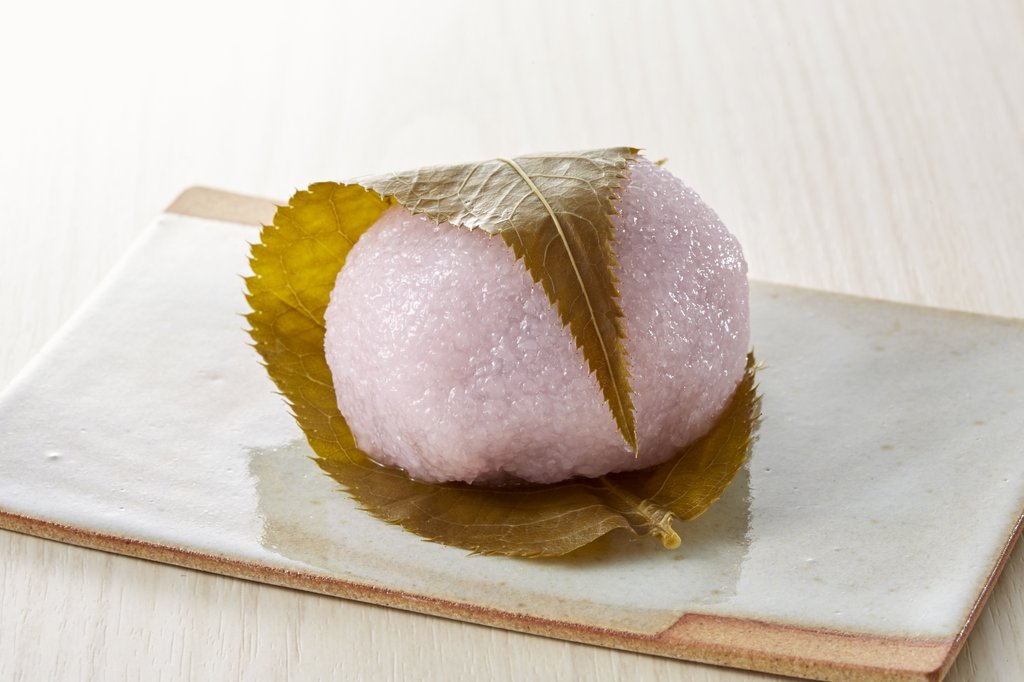
In spring, confectionery shop windows fill up with seasonal treats. Sakura mochi (rice cakes wrapped in a pickled cherry blossom tree leaf) and ichigo daifuku (rice cakes stuffed with a strawberry and sweet red bean paste) are just two of the souvenirs you can pick up at this time of year.
Tsuruya Hachiman has been making sweets since 1863, and it’s worth stopping by before a day of cherry blossom viewing. The shop specializes in artistic, hand-crafted seasonal sweets and won’t disappoint.
A few seasonal pieces from Tsuruya Hachiman are the perfect finishing touch to a day under the cherry blossom trees. Go in the morning for the best selection.
Details
| Address | 4-4-9 Imabashi, Chuo-ku, Osaka |
| Hours | 8:30 am–7 pm (weekends and holidays 8:30 am–5 pm) |
| Closed | No regular closing day (the in-store tea room is closed on weekends and holidays) |
| Website | https://www.tsuruyahachiman.jp/ |
| Best For | Wagashi enthusiasts, families, and souvenir shoppers |
Summer (June to August): Hamo Dishes
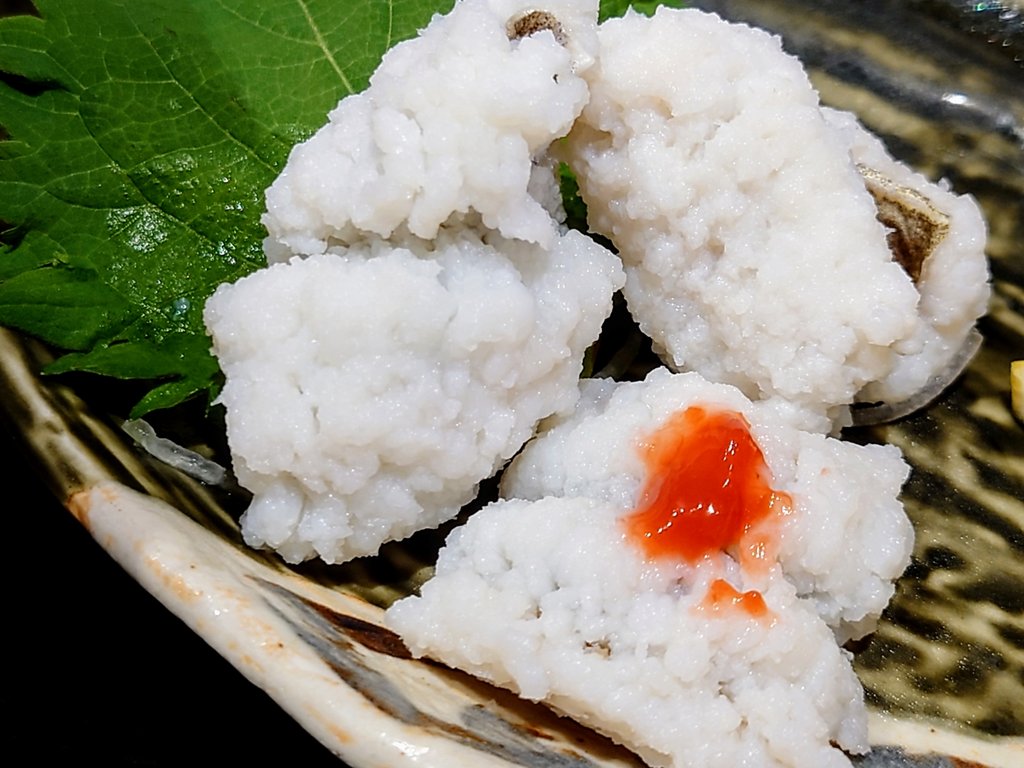
Hamo is a prized summer delicacy in the Kansai region, its peak season lasting from June through August. The hardiness of the eel made it one of the few fish that could reach landlocked Osaka fresh in the old days. Hamo also plays a role in Tenjin Matsuri, one of Osaka’s most famous summer festivals.
Each preparation highlights a different side of the fish. At Kuromon Sanpei in Kuromon Market, you can try proper hamo dishes in a casual eat-in setting.
Details
| Address | 1-22-25 Nipponbashi, Chuo-ku, Osaka |
| Hours | 9 am–5 pm (may vary by season) |
| Closed | Irregular |
| Website | https://kuromon-sanpei.co.jp/ |
| Best For | Foodies and international visitors who want to experience market culture |
Autumn (September to November): Matsutake, New Rice, and Pacific Saury
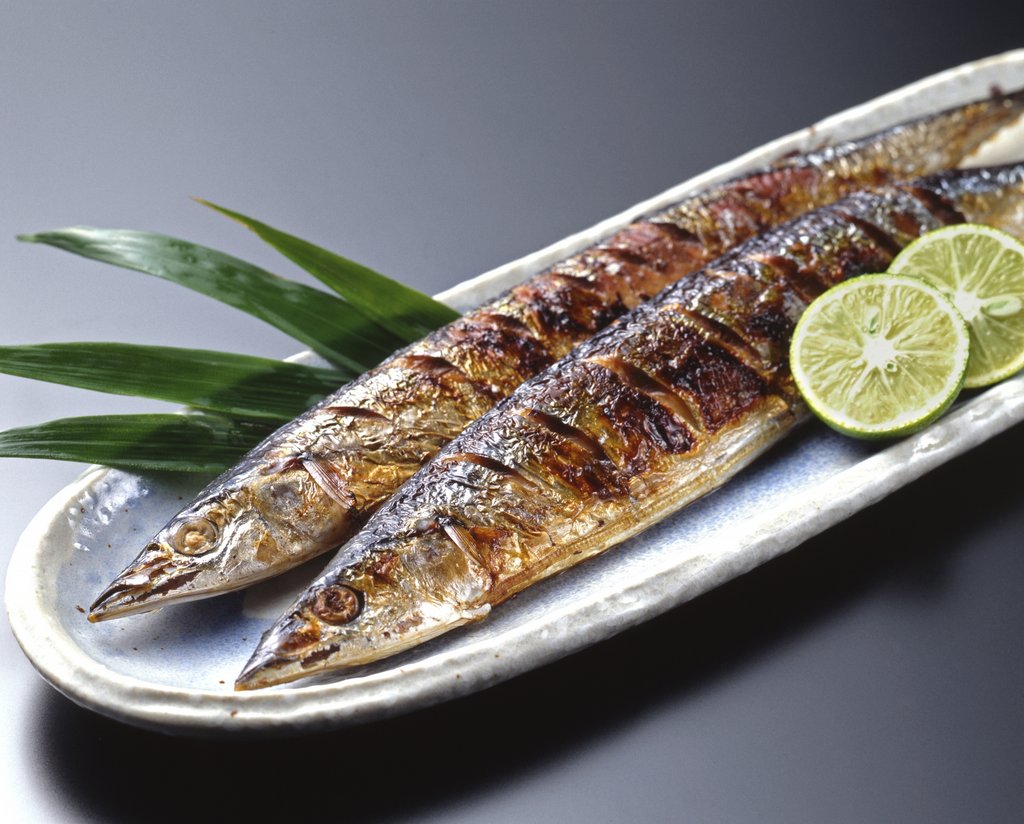
Autumn in Osaka showcases a number of ingredients. From mid-September, matsutake mushrooms show up in markets—and they pair beautifully with freshly harvested rice. Pacific saury, plump with seasonal oils and grilled with salt, is another autumn favorite.
Fukahiro, a fishmonger in Kuromon Market since 1905, stocks a wide range of seasonal seafood. They also serve kaisendon (seafood rice bowls) in-store, so you can taste flavors only available in autumn.
Details
| Address | Kuromon Market, Chuo-ku, Osaka |
| Hours | 9 am–4 pm |
| Closed | Irregular |
| Website | https://fukahiro-shop.jp/ |
| Best For | Seafood lovers and travelers who want to feel the energy of a local market |
Winter (December to February): Fugu Dishes
Osaka eats more fugu (pufferfish) than any other prefecture in Japan, and locals treat it as the king of winter cuisine. The local food culture even has its own vocabulary surrounding this delicacy: fugu sashimi is called tessa, and fugu hot pot is called tecchiri. Expect paper-thin tessa, umami-rich tecchiri, and fugu deep-fried as crispy karaage—the three most common preparations of the fish.
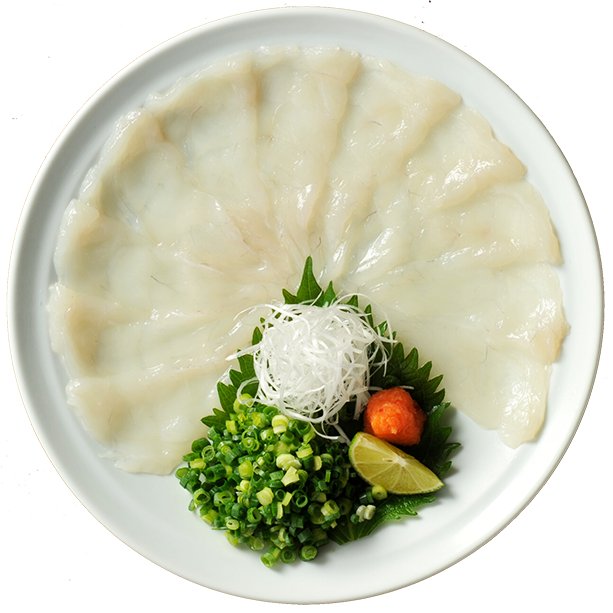
Genpin Namba, near Namba Station, offers tiger fugu meal courses at reasonable prices. With multilingual menus, ordering is easy.
Details
| Address | 1F, Soemoncho Daiichi Building, 5-26 Soemoncho, Chuo-ku, Osaka |
| Hours | Weekdays 5 pm–10:30 pm; Weekends/Holidays 12 pm–3 pm and 5 pm–10:30 pm |
| Closed | Open year-round |
| Website | https://www.tettiri.com/ |
| Best For | Travelers who want an affordable yet luxurious meal; fugu first-timers; international visitors |
The Four Major Food Districts in Osaka
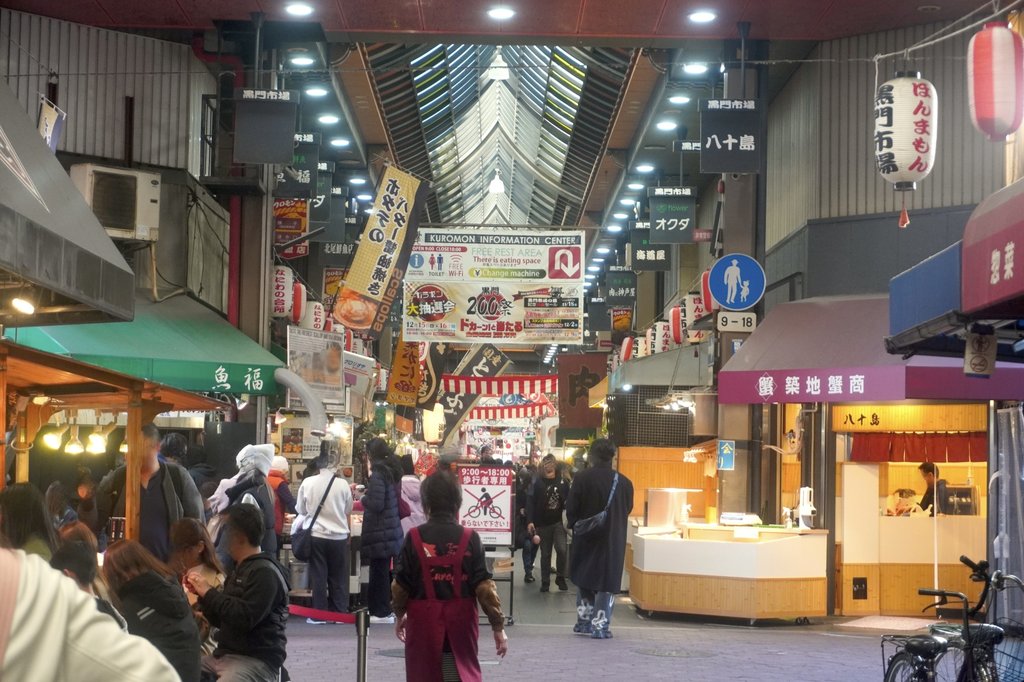
Once you know what to eat, the next question is where to eat it.
Osaka has several food districts, each with its own atmosphere and signature dishes. Four of them stand out, and if you’re short on time, knowing which to prioritize helps.
Dotonbori: The Main Stage of Neon-Lit Street Food
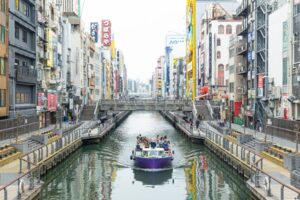
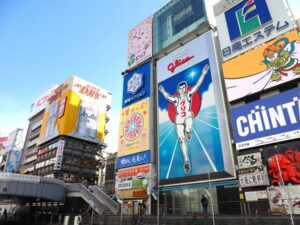
Dotonbori packs Osaka’s most iconic foods into a 600-meter (about 1,970-foot) stretch. The giant 3D signs make it as much a photo spot as a food stop.
Most restaurants operate from around 11 am to 11 pm and accept walk-ins. Expect to spend ¥1,000 to ¥3,000 ($7 to $20 USD) per meal. Peak hours mean long lines, with weekday afternoons (2 pm to 4 pm) being the calmest window.
Plan on spending 1.5 to 2 hours here to cover the main attractions.
Details
| Address | Near 1-chome Dotonbori, Chuo-ku, Osaka |
| Hours | Vary by shop (most open 11 am–11 pm) |
| Closed | Varies by shop (many open year-round) |
| Website | http://www.dotonbori.or.jp/ja/ |
| Best For | First-time Osaka visitors who want to tick off all the food classics in one go |
Shinsekai: The Old-Town Birthplace of Kushikatsu
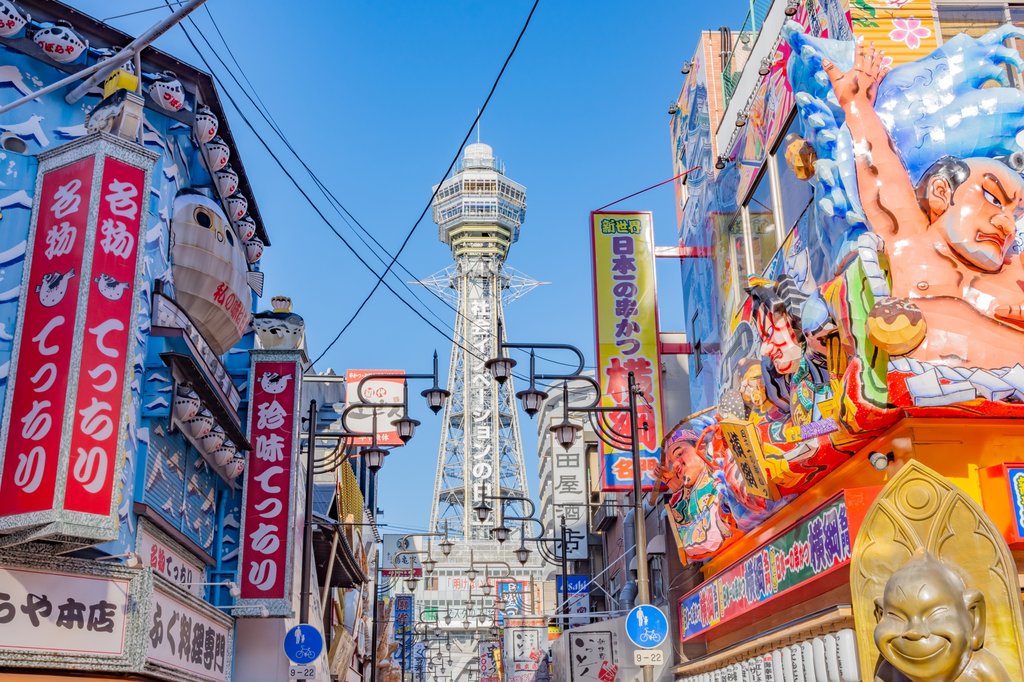
Shinsekai still has that old-town feel, with Tsutenkaku Tower anchoring the retro streetscape. The biggest reason to come? Kushikatsu. This is the birthplace of this famous snack food.
Double-dipping a skewer is frowned upon for hygienic reasons, since the sauce bowl is shared. Jan-Jan Yokocho is packed with small, family-run shops—expect to spend between ¥1,500 and ¥3,000 ($10 to $20 USD) here.
Combine Shinsekai with a sumo performance for an efficient, yet enjoyable, half-day.
Details
| Address | Near Ebisu-Higashi, Naniwa-ku, Osaka |
| Hours | Vary by shop (most open 11 am–11 pm) |
| Closed | Varies by shop |
| Website | https://shinsekai.net/ |
| Best For | Travelers who want to enjoy a retro atmosphere while eating kushikatsu |
Kuromon Market: The 580-Meter “Kitchen of Osaka”
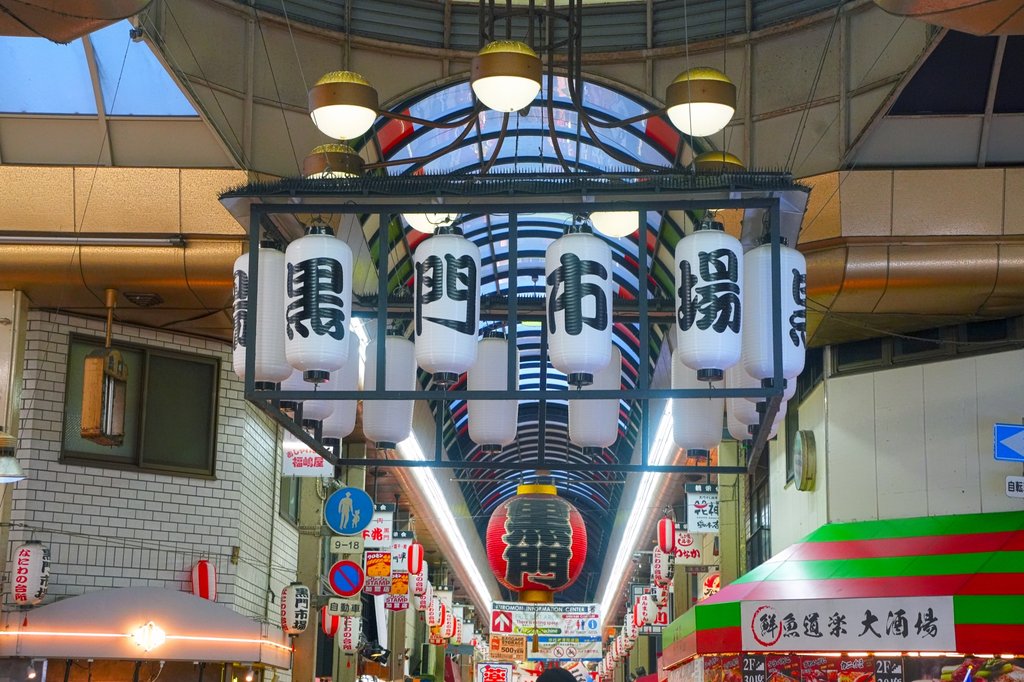
Kuromon Market is a fresh-food market often called “Osaka’s Kitchen.” Fishmongers fill most of the stalls, and local chefs come here for their ingredients.
Seafood rice bowls and seasonal fruit typically run from ¥500 to ¥2,000 ($3 to $14 USD). Hours vary by stall, though most operate between 10 am and 5 pm. Arrive before 10 am to beat the crowds.
Details
| Address | Near 2-chome Nipponbashi, Chuo-ku, Osaka |
| Hours | Vary by stall (typically 9 am–5 pm) |
| Closed | Varies by stall (some close on Sundays/holidays) |
| Website | https://www.kuromon.com/ |
| Best For | Travelers seeking fresh seafood and seasonal fruit to munch on |
Ura-Namba: The Standing Bar Scene
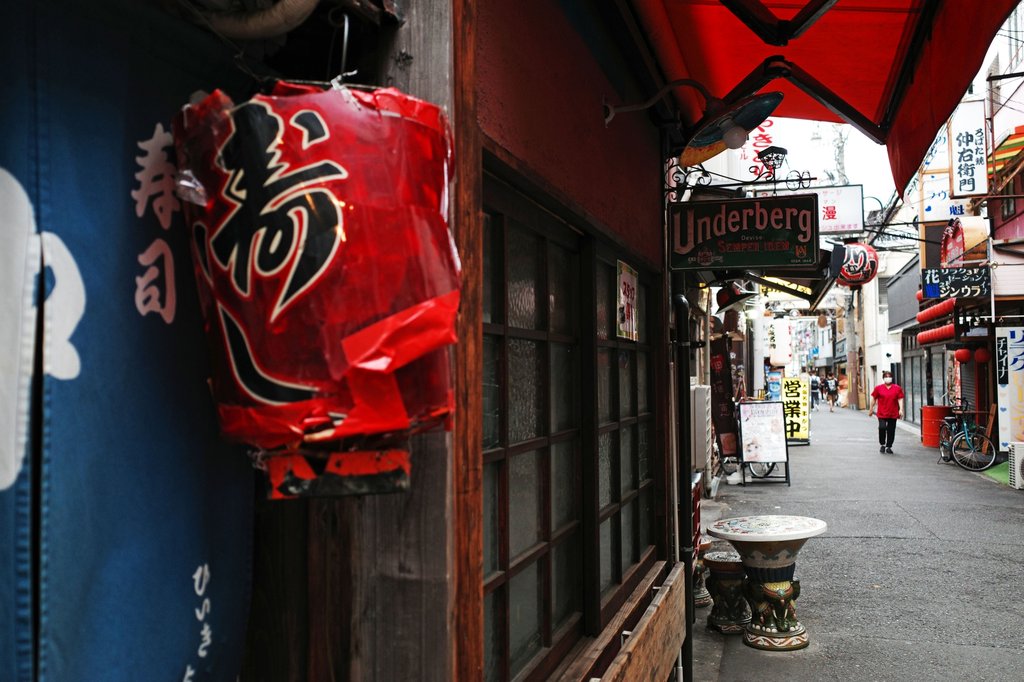
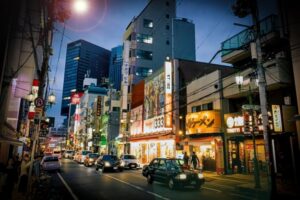
Ura-Namba comes alive after dark. The district is packed with small, independent tachinomi izakaya (bars where you eat and drink at a counter while standing).
Most shops open in the late afternoon and run until 11 pm or midnight. Plan on spending ¥1,000 to ¥3,000 ($7 to $20 USD) in total for food and beverages. Locals order small plates and hop between several shops, so feel free to follow their lead. We recommend keeping a translation app ready.
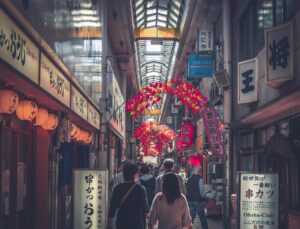
Details
| Address | Near Namba Sennichimae, Chuo-ku, Osaka |
| Hours | Vary by shop (most open late afternoon to 11 pm or midnight) |
| Closed | Varies by shop |
| Website | — |
| Best For | Night owls who want a local stand-and-drink experience |
Techniques for Eating Osaka’s Food Like a Local
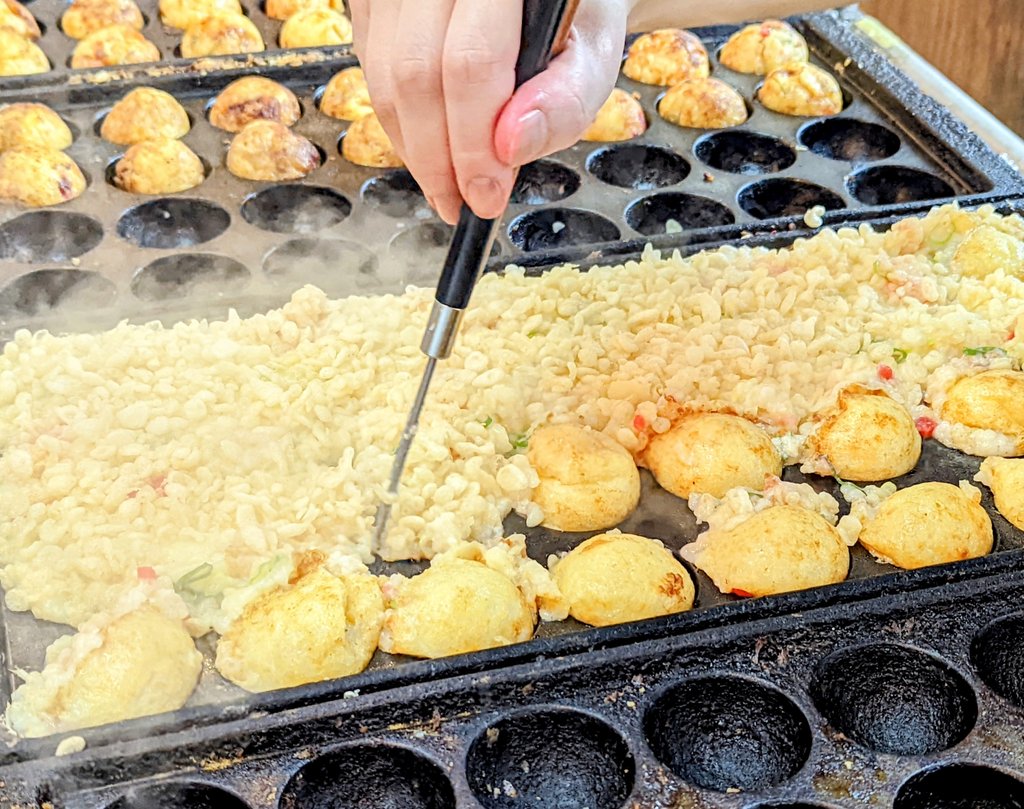
Worried about eating unfamiliar foods the “right” way? You’re not alone. Three dishes in particular have their own etiquette: kushikatsu, takoyaki, and kaiten-zushi. Learning a few customs will make every meal smoother—and more fun.
Kushikatsu: Use Cabbage to Scoop Sauce onto Your Skewer
Since the sauce is shared and double-dipping isn’t allowed, try using the complimentary cabbage as a spoon if you want more sauce mid-meal. This way you get more sauce on your skewer without dipping the used end back into the communal sauce bowl. Cabbage also works as a palate cleanser between rich, fried bites. Once you’ve got the rhythm down, kushikatsu’s a breeze.
Takoyaki: Let It Cool, Then Eat with Toothpicks
Fresh takoyaki comes out scorching hot—waiting about 30 seconds before eating them makes a real difference. The balls are soft and easy to break, so toothpicks work better than chopsticks.
Stick two toothpicks in and slightly apart and the ball stays put on the way to your mouth. A short cool-down plus the two-toothpick trick is perfect for walking and eating. Just watch how the locals do it and you’ll pick it up fast.
Kaiten-zushi: Dip the Topping Side, Not the Rice
Dip the rice side straight into soy sauce and the shari (vinegared rice) will fall apart. Instead, tilt the sushi sideways and lightly dip only the topping in sauce. For sushi wrapped in a strip of seaweed, use a piece of sweet pickled ginger to brush soy sauce onto the topping.
Here are a few other points to keep in mind:
- Grab plates from the belt, or order through the touchscreen device at your table
- Plate colors indicate the price of the dish—check the chart on the wall for prices
- Stack your empty plates so staff can count them at checkout
- Don’t separate the topping from the rice—it’s considered poor manners
Common Questions About Eating in Osaka
Here are quick answers to the questions travelers ask most before heading to Osaka.
What Should I Eat First on My First Trip to Osaka?
Start with takoyaki—it’s quick, easy, and perfect for when you’re on the move. The suggested city route below hits the three most iconic dishes in a single afternoon:
| Order | Dish | Area | Price Range |
|---|---|---|---|
| First | Takoyaki | Dotonbori | ¥500–¥700 |
| Second | Okonomiyaki | Near Dotonbori | ¥700–¥1,000 |
| Third | Kushikatsu | Shinsekai | ¥100–¥200 per skewer |
Start light with takoyaki, take a proper sit-down for okonomiyaki, and finish the evening with kushikatsu—a classic plan for enjoying Osaka’s food scene.
Which Osaka Dishes Work for People Who Avoid Raw Fish or Spicy Food?
Konamon dishes and kushikatsu are fully cooked and generally mild—they work for most palates. Doteyaki (beef tendon simmered in sweet miso) is also on the sweeter side.
More and more shops now offer vegan and gluten-free options. If you have allergies, confirm ingredients in advance. Also, the camera function on most translation apps can decode menus in seconds.
How Much Should I Budget for Food in Osaka?
Budget ¥2,000 to ¥4,000 ($14 to $27 USD) per meal and you’ll eat well. Around ¥6,000 ($40 USD) covers a full day of food.
| Dish | Typical Price |
|---|---|
| Takoyaki (one tray) | ¥500–¥1,400 |
| Okonomiyaki (one serving) | ¥800–¥1,500 |
| Kushikatsu (one skewer) | ¥100–¥250 |
| Kitsune udon (one bowl) | ¥400–¥700 |
A day of food-tasting usually costs ¥1,000 to ¥2,000 ($7 to $14 USD), while sit-down meals run from ¥2,000 to ¥3,000 ($14 to $20 USD).
Which Osaka Dishes Are Good for Takeaway or Souvenirs?
The two classics are 551 Horai’s steamed pork buns and Rikuro Ojisan’s cheesecake.
| Transportation Method | Key Points |
|---|---|
| Shinkansen | No restrictions on travelling with food; be mindful that pork buns have a strong aroma |
| Domestic flights | Processed foods are allowed in luggage; cold items travel best in insulated bags |
Pork buns keep for two days in the fridge, while cheesecake is best eaten the day you buy it. Grab a cooler bag with ice packs at the store to keep refrigerated items properly chilled.
Are There Food Tours That Make It Easier to Explore Osaka Efficiently?
Guided tours take the guesswork out of choosing shops and getting around the language barrier.
| Comparison Point | Food Tour | Independent Exploration |
|---|---|---|
| Efficiency | Around 5–7 dishes across multiple shops in three hours | Time lost to lines and research |
| Language | English-speaking guide included | English menus are not guaranteed |
| Discovery | Access to lesser-known local spots | Tendency to gravitate toward famous shops |
A three-hour tour covering about five notable shops is the most popular format. Book your dates well in advance, especially during peak seasons.
Plan Your Own Osaka Food Journey
From year-round classics to seasonal rarities, Osaka rewards curious eaters all year long. Each food district has its own personality, and authentic flavors are available at affordable prices. Use this guide as your starting point and build the Osaka food plan that fits your trip.