Day Trip to Osaka From Kyoto: Model Courses for History, Culture, and Food
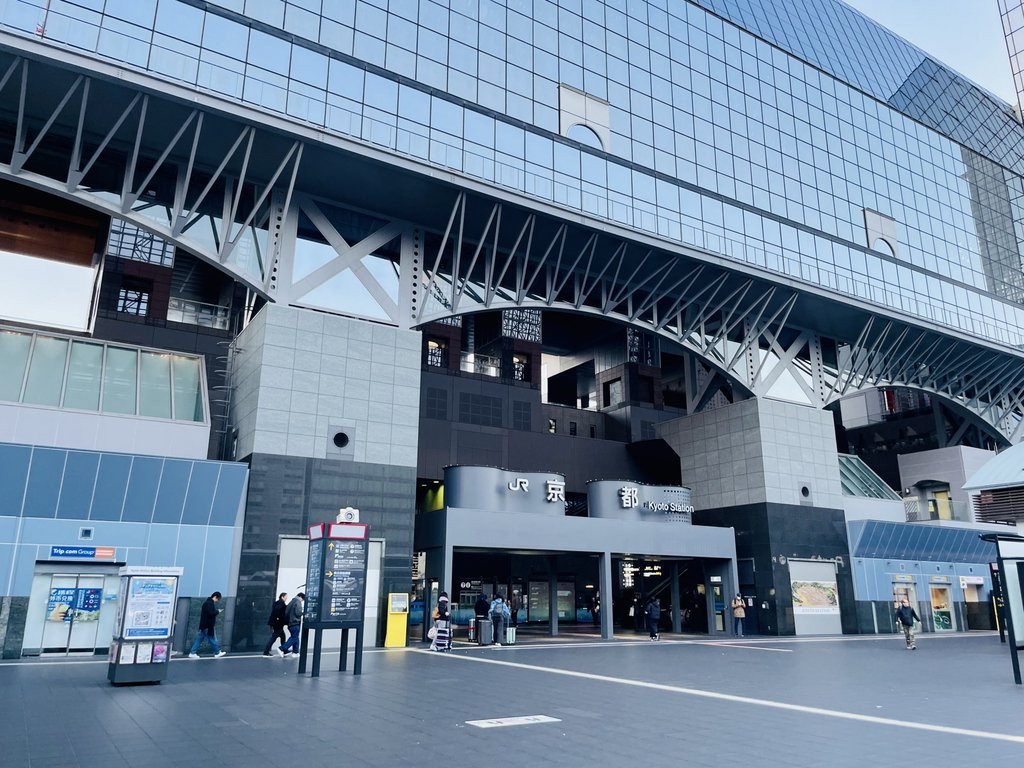
Planning a day trip from Kyoto to Osaka? The biggest question is usually how to cover the most ground in a limited window. The right approach shifts depending on when you leave and what you want most from the day.
Below you’ll find three model courses organized by departure time, each laid out as a clear hour-by-hour flow. Plans cover history, cultural experiences, and a food-focused route, so there’s a fit for different travel styles.
Having the day’s rhythm in mind ahead of time cuts down on wasted travel between stops and keeps the schedule easy to follow. Pick the course that matches what you want most from the trip.
Contents
- Osaka Day Trips From Kyoto by Departure Time
- 7 am Departure: A Model Course for Osaka History
- 9 am: Osaka Castle Park, Castle and Stone Walls
- 11 am: Lunch With Osaka Classics in Tennoji
- 12:30 pm: Shitennoji, Japan’s Oldest State-Sponsored Buddhist Temple
- 2:30 pm: Sumiyoshi Taisha, Head Shrine of Japan’s 2,300 Sumiyoshi Shrines
- 5 pm: A British-Style Tea Room Break at Kitahama Retro
- 6:30 pm: Nakanoshima Light-Up Viewing
- 8:30 am Departure: A Model Course for Cultural Experiences in Osaka
- 10 am Departure: A Model Course for Osaka Food on Foot
- How to Make a Kyoto-to-Osaka Day Trip Run Smoothly
- Common Questions About a Kyoto-to-Osaka Day Trip
- Turn One Day in Osaka Into a Full Trip
Osaka Day Trips From Kyoto by Departure Time
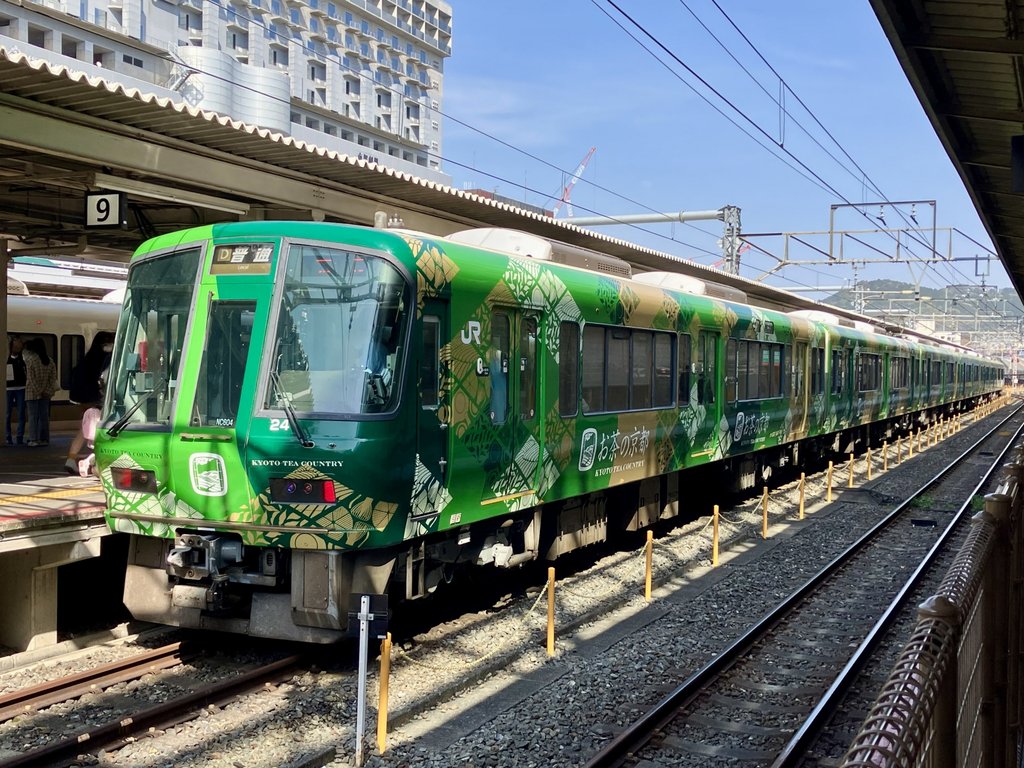
What you can fit into a Kyoto-to-Osaka day trip depends heavily on when you start. Below are three specialized model courses, with departures at 7 am, 8:30 am, and 10 am.
Here’s a summary of each plan’s focus and ideal traveler profile. Match the course to the theme of your trip.
7 am Departure: A Full Day of Osaka History
Leave Kyoto at 7 am and you’ll reach Osaka before 9 am.
The Osaka Castle Main Tower opens at 9 am. Just after opening, the crowds haven’t arrived yet, so you’ll have time to photograph the stone walls and main tower at your own pace.
Starting from Osaka Castle, you can loop through historic sites like Shitennoji Temple and Sumiyoshi Taisha Shrine comfortably in one day. That leaves the evening open for Nakanoshima’s historic Western-style architecture and its light-up.
Some experiences require advance booking, so check ahead. A detailed hour-by-hour plan follows in the next section.
8:30 am Departure: A Deeper Dive Into Osaka Culture Through Experiences
If you want to engage with Osaka culture firsthand, this plan is for you. Leave Kyoto at 8:30 am and you’ll make it in time for morning experience programs.
More and more English-language programs for sado (the Japanese tea ceremony, known as “the way of tea”), takoyaki (a grilled dish of wheat batter with fillings shaped into round balls) making, and sumo viewing are popping up. Whisking your own matcha (powdered green tea) or cooking takoyaki from scratch makes for a memorable activity.
These programs typically require advance booking and run about 1.5 to 2 hours. Popular time slots fill up fast, so book as soon as you’ve locked in your itinerary. Cancellation policies vary by facility.
10 am Departure: A Food-Focused Walk Through Osaka
If you want a relaxed hotel breakfast in Kyoto before heading out, the 10 am departure works well. The plan leans into Osaka’s kuidaore (literally “to eat oneself into ruin”—Osaka’s famous food obsession) culture with a half-day food-focused route.
Leave at 10 am and you’ll arrive in Osaka just before noon—right when Kuromon Market is at its liveliest.
Lunch centers on kaisen-don (a bowl of rice topped with fresh seafood) and Kobe beef skewers at Kuromon Market. The afternoon moves to Shinsekai for kushikatsu (skewered meat and vegetables, battered and deep-fried). The evening wraps up in Dotonbori with a side-by-side tasting of takoyaki and okonomiyaki (a savory grilled pancake with mixed-in ingredients).
This plan works well for:
- Food lovers who put meals above sights
- Travelers who prefer a slower morning at the hotel
- Anyone drawn to the neon of Dotonbori and the Showa-era (mid-20th century Japan) nostalgia of Shinsekai
Here’s the full step-by-step route.
7 am Departure: A Model Course for Osaka History
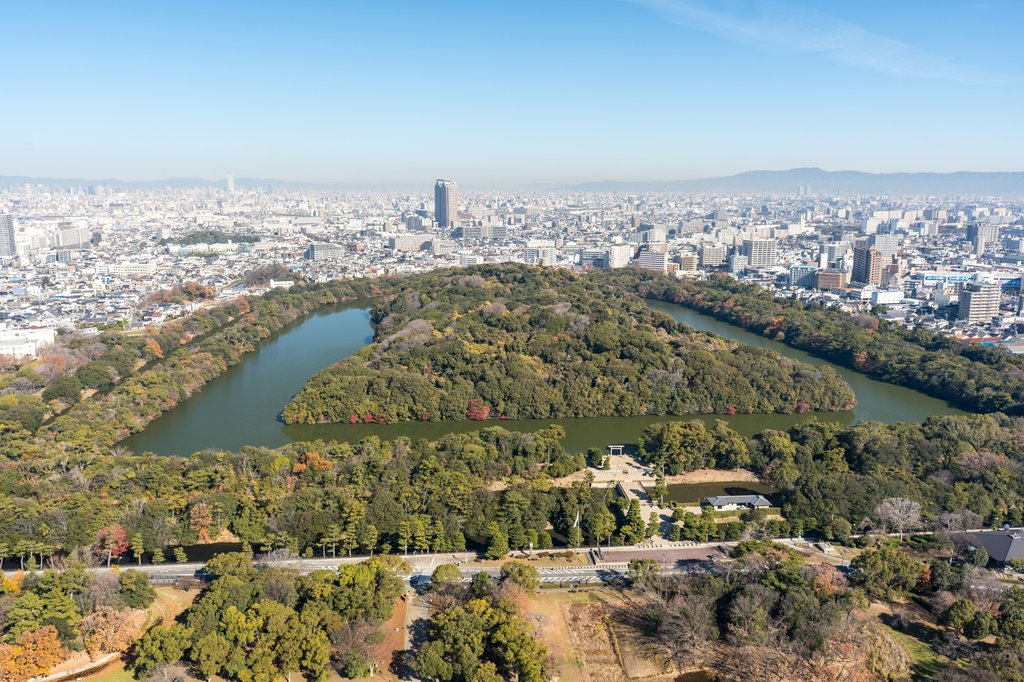
Osaka holds on to a wealth of historic architecture. Here’s a full-day route that leaves Kyoto at 7 am and threads through the key historic sites.
You’ll see time allocations for a morning castle visit, afternoon temple and shrine visits, and an evening light-up.
Planning the flow in advance cuts down on wasted travel time and leaves more energy for the visits themselves.
9 am: Osaka Castle Park, Castle and Stone Walls
From Kyoto Station, the JR Special Rapid reaches Osaka Station, where the Osaka Loop Line continues to Osakajokoen Station in about 30 minutes. A five-minute walk from the station leads to the park entrance.
Catch the 7:30 am train and you’ll arrive just in time for the 9 am opening.
Start with the main tower for its sweeping views, then move on to Toyotomi Ishigakikan. Working your way up through the historic exhibits to the top floor takes around 60 minutes.
Toyotomi Ishigakikan, which opened in April 2025, lets you see massive stones more than 400 years old up close. A combined ticket with the main tower costs ¥1,200 (about $7–$8 USD) for adults.
After the visit, take a short JR ride to Tennoji Station—roughly 10 minutes away—for lunch.
Details
| Address | 1-1 Osakajo, Chuo-ku, Osaka |
| Hours | 9 am–6 pm (last entry 5:30 pm) |
| Closed | December 28–January 1 |
| Official site | https://www.osakacastle.net |
| Recommended for | Travelers interested in castle architecture and Japan’s Sengoku-era (Warring States period, roughly 1467–1615) history |
11 am: Lunch With Osaka Classics in Tennoji
After Osaka Castle, the JR Loop Line runs to Tennoji Station in about 12 minutes for ¥180 (about $1 USD).
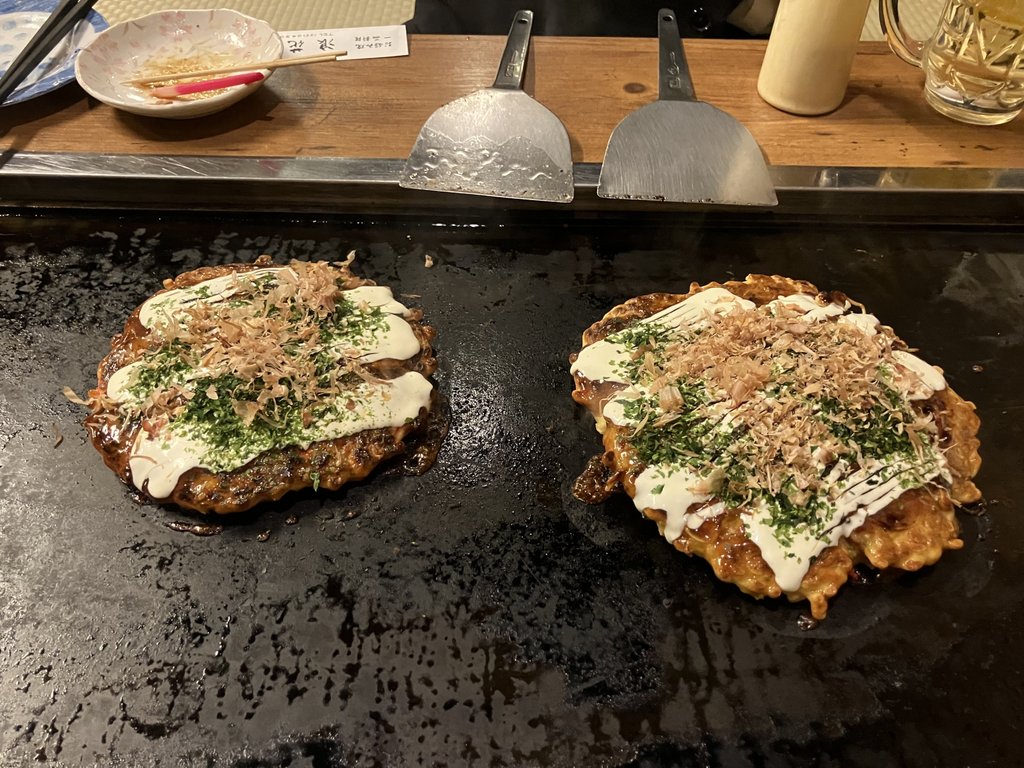
At Tennoji Mio (a dining and shopping complex next to the station), you can sample B-kyu gurume (affordable comfort food beloved by locals; the “B” doesn’t mean second-rate) without leaving the building.
A three-shop hashigo-gui (the practice of eating across several restaurants in one meal) route makes great use of your time: a few takoyaki at Aizuya, a shared okonomiyaki at Bote-jyu, and a round of kushikatsu at Kushi-no-Bo—you can cover all three in roughly 80 minutes.
Each shop has a photo menu, so pointing to what you want is easy. A budget of ¥2,000–¥3,000 (about $13–$19 USD) covers all three stops.
After the meal, the Osaka Metro Tanimachi Line reaches Shitennoji-mae Yuhigaoka Station in about five minutes—plenty of time to spare before the 12:30 pm temple visit.
12:30 pm: Shitennoji, Japan’s Oldest State-Sponsored Buddhist Temple
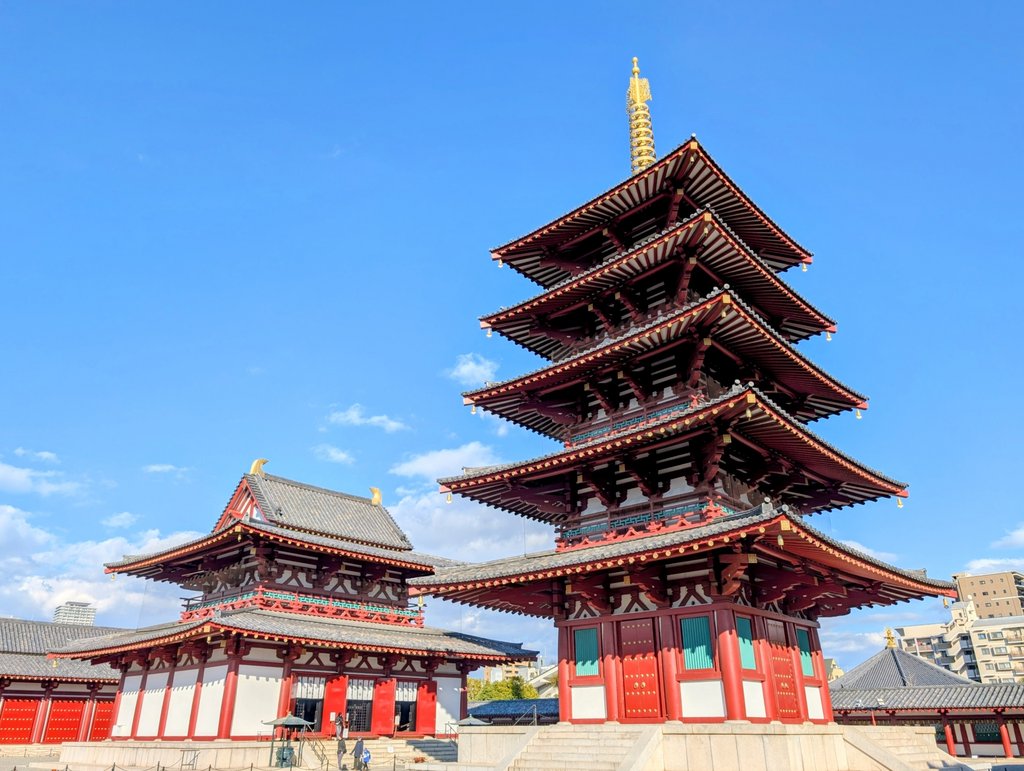
From Tennoji Station, the Osaka Metro Tanimachi Line reaches Shitennoji-mae Yuhigaoka Station in about two minutes for ¥190 (about $1 USD). The temple grounds are a five-minute walk from the station.
Shitennoji, founded in 593 by Prince Shotoku, is Japan’s oldest state-sponsored Buddhist temple. A standout feature is the Shitennoji-shiki garan haichi (Shitennoji-style temple layout), a foundational architectural arrangement.
The South Gate, Middle Gate, Five-Storied Pagoda, Kondo (Main Hall), and Kodo (Lecture Hall) stand in a single line, ringed by a cloistered corridor. The layout marks the starting point of temple architecture in Japan, and you’ll feel its scale as soon as you step onto the grounds.
Admission to the central precinct is ¥500 (about $3 USD), and a full walk-through takes around 60 minutes.
Wrap up by 1:30 pm and you’ll have time for Sumiyoshi Taisha. The train takes about 40 minutes and costs ¥410 (about $2–$3 USD) total.
Details
| Address | 1-11-18 Shitennoji, Tennoji-ku, Osaka |
| Hours | 8:30 am–4:30 pm (central precinct; varies by season) |
| Closed | Open daily |
| Official site | https://www.shitennoji.or.jp/ |
| Recommended for | Travelers interested in the origins of Japanese Buddhism and ancient architecture |
2:30 pm: Sumiyoshi Taisha, Head Shrine of Japan’s 2,300 Sumiyoshi Shrines
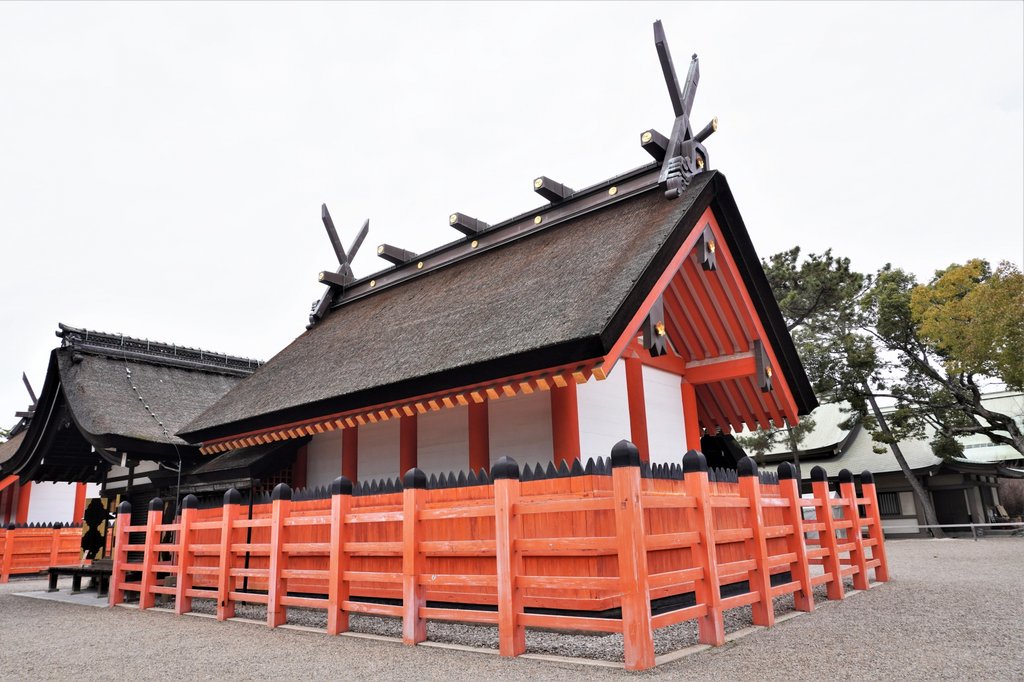
From Shitennoji-mae Yuhigaoka Station, the subway returns to Tennoji Station, where the Hankai Tramway (a streetcar line) runs to Sumiyoshi-Toriimae Station. The trip takes about 25 minutes and ¥410 (about $2–$3 USD). The shrine entrance sits right at the station.
Sumiyoshi Taisha has more than 1,800 years of history and serves as the head shrine for roughly 2,300 Sumiyoshi shrines nationwide.
Inside the grounds, the vermilion sori-hashi (an arched bridge also known as a drum bridge) immediately catches your eye.
Across the bridge, four main halls stand in a row in the Sumiyoshi-zukuri (Sumiyoshi style), Japan’s oldest surviving Shinto shrine architectural style, visible at close range.
At Goshogozen, a local tradition invites visitors to collect small stones as talismans—easy to work into your visit.
Entry is free, and a standard visit runs about 60 minutes.
Afterwards, take a train (about 30 minutes, ¥430 / about $2–$3 USD) to Kitahama Station, where a quiet tea room nearby makes a perfect break.
Details
| Address | 2-9-89 Sumiyoshi, Sumiyoshi-ku, Osaka |
| Hours | April–September 6 am–5 pm / October–March 6:30 am–5 pm |
| Closed | Open daily |
| Official site | https://www.sumiyoshitaisha.net/ |
| Recommended for | Travelers interested in ancient Japanese shrine architecture and Shinto traditions |
5 pm: A British-Style Tea Room Break at Kitahama Retro
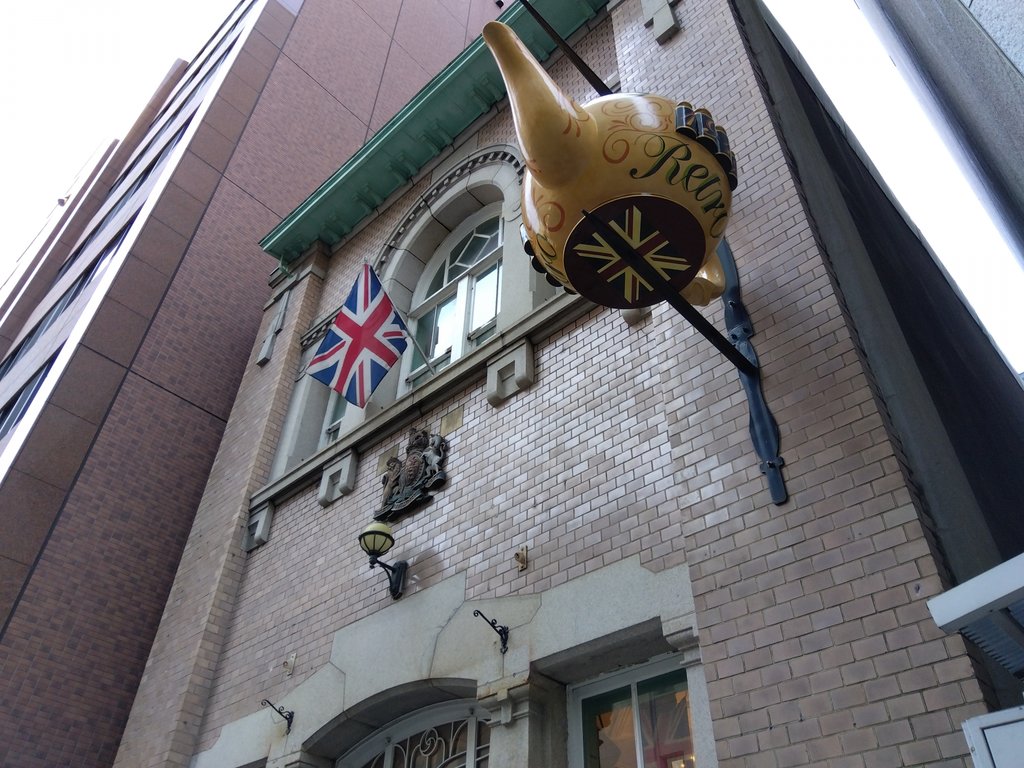
After Sumiyoshi Taisha, the Nankai Main Line reaches Namba Station, and the Osaka Metro Sakaisuji Line continues to Kitahama Station. The trip takes about 30 minutes and ¥410 (about $2–$3 USD). The Western-style building sits about a one-minute walk from Kitahama Station.
Kitahama Retro is a registered tangible cultural property built in 1912. The second floor is a British-style tea room with a quiet, relaxed feel. Tea and cake are the perfect reward after a long day on foot.
The cafe doesn’t take reservations, and seating is first-come, first-served. 5 pm is usually easy to walk into. During busy times, a 90-minute limit applies.
Leave around 6:20 pm to give yourself time for the Nakanoshima light-up. A walk west along the river reaches the Yodoyabashi area in about eight minutes.
Details
| Address | 1-1-26 Kitahama, Chuo-ku, Osaka |
| Hours | Weekdays 11 am–7 pm / Weekends & holidays 10:30 am–7 pm (last order 6:30 pm) |
| Closed | Open daily (except Obon and the New Year holidays) |
| https://www.instagram.com/kitahama_retro | |
| Recommended for | Travelers interested in the blend of Meiji-era (late 19th to early 20th century Japan) architecture and British tea culture |
6:30 pm: Nakanoshima Light-Up Viewing
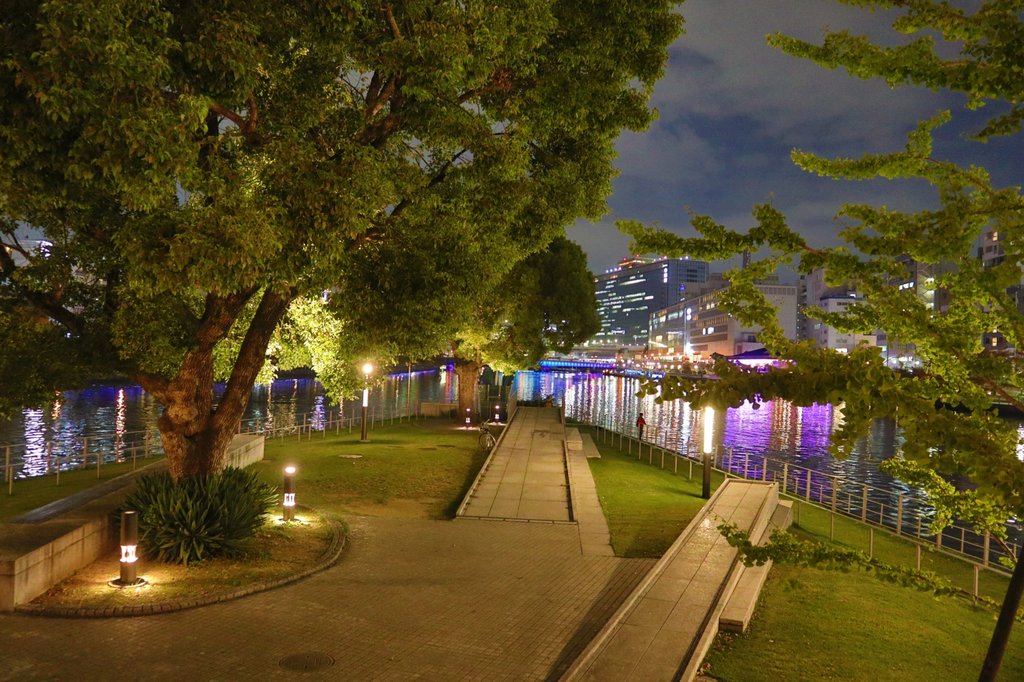
An eight-minute walk west along the river from Kitahama Retro brings you to Nakanoshima Park.
Around 6:30 pm, the illuminated Western-style buildings reflect off the water for a quietly striking scene.
Nakanoshima is home to some of Osaka’s most recognizable Meiji- and Taisho-era (early 20th century) buildings, and a walk through the area offers a layered sense of the city’s historic streetscape.
| Structure | Year and style | Light-up features |
|---|---|---|
| Osaka Central Public Hall | 1918, Neo-Renaissance | The red-brick facade glows in warm-toned light |
| Former Bank of Japan Osaka Branch | 1903, stone construction modeled on the National Bank of Belgium | White stone walls take on a stately pale-blue glow |
| Osaka Prefectural Nakanoshima Library | 1904, Greek-temple-style facade with columned entrance | Dramatic shadows play across the row of columns |
At night, take your time and focus on the exteriors.
For the Osaka Central Public Hall, shoot from directly across the river to capture both the building and its reflection on the water.
After about 90 minutes in Nakanoshima, aim to be at Yodoyabashi Station around 8 pm.
From Osaka Castle through ancient temples and shrines to modern architecture, this route traces a clear arc through Osaka’s layered history in a single day.
8:30 am Departure: A Model Course for Cultural Experiences in Osaka
Below is a course for travelers who want to engage with Osaka’s culture hands-on. Leave Kyoto at 8:30 am, and the route threads through five hands-on experiences once you arrive at Namba.
You’ll find a tea ceremony, takoyaki making, a river cruise, sumo viewing, and a night-view observation deck—each with reservation notes and travel times for easy reference.
10 am: A Tea Ceremony Experience at Namba
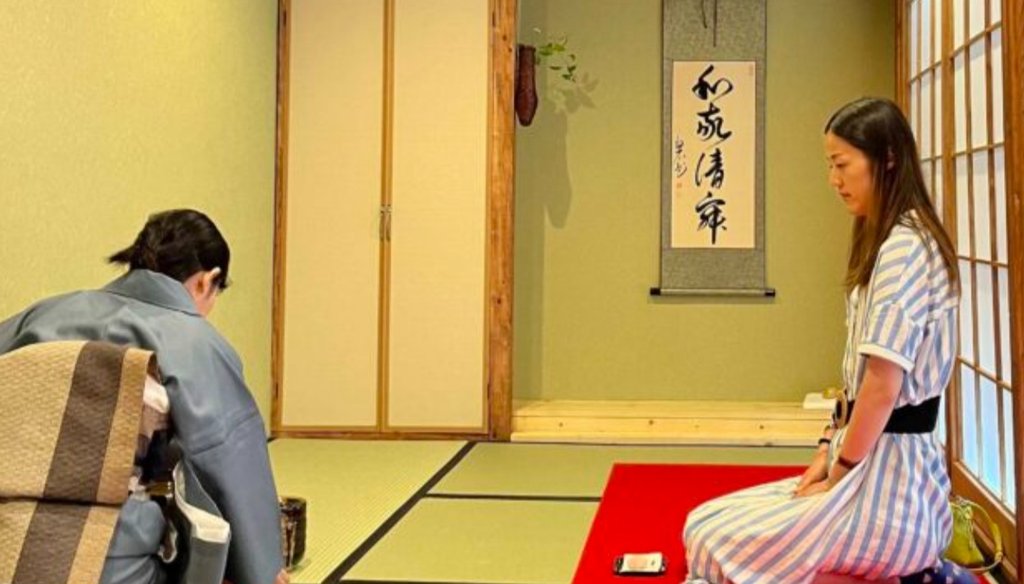
The Dotonbori area is home to Tea Ceremony Osaka The Osaka, a studio that runs its program in English.
The 60-minute program covers history, a demonstration of otemae (the formal procedure for preparing matcha), and a hands-on session where you whisk your own bowl. The spirit of omotenashi (Japanese hospitality) runs through the sequence of movements.
Part of the appeal is that you can experience the tradition in a casual setting. The fee is ¥3,600 (about $22–$23 USD), and you’ll need to book in advance through the official website.
After the session, the takoyaki-making venue is within walking distance, so you won’t lose time on transit.
Details
| Address | 2F, Dotonbori Building, 1-East 5-26 Dotonbori, Chuo-ku, Osaka |
| Hours | 10 am–6 pm |
| Closed | New Year holidays |
| Official site | https://www.tea-ceremony-osaka.com/ |
| Recommended for | First-time visitors to Japan; travelers interested in comparing cultural traditions with Kyoto |
11:30 am: Making Takoyaki in Dotonbori
Cooking your own takoyaki is far more memorable than just eating it.
About a five-minute walk from the tea ceremony studio, the Konamon Museum runs a takoyaki-making workshop.
Staff walk you through the process in English—from pouring the batter to turning the balls with a skewer until they come out perfectly round.
Eat your hot-off-the-pan takoyaki as lunch and you’ll save time.
If you have time left over, stroll along Dotonbori and pick up a few more snacks. Until the 1:30 pm cruise, Osaka’s food scene will keep you happily occupied.
Details
| Address | 1-6-12 Dotonbori, Chuo-ku, Osaka |
| Hours | 11 am–10 pm (experience reception: weekdays 11:30 am–7:15 pm, weekends and holidays 10:30 am–7:15 pm) |
| Closed | Open daily (hours may vary) |
| Official site | https://dotonbori-kukuru.com/ |
| Recommended for | Travelers who want Osaka cuisine as a hands-on experience; those looking to combine lunch and sightseeing efficiently |
1:30 pm: Tombori River Cruise in Dotonbori
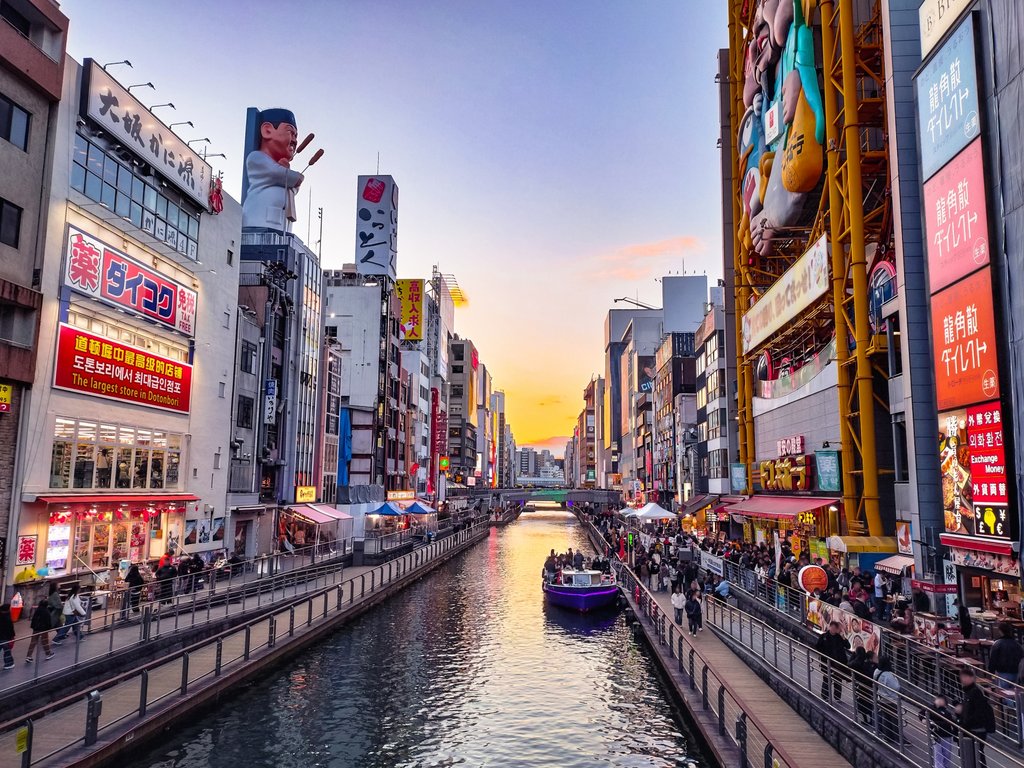
After the takoyaki session, a five-minute walk brings you to the Tazaemonbashi boarding dock.
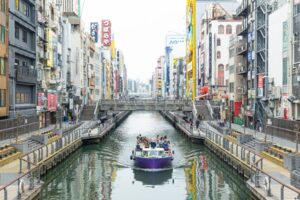
The Tombori River Cruise starts here, offering a view of Osaka’s cityscape from the water.
The 20-minute route passes under nine bridges while a guide walks through the history and the origin stories behind the famous signs.
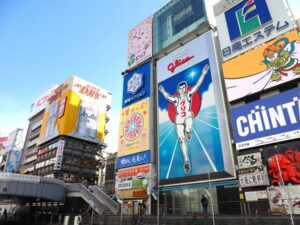
Looking up at the Glico sign from water level is striking—and great for photos. Natural light is steady around 1 pm, making it a solid window for photography. The fare is ¥3,500 (about $22 USD) for adults and ¥1,000 (about $6–$7 USD) for students age 13 and older.
Tickets go on sale the same day, about an hour before the first departure. Arrive 30 minutes before your departure for a comfortable buffer.
After disembarking, the subway reaches Hanazonocho Station in about five minutes.
Details
| Address | 7-13 Soemoncho, Chuo-ku, Osaka (Tazaemonbashi boarding dock) |
| Hours | 11 am–9 pm (departures on the hour and half-hour) |
| Closed | Irregular (check the official site for closed days) |
| Official site | https://suijo-bus.osaka/ |
| Recommended for | Travelers who want to photograph Dotonbori from a fresh angle, or fit a brief change-of-pace activity into the day |
3 pm: A Sumo Demonstration at Sumo Studio Osaka
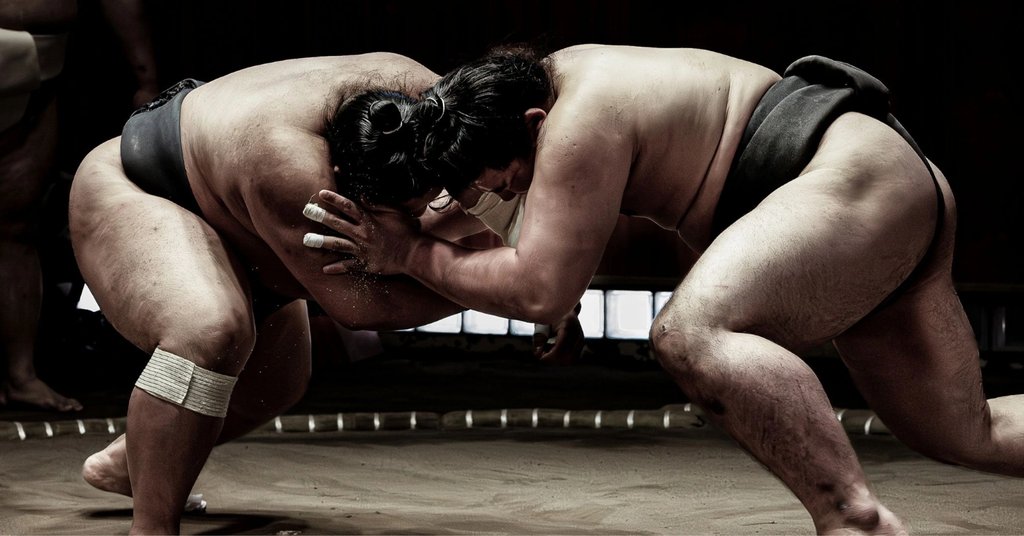
Take a short trip out from Dotonbori to Sumo Studio Osaka, where you can watch sumo up close.
From Namba Station, the subway runs to Hanazonocho Station, followed by a two-minute walk to the venue.
The 3 pm session runs about 90 minutes and includes an English-narrated match demonstration plus a hands-on segment where you step onto the dohyo (the sacred clay ring where sumo is performed) and push against a rikishi (a sumo wrestler). Commemorative photos with a rikishi are often the highlight of the trip.
Five sessions run each day, and advance online booking is required. Book on the official website as soon as you’ve set your travel dates.
The demonstration wraps up around 4:30 pm. From Hanazonocho Station, Tennoji Station is about 15 minutes away.
Details
| Address | 1F, Hanazonocho AI Building, 1-5-1 Asahi, Nishinari-ku, Osaka |
| Hours | 9 am–10 pm |
| Closed | Open daily |
| Official site | https://sumowrestlingshow.jp |
| Recommended for | Travelers looking to experience traditional Japanese culture; families with children |
5 pm: Night Views From the Abeno Harukas Observation Deck
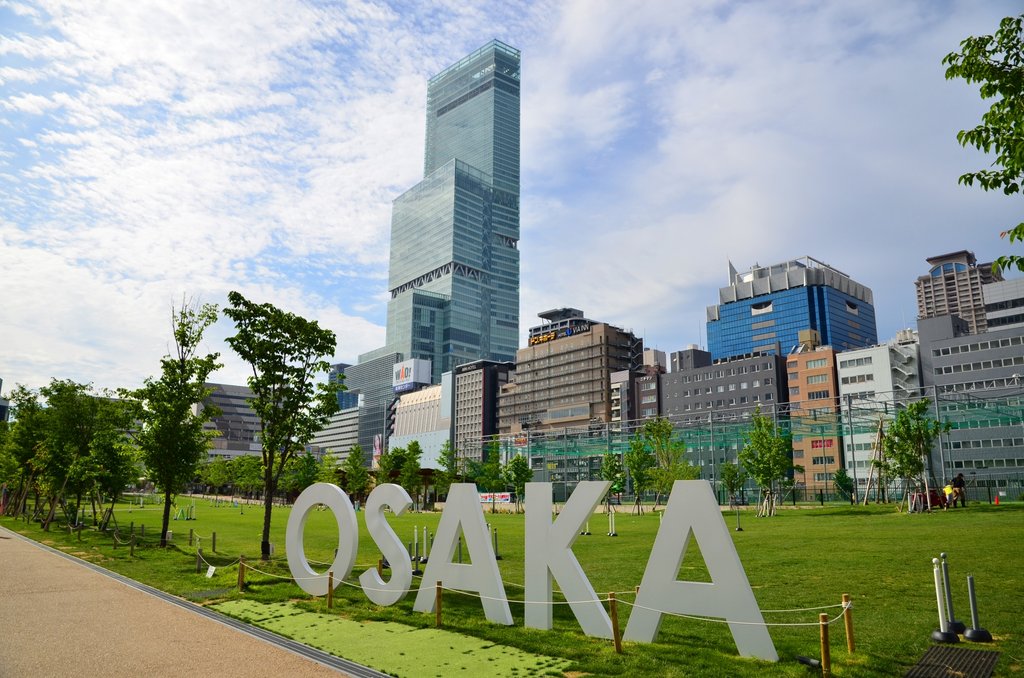
Wrap up the day at Abeno Harukas 300 Observation Deck, located at Tennoji Station.
Arrive by 5 pm to catch the sun setting over the Osaka plain in gradient hues. Around 6:30 pm, city lights come on and the illuminated nightscape takes shape. Enter 30 minutes before sunset to snag a window-side spot.
After taking in the night view, hop on the JR Kyoto Line at Tennoji Station—Kyoto is about 75 minutes away. Last entry is at 9:30 pm.
Note: Admission rates will change on July 23, 2026. Check the official site for the latest information before visiting.
Details
| Address | 58F–60F, Abeno Harukas, 1-1-43 Abenosuji, Abeno-ku, Osaka |
| Hours | 9 am–10 pm (last entry 9:30 pm) |
| Closed | Open daily |
| Official site | https://www.abenoharukas-300.jp/ |
| Recommended for | Travelers looking to see a full panorama of Osaka, or photograph the transition from sunset to night |
10 am Departure: A Model Course for Osaka Food on Foot
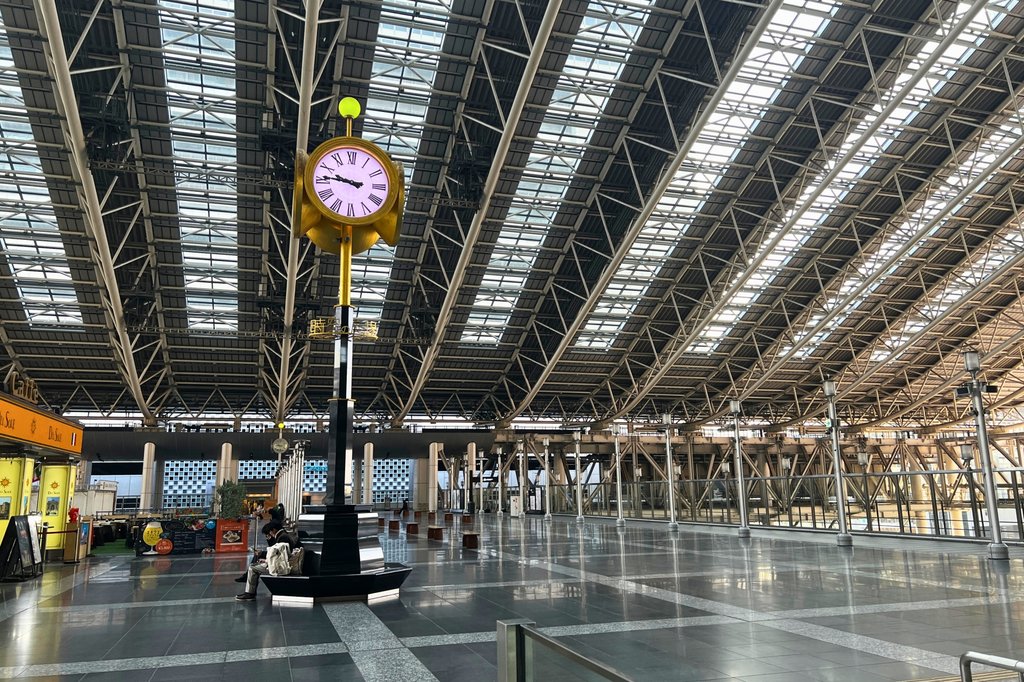
This course is for travelers who want a slow morning and a full afternoon and evening of Osaka food.
The route covers a midday market crawl, afternoon kushikatsu, an early-evening tasting duel, and a late-night dessert with a night view.
Travel times and meal estimates are included, so you can stay relaxed from start to finish.
12 pm: Kaisen-don and Kobe Beef Skewers at Kuromon Market
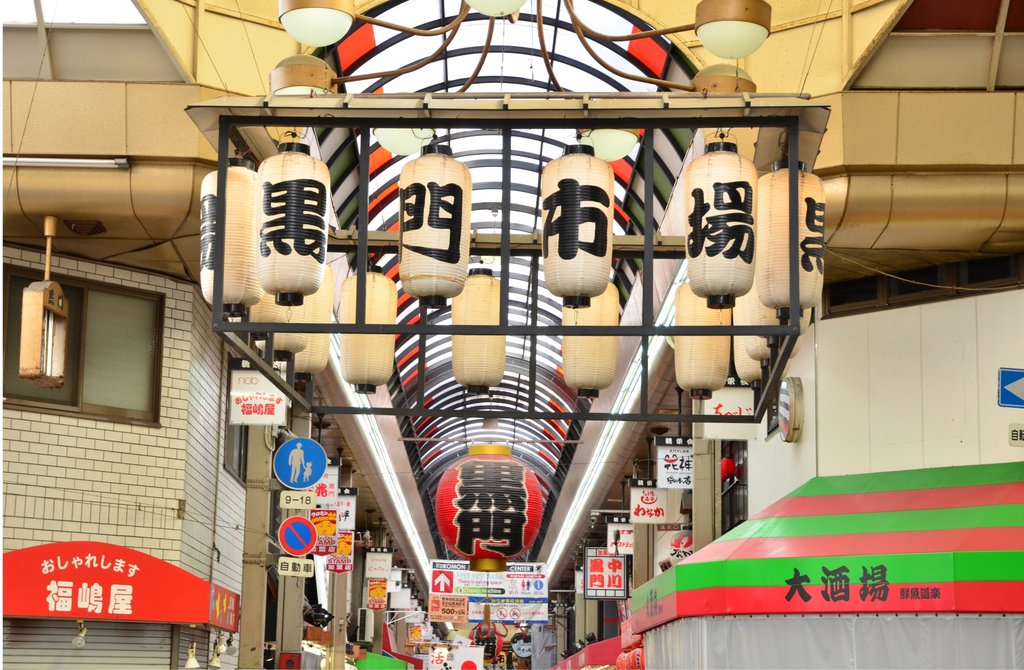
Leave Kyoto at 10 am and you’ll reach Kuromon Market around noon. The market is a two-minute walk from Nippombashi Station, its nearest station.
At Kuromon Market, the natural approach is to move between several shops, eating a little at each. Start with a kaisen-don (¥1,500–¥3,000, about $9–$19 USD), then move on to a Kobe beef skewer (¥2,000–¥2,500, about $13–$16 USD) to sample a wide range of flavors without overdoing it.
The busiest window runs from noon to 1 pm. If there’s a line at one stall, just move on to a nearby alternative.
Major shops accept credit cards and most have English menus, so Kuromon Market is easy to navigate even on your first visit.
Details
| Address | Around 1-22-23 Nippombashi, Chuo-ku, Osaka |
| Hours | 9 am–7 pm (last order 6:30 pm; varies by shop) |
| Closed | Open daily (some shops close during year-end and New Year) |
| Official site | https://kuromon.com/ |
| Recommended for | Travelers who enjoy grazing as they walk |
2 pm: Kushikatsu in Shinsekai
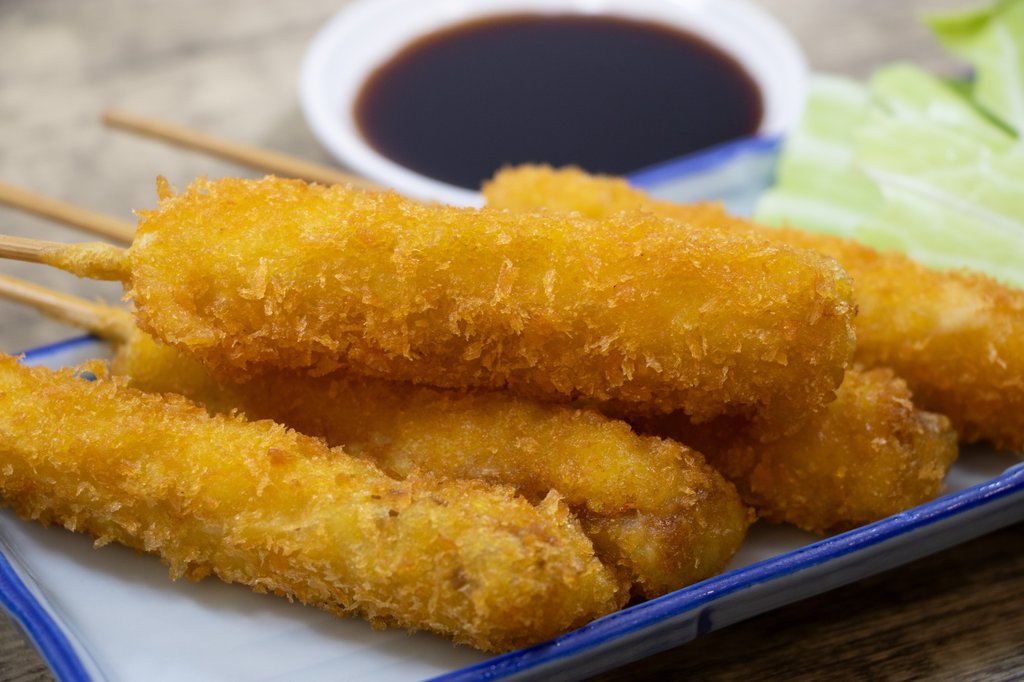
After Kuromon Market, the next stop is Shinsekai, the heartland of B-kyu gurume. From Nippombashi Station, the subway takes about two minutes to Ebisucho Station (¥180, about $1 USD).
Step out of the station and Tsutenkaku Tower comes into view beyond the arcade. 2 pm tends to be relatively quiet.
Kushikatsu runs ¥100–¥300 per skewer (about $0.60–$2 USD), and the natural approach is to order a few at a time. Ten skewers generally keeps the bill around ¥2,000 (about $12–$13 USD).
One rule to remember in Shinsekai: no double-dipping the sauce. Once you’ve bitten a skewer, don’t put it back in the shared sauce. Use cabbage leaves to scoop extra sauce instead.
Across the arcade, Tsutenkaku Tower’s observation deck ticket is ¥1,500 (about $9–$10 USD), and a full visit takes about 60 minutes.
Details
| Address | Ebisu-higashi area, Naniwa-ku, Osaka |
| Hours | Varies by shop (Tsutenkaku 9 am–9 pm) |
| Closed | Varies by shop (Tsutenkaku is open daily) |
| Official site | https://www.tsutenkaku.co.jp/ |
| Recommended for | Travelers who want to experience Osaka’s local food culture |
4:30 pm: A Takoyaki-Okonomiyaki Taste-Off in Dotonbori
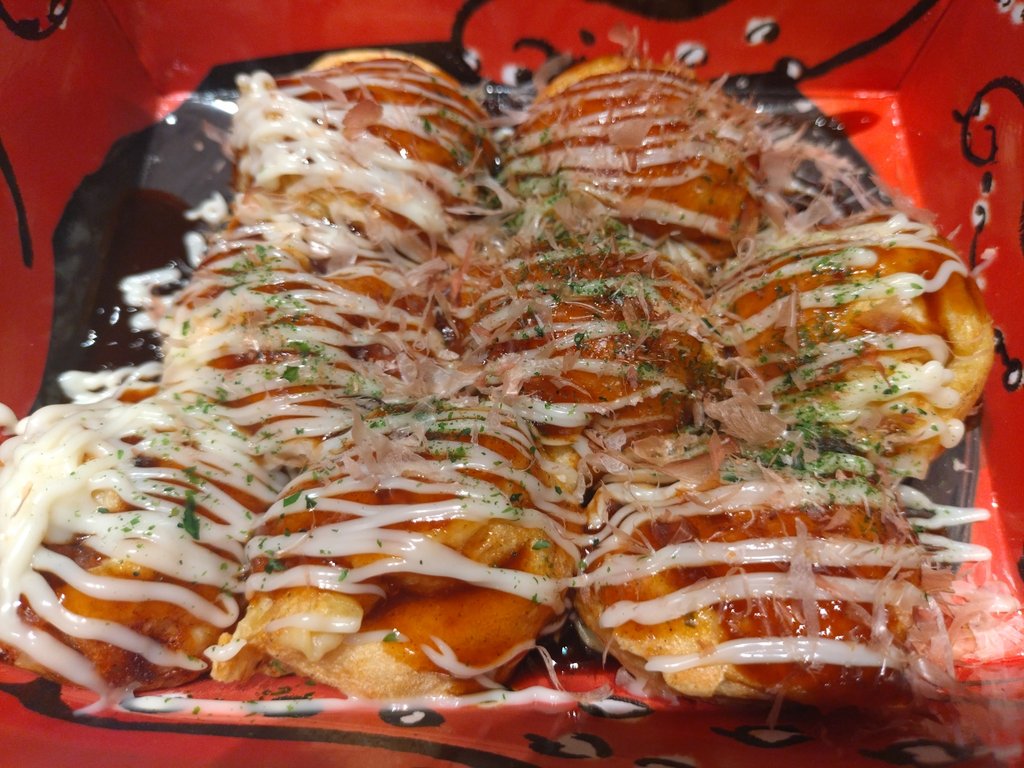
From Ebisucho Station, the subway reaches Namba Station in about 5–10 minutes for ¥190 (about $1 USD). Ebisubashi Bridge is a seven-minute walk from Namba Station.
At 4:30 pm, crowds thin out, and even popular shops usually seat you without much of a wait.
In Dotonbori, pairing walk-around takoyaki with a sit-down okonomiyaki makes for a balanced tasting. A six-piece order of takoyaki runs about ¥500–¥600 (about $3–$4 USD)—easy to eat as you walk. Okonomiyaki runs ¥900–¥2,000 each (about $5–$13 USD), cooked in front of you at a teppan (iron griddle) counter. The combination covers both stand-up and sit-down meals.
English menus are available at most shops. Check what payment methods each shop accepts before ordering.
6:30 pm: Close With a Parfait and Night Views in Dotonbori
For a sweet close to the food walk, specialty parfait shops around Dotonbori keep late hours.
Prices run around ¥1,000–¥3,000 (about $6–$19 USD), and fruit parfaits are the most popular choice. Sitting down for something sweet also gives your feet a rest.
When picking a shop, look for one with window seats facing the night view. Riverside shops offer a clear look at the neon.
After the meal, shoot the Glico sign from Ebisubashi Bridge. From about 30 minutes after sunset until 10 pm, the neon looks its richest. The Kani Doraku (a crab restaurant chain) crab sign also lights up at night.
Soak up the final hours of the day before heading back to Kyoto.
How to Make a Kyoto-to-Osaka Day Trip Run Smoothly
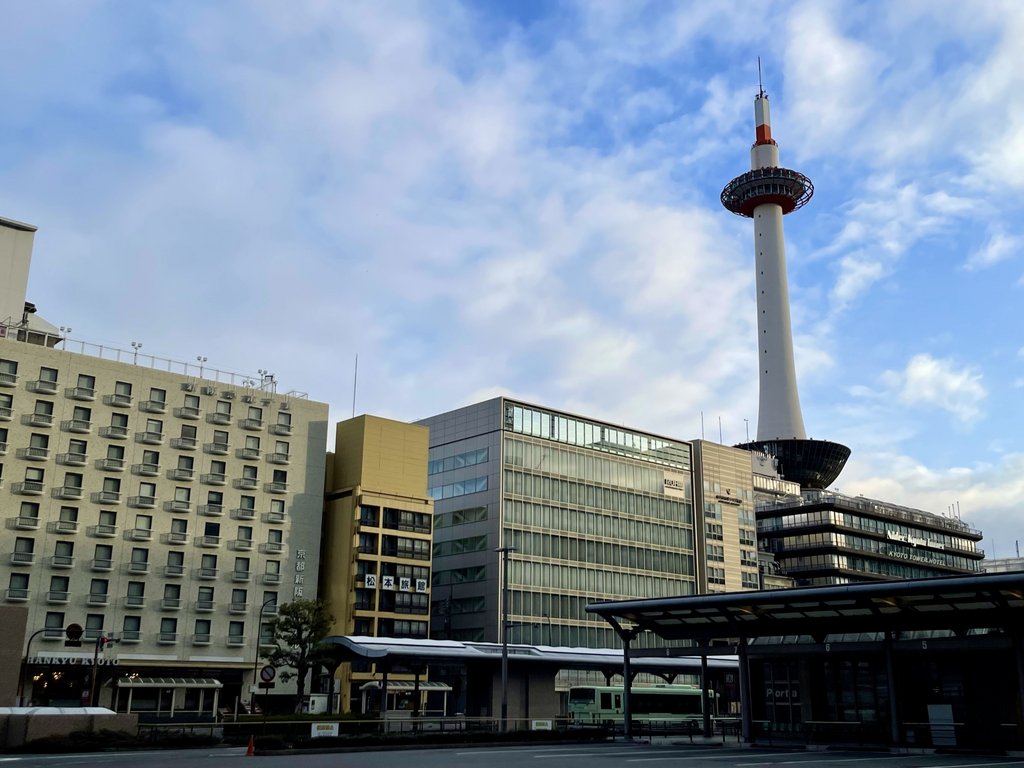
Worried about losing time on transit? A few practical choices can help.
Between Kyoto and Osaka, the JR Special Rapid takes about 30 minutes and costs ¥580 (about $3–$4 USD); the Hankyu Limited Express takes about 45 minutes and costs ¥410 (about $2–$3 USD). JR works well for Osaka Castle, while Hankyu fits routes headed to Dotonbori.
An ICOCA card (a rechargeable transit IC card) lets you tap in and out at the gates—no paper tickets needed. Searching directions on a map app from your current location also pulls up transfer details instantly.
Common Questions About a Kyoto-to-Osaka Day Trip
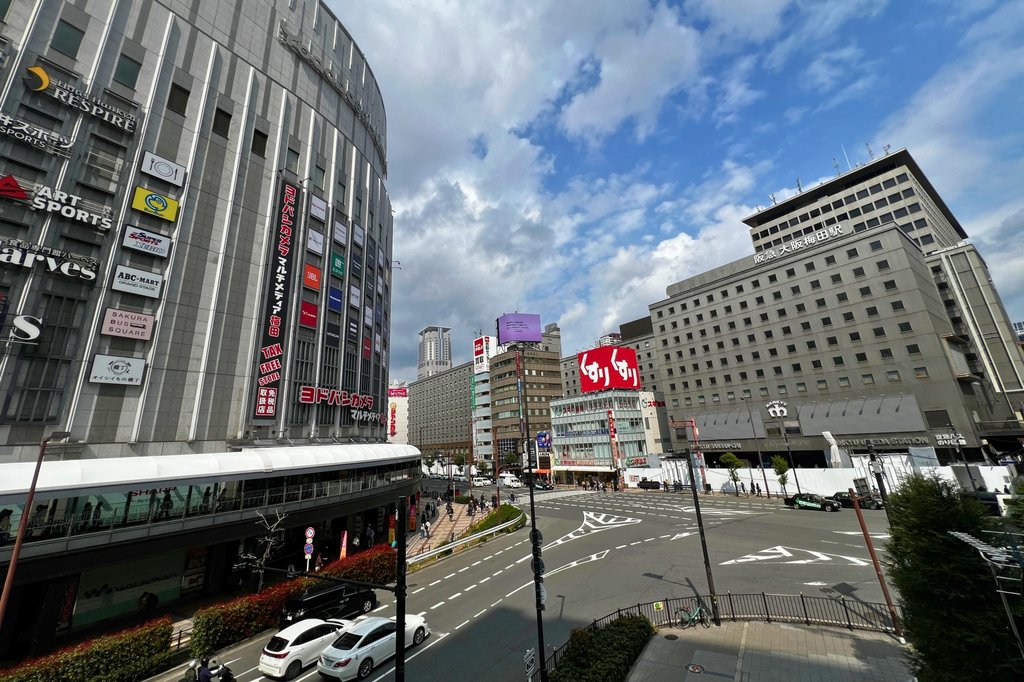
Below are five common questions that come up when planning a Kyoto-to-Osaka day trip.
Knowing the answers ahead of time makes day-of decisions easier.
What Are the Transit Options Between Kyoto and Osaka, With Times and Fares?
Here’s a side-by-side comparison of the three main routes.
| Route | Travel time | One-way fare |
|---|---|---|
| Shinkansen (Kyoto → Shin-Osaka) | About 15 minutes | From ¥1,450 (about $9–$10 USD) |
| JR Special Rapid (Kyoto → Osaka) | About 30 minutes | ¥580 (about $3–$4 USD) |
| Hankyu Limited Express (Kyoto-Kawaramachi → Osaka-Umeda) | About 40–50 minutes | ¥410 (about $2–$3 USD) |
Fares are subject to change. Check the operator’s website for the latest information.
For a cost-focused trip, the JR Special Rapid is the clearest choice. For destinations toward Osaka Castle, JR offers the smoothest connection.
For routes centered on Dotonbori, Hankyu or Keihan offers a more direct ride. Shinkansen routes require a transfer at Shin-Osaka Station.
For getting around within Osaka, the Osaka Metro One-Day Pass is a solid option. You can buy the pass at ticket machines, and it covers unlimited rides on all lines (with a few exceptions).
Can the JR Pass Be Used Between Kyoto and Osaka?
The JR Pass (a rail pass available only to international visitors entering Japan) covers conventional lines and some shinkansen services between Kyoto and Osaka. Nozomi and Mizuho services are not covered.
The one-way fare between Kyoto and Osaka is ¥580 (about $3–$4 USD). If you’re only using the pass for a round trip between the two cities, you won’t save much.
For broader travel across the Kansai region, the JR Kansai Area Pass covers a wider range. Starting at ¥2,800 (about $17–$18 USD) for a one-day pass, it covers unlimited rides on JR conventional lines in Kyoto, Osaka, and beyond. The pass also covers the Haruka limited express—a genuinely useful perk.
Where Are Coin Lockers for Storing Luggage in Osaka?
The major stations in Osaka have plenty of coin lockers. The key is to match the storage station to the area you’ll be visiting. JR Osaka Station works well for trips centered on Umeda, while Namba Station fits Dotonbori plans.
You can check locker availability at JR Osaka Station on the official website. Rates run about ¥400 (about $2–$3 USD) for a small locker and ¥700 (about $4–$5 USD) for a large one.
Lockers near ticket gates accept both IC cards and cash. Most lockers are available from the first train through the last train. Dropping your luggage off makes sightseeing much easier.
Are There Spots in Osaka That Work Well for Families With Children?
Osaka has plenty of family-friendly stops.
Osaka Castle Park has a playground area where children can run off energy. Restrooms and benches are scattered throughout, so you can take breaks easily.
Grazing through Kuromon Market is also popular with families. Skewered fruit and other bite-sized snacks are easy for children to eat.
Hands-on experiences like takoyaki making and sumo viewing help hold children’s attention. Check elevator locations ahead of time—it’ll come in handy.
What Time Is the Last Train Back to Kyoto?
The last JR Special Rapid leaves JR Osaka Station sometime after 11 pm and reaches Kyoto Station in about 28 minutes. Schedules differ on weekdays versus weekends and holidays, so check the timetable before you go.
From Namba Station to JR Osaka Station takes 20–30 minutes. Leave Namba between 8:30 pm and 9 pm and you’ll be back in Kyoto around 10 pm.
Schedules can shift due to service disruptions. Check the latest information on the day you travel—it’s a simple safeguard.
Turn One Day in Osaka Into a Full Trip
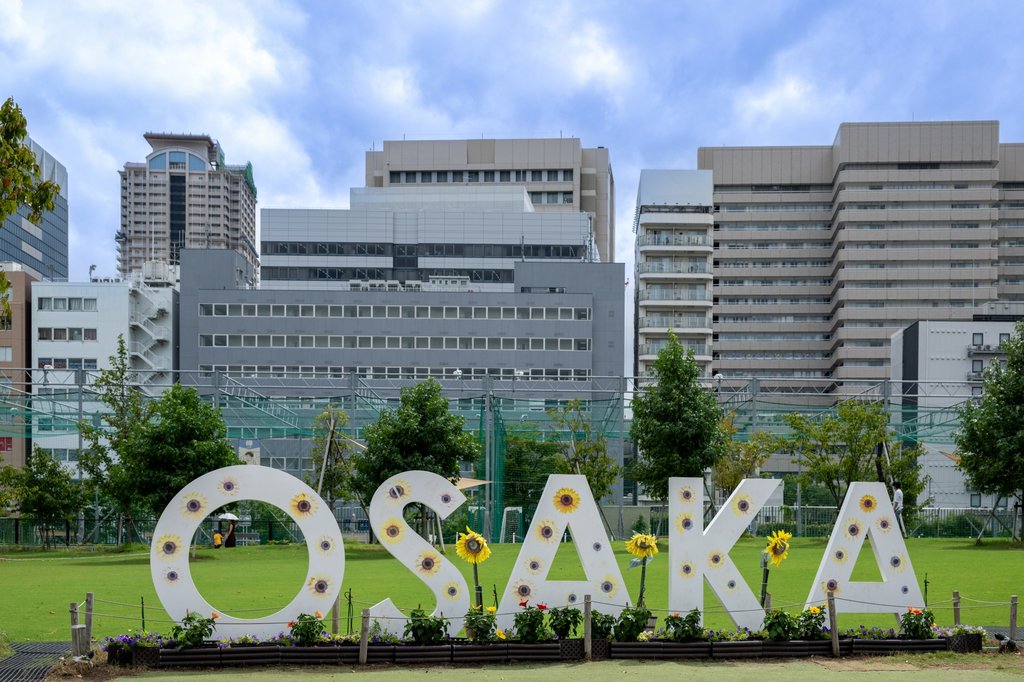
Osaka holds up well as a day-trip destination. Match the course to your departure time to minimize transit time. Keep the last-train times in mind. Soak up the buzz of Osaka—an energy all its own, quite different from Kyoto.

![Where to Watch Sumo in Japan: 3 Ways to See Sumo & How to Get Tickets [Complete Guide]](https://sumowrestlingshow.jp/wp-content/uploads/2026/08/where-to-watch-sumo-in-japan_1-300x200.jpg)