9 Best Day Trips from Osaka by Train: Top Destinations, Travel Times & Planning Tips
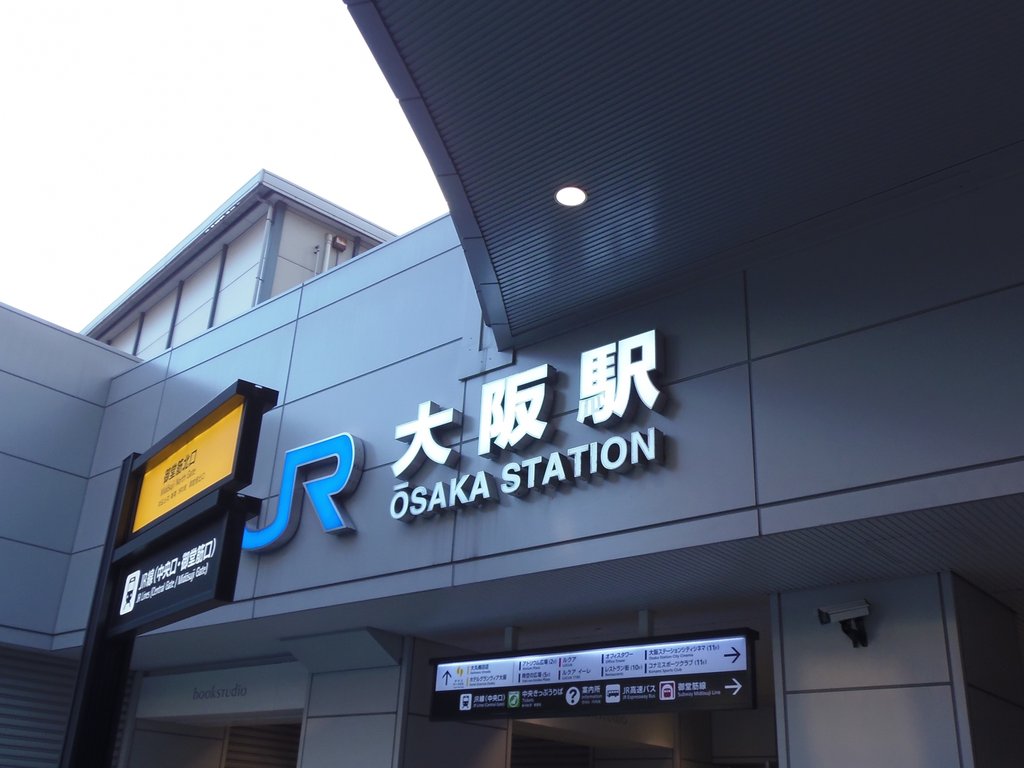
Wondering how far you can venture on a day trip with Osaka as your base?
Thanks to the extensive rail network across the Kansai region, a surprisingly diverse range of destinations lies within just 90 minutes of Osaka. With so many options available, deciding where to go and how to balance travel time with time spent at your destination can feel overwhelming.
In this guide, we introduce nine carefully selected day trip destinations from Osaka, complete with travel times, rail pass information, and sample itineraries tailored to different travel styles.
Whether you’re drawn to iconic landmarks or prefer exploring lesser-known spots, you’re sure to find the perfect destination for your journey.
Contents
- Planning the Perfect Day Trip from Osaka
- Nine Recommended Day Trip Destinations from Osaka
- Kyoto — Temples, Tradition, and Timeless Beauty
- Nara — Friendly Deer and Ancient Monuments
- Kobe — World-Class Beef and Harbor Views
- Himeji — Japan’s Most Beautiful Castle
- Hiroshima and Miyajima — History and Sacred Beauty
- Mount Kōya (Kōya-san) — A Mystical Atmosphere on the “Sacred Mountain”
- Kinosaki Onsen — Relaxation in a Traditional Hot Spring Town
- Okayama and Kurashiki — Picture-Perfect Gardens and a Canal Town
- Wakayama — Castle, Coastline, and Quiet Corners
- Making the Most of Your Time Before and After Day Trips
- Day Trip Itineraries by Travel Style
- Frequently Asked Questions About Day Trips from Osaka
- Making the Most of Day Trips from Osaka
Planning the Perfect Day Trip from Osaka
Maximizing a day trip requires preparation just as much as choosing the right destination. When you’re working with limited time and hoping to explore efficiently, thoughtful planning before departure can make a significant difference in your overall experience.
In this section, we’ll walk you through key planning tips from three essential perspectives: selecting the right rail pass, timing your departure and return to maximize your hours on the ground, and managing your luggage so you can travel light and comfortably.
By mastering these elements, you’ll set yourself up for a smooth, confident, and stress-free day of exploration.
Rail Passes for the Osaka Area and How to Choose
Choosing the right rail pass based on your destination and number of rides is key to keeping transportation costs under control during day trips from Osaka.
| Pass Name | Price | Best For |
|---|---|---|
| JR Kansai Area Pass | ¥2,800/1 day | Multiple round trips to Kyoto, Nara, Kobe in one day |
| Kansai Wide Area Pass | ¥12,000/5 days | Reaching distant destinations like Okayama, Kinosaki, Shirahama |
| Enjoy Eco Card | ¥820/1 day | Intensive Osaka Metro use within the city |
| ICOCA Card | Rechargeable | Days with only 1–2 rides |
The JR Kansai Area Pass offers unlimited rides on Special Rapid services as well as unreserved seats on the Limited Express Haruka (note that the shinkansen is not included). If you plan to make two or more round trips to destinations such as Kyoto or Kobe in a single day, the pass can easily pay for itself.
For longer-distance destinations, the Kansai Wide Area Pass is a particularly powerful option. It covers the San’yō Shinkansen between Shin-Osaka and Okayama (including reserved seats), along with limited express trains heading toward Kinosaki and Shirahama. There is no limit on the number of reserved seat bookings, although reservations from the seventh booking onward must be made at a ticket window. Valid for five consecutive days, this pass is well suited to itineraries that include multiple long-distance excursions over several days.
If you’re spending the day entirely within Osaka city, the Enjoy Eco Card (¥820) can be a good value if you plan to ride the subway three to four times or more. For two rides or fewer, paying per ride with an ICOCA card is generally cheaper. A quick estimate of your expected travel each morning will help you decide which option makes the most sense.
Optimal Departure and Return Timing
Osaka’s morning commuter rush typically peaks between 7:30 a.m. and 9:00 a.m. To avoid the heaviest crowds while still maximizing your time at your destination, aim to depart between 8:30 a.m. and 9:00 a.m.
By this point, congestion on most lines has begun to ease, making for a more comfortable journey. You’ll also arrive at most destinations around 10:00 a.m., giving you a full day of sightseeing. At popular spots such as Fushimi Inari Taisha and the Arashiyama Bamboo Grove, visitor numbers tend to peak between 10:00 a.m. and 3:00 p.m., so arriving earlier in the morning allows for a more relaxed experience before the largest crowds build.
When planning your return, be mindful of seasonal sunset variations.
| Season | Approximate Sunset | Recommended Return |
|---|---|---|
| Winter (Dec–Feb) | Around 4:50 pm–5:15 pm | Around 5:00 pm |
| Spring/Autumn | Around 5:30 pm–6:15 pm | 5:30 pm–6:00 pm |
| Summer (Jun–Aug) | Around 7:00 pm–7:15 pm | 6:00 pm–7:00 pm |
In winter, earlier sunsets mean you’ll want to schedule outdoor sightseeing so it wraps up before dark. In contrast, summer’s longer daylight hours give you the flexibility to linger and enjoy golden hour at your destination.
It’s also worth noting that return trains tend to become crowded between 5:00 p.m. and 8:00 p.m. To travel more comfortably, consider heading back to Osaka before the 5:00 p.m. rush or waiting until after 7:00 p.m., once peak congestion begins to ease.
Luggage Management and Storage
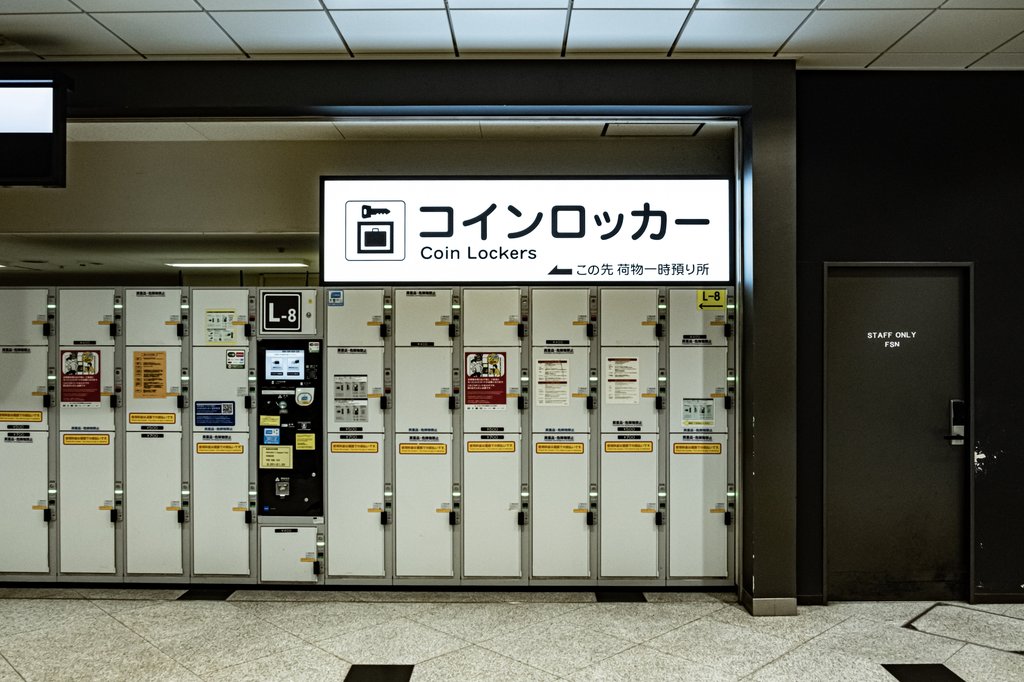
The comfort of a day trip depends greatly on how lightly you’re able to travel. Dragging a large suitcase through crowded streets or up temple staircases quickly drains your energy and takes away from the experience.
Whenever possible, store large luggage at your accommodation before heading out. Most hotels will hold bags at the front desk either before check-in or after check-out. Confirming this service with the front desk the day before your trip provides added peace of mind.
If hotel storage isn’t available, coin lockers at major stations offer a reliable alternative. At Tennoji Station, for example, lockers typically cost around ¥500 for small, ¥600 for medium, and ¥800 for large sizes. Namba Station has roughly seven locker areas, but they often fill up by late morning, so arriving early is advisable. Lockers at Shin-Osaka Station cannot be reserved in advance, so extra caution is needed during peak travel periods.
Once you’ve secured your larger luggage, aim to carry only the essentials:
- A small shoulder bag or compact backpack (keeping your hands free is ideal)
- A water bottle or drink (especially important in summer)
- A portable charger (navigation and translation apps drain batteries quickly)
Traveling light makes everything easier, from climbing temple steps to strolling along cobblestone streets. Treat it not just as a convenience, but as a deliberate strategy for a more enjoyable day.
Nine Recommended Day Trip Destinations from Osaka
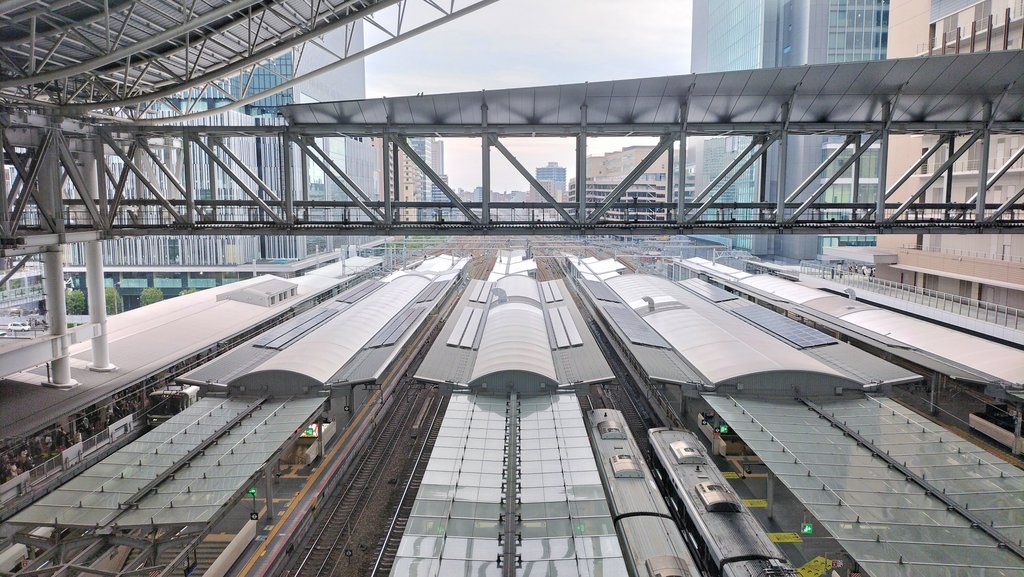
With so many appealing places within easy reach of Osaka, it’s easy to feel overwhelmed by the choices. To help you narrow it down, we’ve selected nine standout day trip destinations that are easily accessible by train. For each location, you’ll find key travel times along with suggestions on how best to structure your visit.
Kyoto — Temples, Tradition, and Timeless Beauty
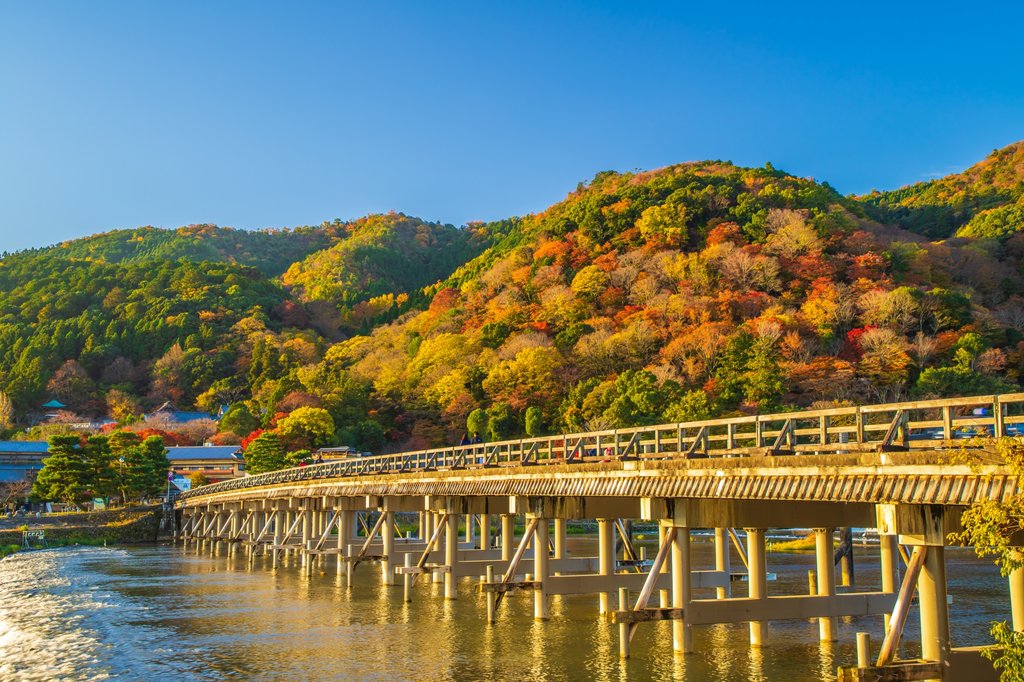
Kyoto lies just 30 minutes from Osaka via the JR Special Rapid service, with a one-way fare of ¥580. The direct route from Osaka Station to Kyoto Station requires no transfers, making it especially convenient for first-time visitors.
If time is tight, the shinkansen from Shin-Osaka to Kyoto takes about 15 minutes. Unreserved seats cost ¥1,450 one-way and require a transfer at Shin-Osaka. Japan Rail Pass holders can board Hikari and Kodama services, making this a smooth alternative.
For day trips, an afternoon arrival followed by evening strolling can help you avoid peak crowds. Most temples close for admission between 5:00 p.m. and 6:00 p.m., so prioritize key sights in advance.
| Spot | Recommended Time | Reason |
|---|---|---|
| Fushimi Inari Taisha | After 3:00 pm | Large tour groups depart, allowing leisurely walks through the thousand torii (shrine gates) |
| Arashiyama Bamboo Grove | Early morning or after 4:00 pm | Crowded midday, but tranquil in early and late hours |
| Gion/Kiyomizu-dera area | Evening to before sunset | Stone-paved streets glow beautifully at dusk, and foot traffic eases |
Trying to cover Fushimi Inari Taisha, Gion, and Arashiyama in a single day often leads to rushed and tiring travel. Instead, focus on either Fushimi Inari Taisha and Gion or dedicate your time to the Arashiyama area. Concentrating on one or two districts allows you to appreciate Kyoto’s timeless beauty at a relaxed, more rewarding pace.
Nara — Friendly Deer and Ancient Monuments
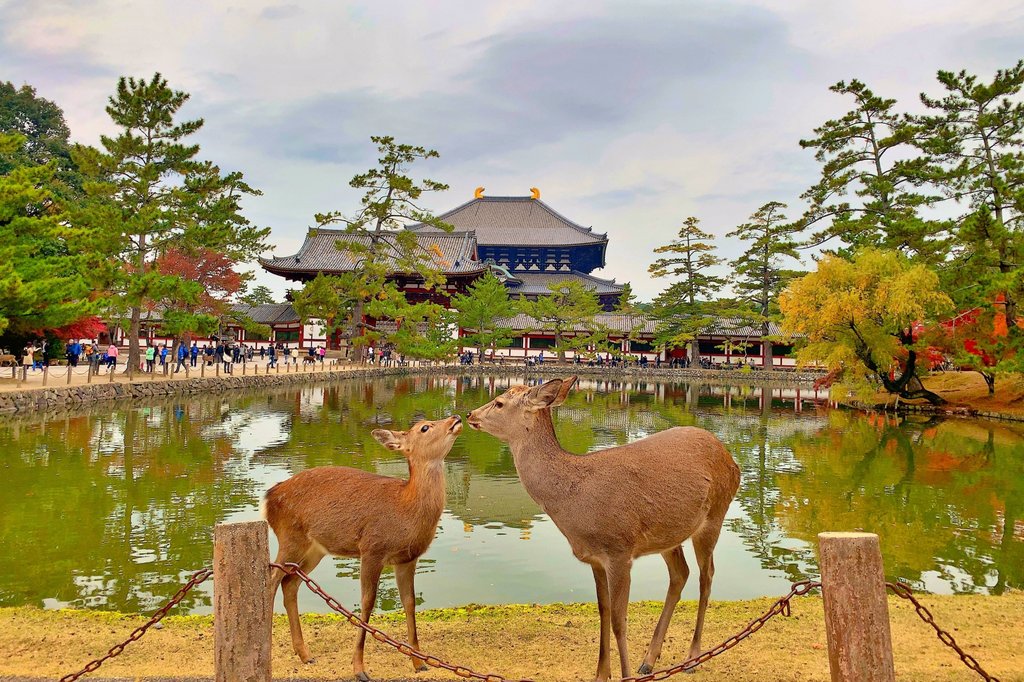
Nara, just 30–40 minutes one-way from Osaka, makes an ideal half-day trip, especially for families with children. Spend the morning exploring, then return to Osaka in the afternoon for additional plans. This flexible schedule works particularly well if you prefer a relaxed pace.
| Item | Kintetsu (from Osaka-Namba) | JR (from Osaka Station) |
|---|---|---|
| Travel Time | About 40 min | About 55 min |
| One-way Fare | ¥680 | ¥840 |
| Advantage | Direct connection to station near Nara Park | No additional cost with JR Pass |
Kintetsu Nara Station is only about a five-minute walk from Nara Park, making the Kintetsu line especially convenient for families. JR Pass holders, however, can reduce transportation costs by taking the JR line instead.
Once you arrive at Nara Park, purchase shika-senbei (deer crackers, from ¥200 per bundle). Only these designated crackers should be fed to the deer. Be aware that deer may also try to nibble on plastic bags or maps if accessible. Offer one cracker at a time, and once they’re finished, show your empty open palms to signal that you have no more. If a deer lays its ears back or paws the ground, step away calmly and create distance. Young children should never approach the deer alone, close adult supervision is essential.
For efficient sightseeing, follow this route: Kintetsu Nara Station → Nara Park (deer interaction) → Todai-ji (Great Buddha Hall) → Kasuga Taisha. This sequence covers the highlights in roughly two to three hours, making it entirely feasible to return to Osaka by early afternoon.
Kobe — World-Class Beef and Harbor Views
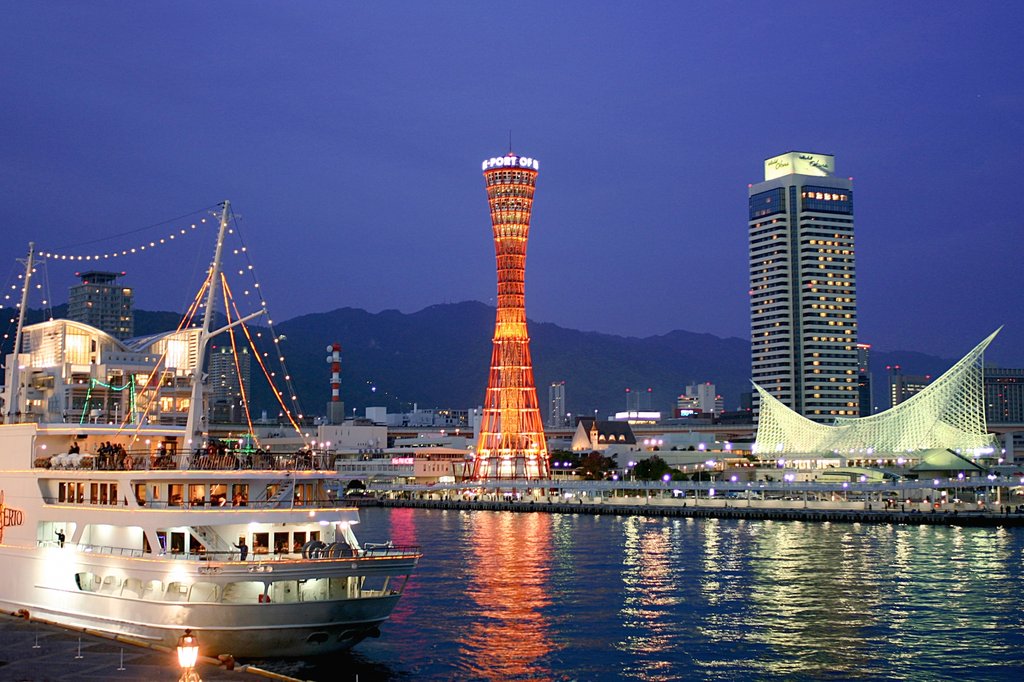
Just 25 minutes and ¥420 from Osaka via JR Special Rapid, Kobe is an effortless and rewarding day trip, especially for food lovers and couples seeking a relaxed yet refined atmosphere.
Savoring Kobe beef at lunch is a smart strategy. Dinner courses often exceed ¥10,000, while lunchtime teppanyaki sets typically start around ¥3,000. Even A5-grade steak lunches can be found for approximately ¥5,400, offering exceptional value. Watching the chef prepare your meal on the iron griddle right before your eyes turns the experience into both dining and entertainment.
After an early lunch near Sannomiya around 11:00 a.m., dedicate the afternoon to exploration. Stroll uphill through Kitano Ijinkan-gai, the charming district of Western-style residences once inhabited by foreign merchants during the Meiji era. From there, gradually make your way down toward Kobe Harborland as evening approaches. As the sun sets, the harbor takes on a romantic glow. The illuminated Kobe Port Tower against the waterfront skyline creates a scene unique to the city, so be sure to have your camera ready.
The return journey from Sannomiya Station to Osaka Station also takes about 25 minutes, leaving you plenty of time to continue the evening back in Osaka if you wish.
Himeji — Japan’s Most Beautiful Castle
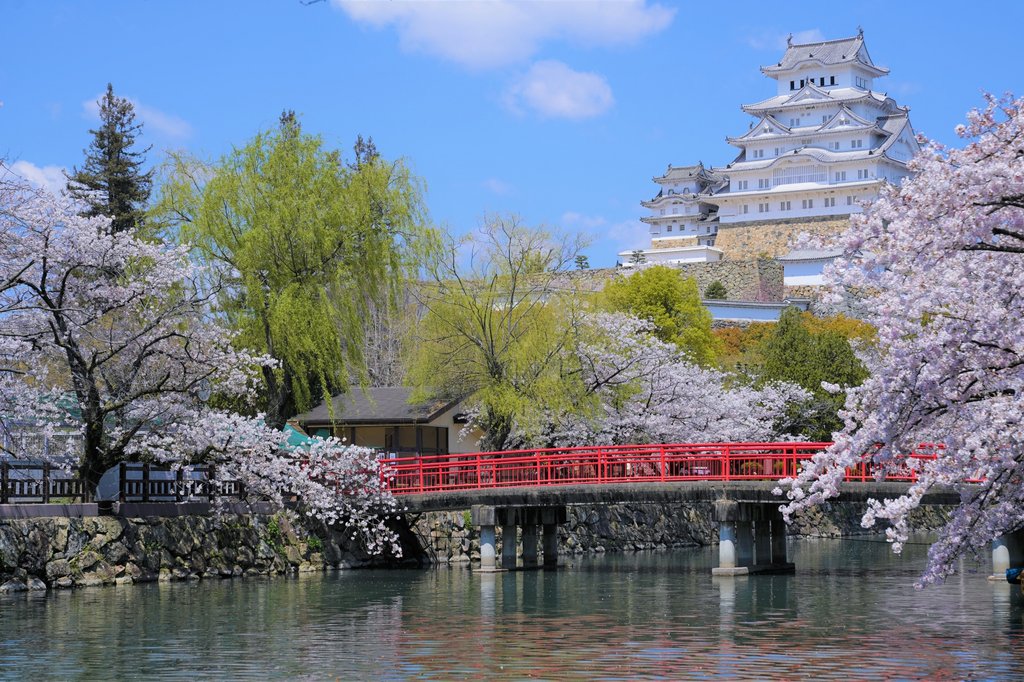
For castle enthusiasts, Himeji is unmissable. A UNESCO World Heritage Site and home to one of Japan’s largest surviving original castle keeps, Himeji Castle is affectionately nicknamed Shirasagi-jō (White Heron Castle) for its elegant white exterior, which appears ready to take flight.
Two access options from Osaka are available.
| Item | JR Special Rapid | Shinkansen |
|---|---|---|
| Travel Time | About 60–65 min | About 30 min |
| Departure Station | Osaka Station | Shin-Osaka Station |
| Transfers | None | Requires travel to Shin-Osaka |
Budget-conscious travelers can take the JR Special Rapid service, while Japan Rail Pass holders may prefer the shinkansen for a faster and more comfortable journey.
From Himeji Station, the castle is a straightforward 15-minute walk along a wide boulevard, with the white keep rising dramatically at the end of the street — a striking and photogenic approach. After exploring the castle’s wooden interior and climbing to the top of the main keep, visit nearby Koko-en, a beautifully landscaped pond-strolling garden located adjacent to the castle grounds. Allow approximately two to three hours to comfortably enjoy both sites.
After lunch in the surrounding castle town area, consider beginning your return in the early afternoon. For a refined touch, stop in Kobe on the way back for an evening harbor stroll, creating a luxurious two-city itinerary within a single day.
Hiroshima and Miyajima — History and Sacred Beauty
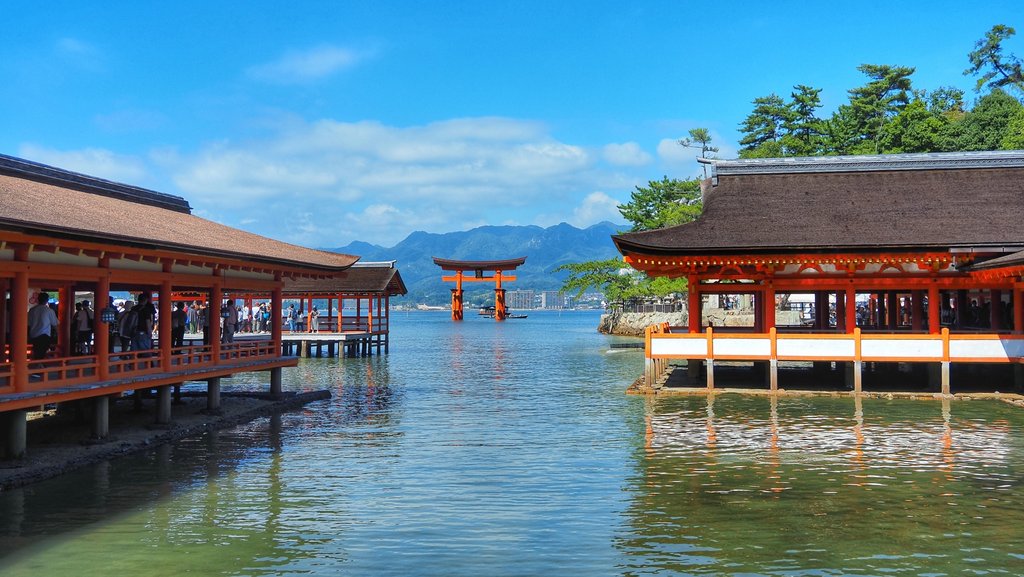
The most distant destination in this guide, yet one that many travelers describe as life-changing.
From Shin-Osaka, the Nozomi shinkansen reaches Hiroshima in approximately 80–90 minutes. One-way reserved seat fares typically range from ¥10,750 to ¥10,950. For holders of the Japan Rail Pass, the round trip is effectively covered (note that the pass does not apply to Nozomi services, but Hikari and Sakura trains provide convenient alternatives). A single day trip to Hiroshima can offset a significant portion of the pass’s cost, making it one of the most valuable long-distance excursions from Osaka.
At the heart of the visit lies Hiroshima Peace Memorial Museum and the Atomic Bomb Dome. Together, they offer a profoundly moving experience that often leaves visitors speechless. The exhibits are thoughtfully presented, and even families with children will find meaningful, age-appropriate educational opportunities.
If time allows, continue to Itsukushima Shrine on Miyajima Island, about 10 minutes by ferry from Miyajimaguchi. The shrine’s iconic “floating” torii gate is particularly striking at high tide, while at low tide (below 100 cm), visitors can walk directly out to its base. Check the tide tables on the Miyajima Tourist Association website before visiting.
To cover both Hiroshima and Miyajima in a single day, boarding a shinkansen during the 7:00 a.m. hour is essential. If time is limited, focus on central Hiroshima and explore Peace Memorial Park thoroughly rather than rushing. This is a destination best experienced with reflection, not haste.
Mount Kōya (Kōya-san) — A Mystical Atmosphere on the “Sacred Mountain”
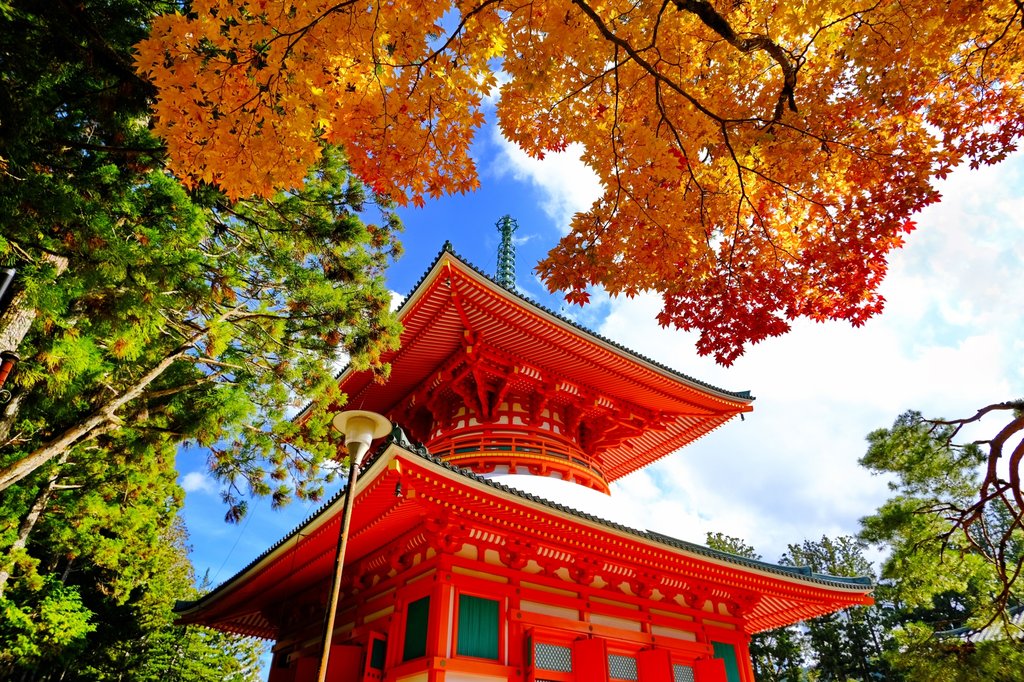
Located approximately 1 hour 40 minutes to 2 hours from Namba Station via the Nankai Koya Line and cable car (one-way fare ¥1,430), Kōya-san unfolds across a mountaintop plateau at roughly 800 meters (2,625 feet) above sea level. As one of Japan’s most important centers of esoteric Buddhism, it offers an atmosphere unlike any other destination.
At the heart of the experience lies Okunoin, the sacred precinct where Kobo Daishi (Kukai) is believed to remain in eternal meditation. The nearly 2-kilometer approach is lined with towering centuries-old cedar trees, moss-covered gravestones, and memorial monuments that fade into the forest. The moment you step onto the path, the air feels noticeably different: quieter, heavier, contemplative.
In striking contrast stand the vivid vermilion structures of Danjo Garan and the serene halls of Kongobu-ji, headquarters of the Shingon sect. Together, they showcase both the grandeur and the spiritual depth of the mountain.
For a day trip, departing Namba between 7:00 a.m. and 8:00 a.m. allows for approximately five to six hours on site, enough time to explore Okunoin and Danjo Garan at a measured pace.
If your schedule permits, however, consider staying overnight at a shukubo (temple lodging). Experiencing shojin-ryori, Buddhist vegetarian cuisine prepared without meat or fish, and attending the early morning prayer service around 6:00 a.m. alongside resident monks offers a level of immersion that simply cannot be replicated on a day trip.
Kinosaki Onsen — Relaxation in a Traditional Hot Spring Town
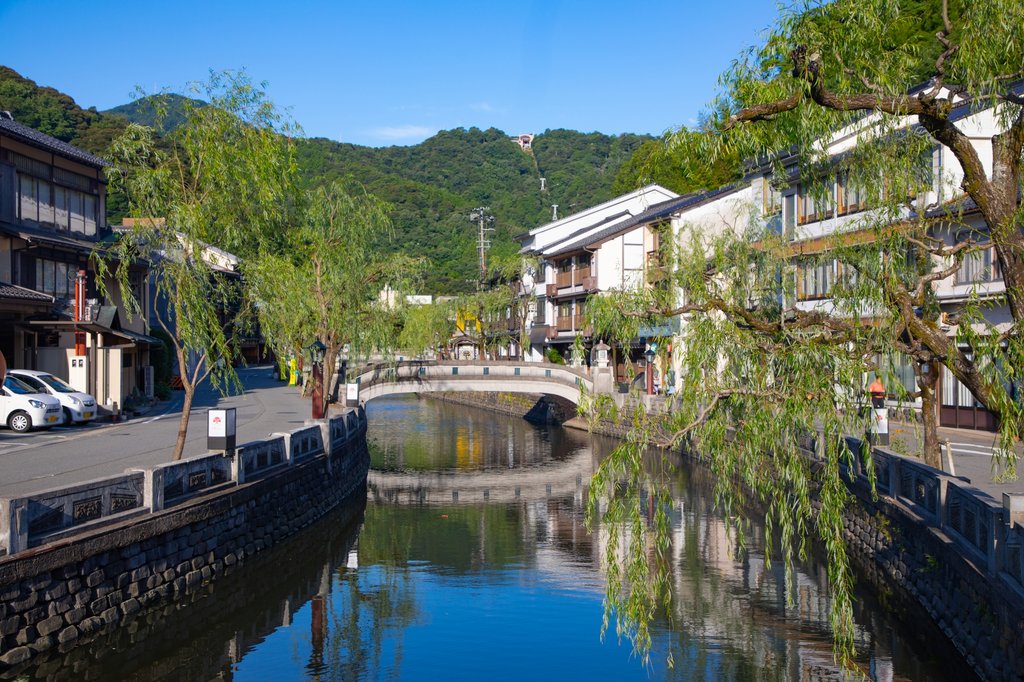
At approximately 2.5 hours from Osaka, Kinosaki is one of the more distant destinations in this guide — but well worth the journey. The normally ¥6,140 reserved-seat fare on the JR Limited Express Kounotori is fully covered by the Kansai Wide Area Pass, making the trip especially appealing for pass holders. The scenic ride itself, with pastoral landscapes unfolding beyond the train window, becomes part of the experience.
Upon arrival, purchase a one-day onsen pass (¥1,500) at a ryokan (traditional Japanese inn) or public bathhouse. Then change into a yukata (lightweight traditional Japanese garment) and stroll through town in wooden geta sandals, their gentle clacking echoing along the willow-lined canals. This is the essence of Kinosaki Onsen.
The town features seven distinctive sotoyu (public bathhouses), each with its own personality. Kouno-yu is associated with a legend of storks healing their wounds in its waters, while Ichino-yu is known for its cave-style bath. Moving leisurely from bath to bath, known as onsen hopping, is both relaxing and surprisingly addictive.
Winter visitors should not miss matsuba-gani, premium snow crab from the Sea of Japan, a seasonal specialty that elevates the experience even further.
For Kansai Wide Area Pass users, note that while shinkansen and limited express reserved seats are included, online reservations are limited to six uses. From the seventh booking onward, reservations must be made at a ticket window. Early morning departures can be busy, so aiming for a train in the 8:00 a.m. hour typically offers a more comfortable start to the day.
Okayama and Kurashiki — Picture-Perfect Gardens and a Canal Town
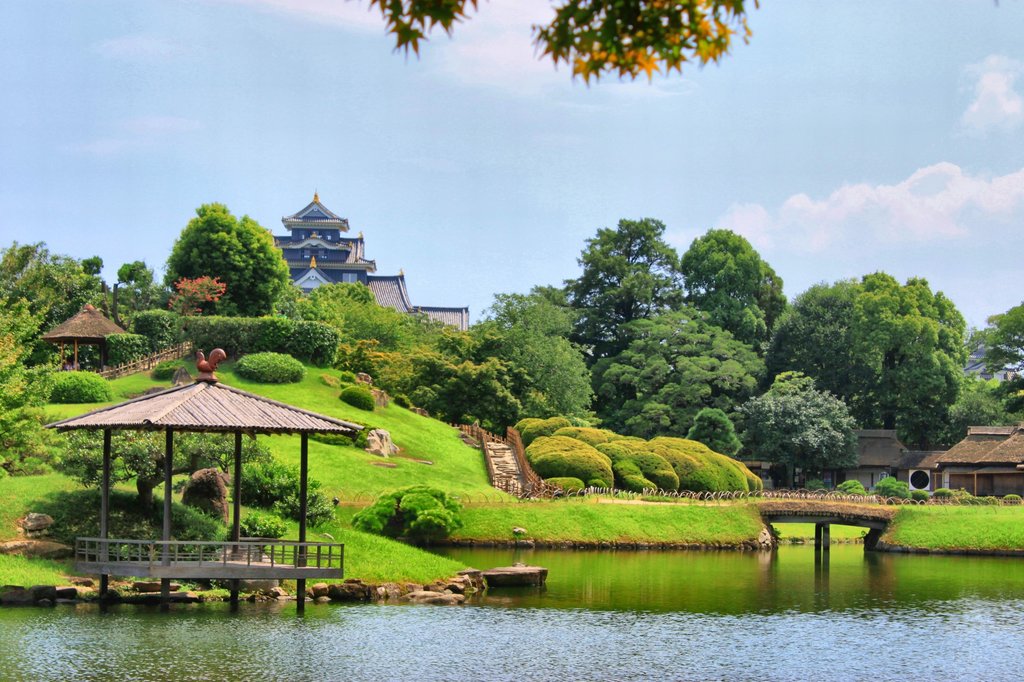
If you’re feeling fatigued by Kyoto’s crowds, these neighboring cities offer a refreshing alternative. From Shin-Osaka, the Nozomi shinkansen reaches Okayama in just 45–48 minutes (¥6,460 one-way). JR Pass holders can travel this segment at no additional cost (via eligible services), making it a smooth and efficient excursion.
Begin your morning at Korakuen Garden, counted among Japan’s Three Great Gardens and awarded three stars by the Michelin Green Guide. Spanning 14.4 hectares, this expansive strolling garden was begun in 1687 and took approximately 13 years to complete. Climb Yuishin-zan, the central artificial hill, for sweeping views over Sawa-no-ike Pond and Okayama Castle rising beyond. With far fewer visitors than Kyoto’s major sites, Korakuen allows for a more contemplative, unhurried experience.
In the afternoon, ride the JR San’yō Line about 15 minutes to Kurashiki’s Bikan Historical Quarter. The canal-side streets lined with white-walled storehouses feel almost cinematic. Within walking distance is the Ohara Museum of Art, Japan’s first private museum dedicated to Western art.
Together, Okayama and Kurashiki create a beautifully balanced day, combining classical garden design, historic townscape, and fine art in a single, well-paced itinerary.
Wakayama — Castle, Coastline, and Quiet Corners
For travelers who have already explored the Kyoto and Nara classics, Wakayama offers a quieter and slightly deeper alternative.
From Namba, the Nankai Main Line reaches Wakayama-shi Station in about 50 minutes (¥970 one-way). Alternatively, the JR Hanwa Line connects Tennoji to Wakayama in approximately 70–76 minutes (¥900 one-way), providing flexibility depending on your starting point and rail pass.
Start your visit at Wakayama Castle, where panoramic views stretch across the Kino River and the surrounding cityscape. The reconstructed keep offers an accessible yet scenic introduction to the region’s history.
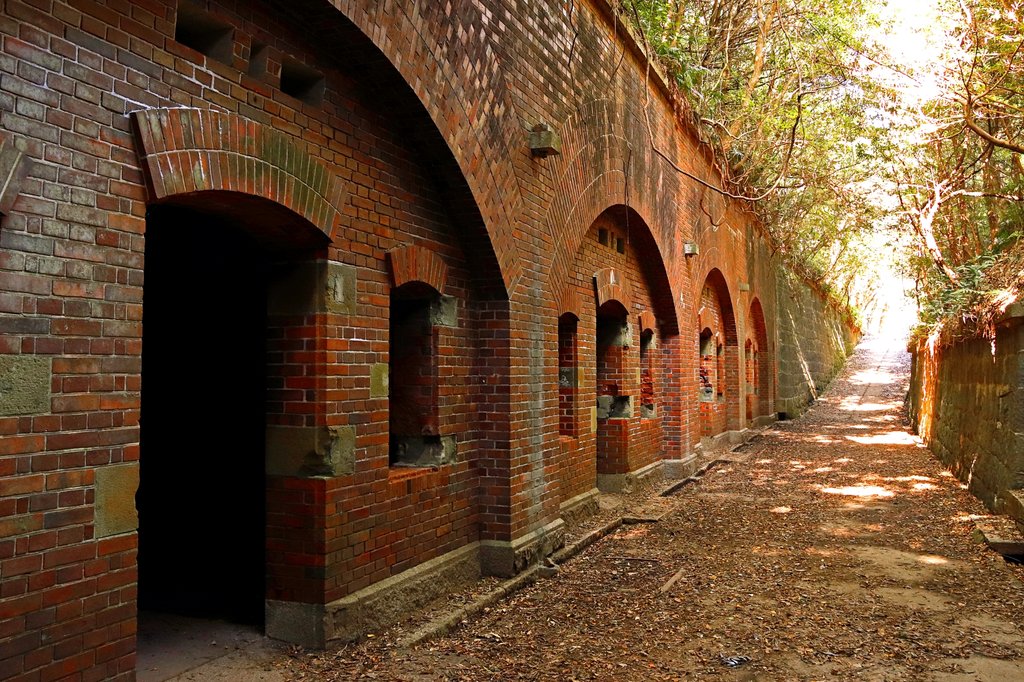
For photographers and adventure-seekers, Tomogashima often leaves the strongest impression. This uninhabited island group is home to overgrown former military battery ruins, earning it the nickname “Japan’s Laputa.” A roughly 2.5-hour hiking route winds through atmospheric brick fortifications reclaimed by nature, a setting that feels almost cinematic.
One important note: ferry services to Tomogashima operate on a limited daily schedule and are frequently canceled due to strong winds or rough seas. It’s not uncommon for visitors to arrive at the port only to discover that no boats are running. Always check ferry status before departure and prepare an alternative plan.
If crossings are suspended, consider visiting Wakayama Marina City or stopping by Kuroshio Market, known for its lively tuna-cutting shows and fresh seafood — a worthwhile experience in its own right.
Making the Most of Your Time Before and After Day Trips
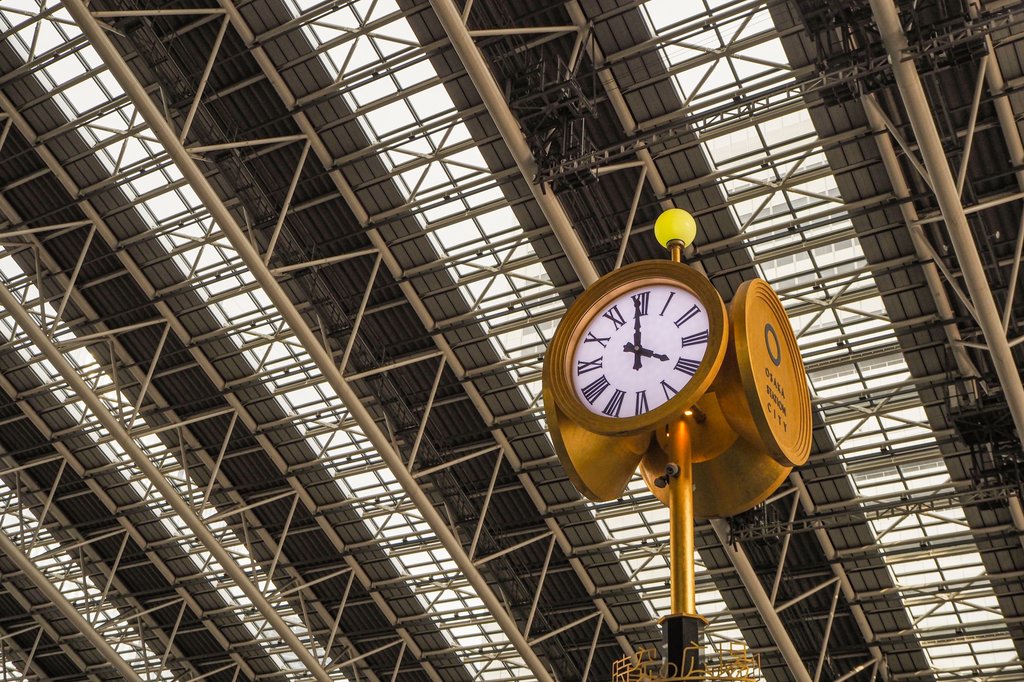
Sightseeing at your day trip destination is important, but how you spend your time in Osaka before departure and after returning can significantly shape the overall experience. Here we introduce activities to enjoy in Osaka during morning hours before departure and evening hours after return.
Morning Before Departure
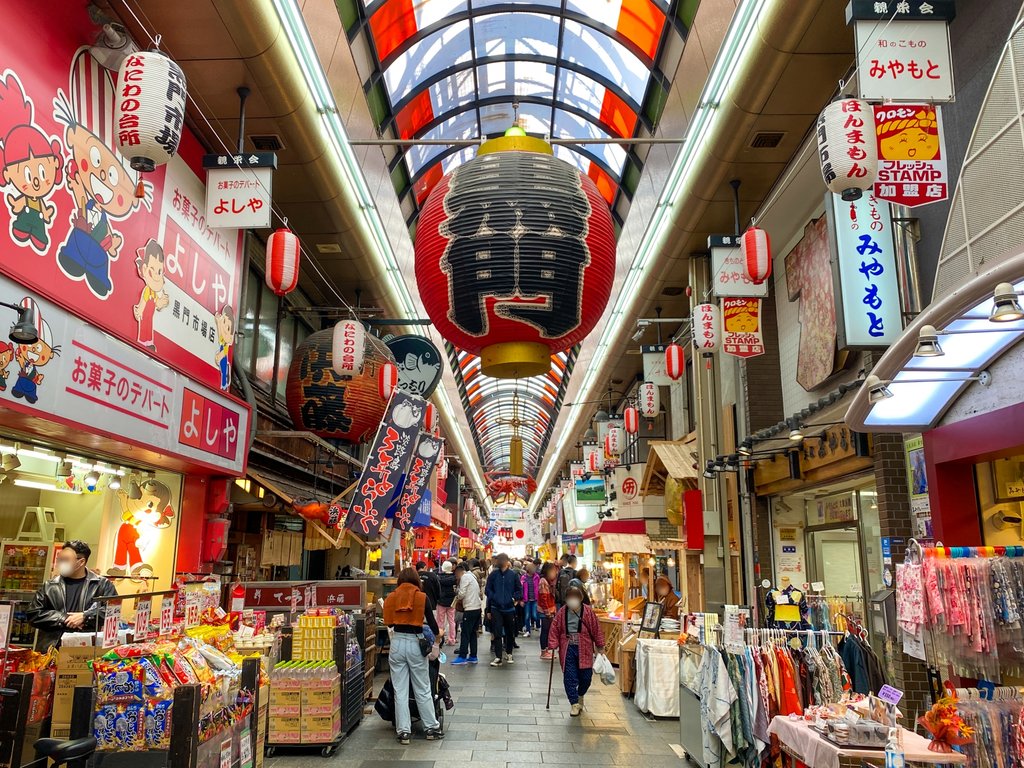
If your departure time is already set, consider dedicating one to two early-morning hours to a quintessential Osaka experience before boarding your train.
Breakfast at Kuromon Ichiba Market, often called “Osaka’s Kitchen”, is an excellent choice. Most shops open around 9:00 a.m., serving fresh seafood rice bowls, grilled skewers, and seasonal cut fruit ready to enjoy on the spot. Popular vendors such as Kuromon Sampei frequently sell out before noon, so arriving at opening time is wise. Plan for 30–45 minutes to eat and browse comfortably.
After breakfast, extend your walk to Osaka Castle Park to elevate the travel mood. The park is open 24 hours and easily accessible from JR Osakajō-kōen Station or Morinomiya Station on the subway. While the grounds grow lively later in the day, mornings offer a quieter atmosphere, ideal for strolling past the castle tower and through the expansive greenery. Even a 20–30 minute walk provides a tangible connection to Osaka’s history and sets a reflective tone before departure.
Building your schedule backward from departure time provides reassurance.
| Time | Activity |
|---|---|
| 7:00 am | Breakfast at Kuromon Market (about 45 min) |
| 8:00 am | Travel to Osaka Castle Park for morning walk (about 30 min) |
| 9:00 am | Return to accommodation to retrieve luggage |
| 9:30 am | Depart for day trip |
Evening After Return
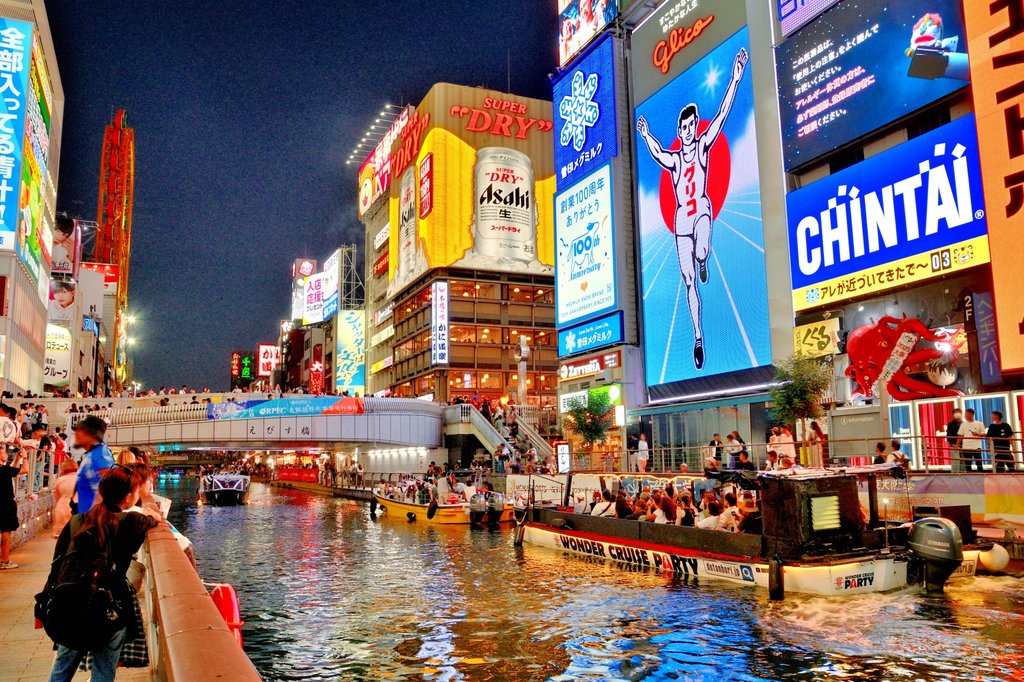
After returning to Osaka from your day trip, don’t let the evening slip away. Choose from the following four options depending on your interests and remaining stamina.
Dotonbori Street Food and Night Stroll
Just a five-minute walk from Namba Station, Dotonbori truly comes alive at night. The iconic Glico Running Man Sign and surrounding neon lights reflecting on the canal create Osaka’s quintessential nightscape.
Stroll along the Tonbori Riverwalk with takoyaki (fried octopus balls) or kushikatsu (deep-fried skewers) in hand. Plan for 1.5–2 hours to wander, snack, and soak in the atmosphere. The promenade is well maintained and manageable even for families with children.
Shinsekai Kushikatsu and Tsutenkaku Tower Illumination
For a dose of retro, working-class charm, head to Shinsekai. Kushikatsu specialty restaurants line the narrow streets, and the custom of ordering skewers one at a time feels distinctly local.
After dinner, take a leisurely stroll beneath the illuminated Tsutenkaku. The glow of the tower against the nostalgic streetscape creates a uniquely Osaka atmosphere.
Sumo Experience at Sumo Studio Osaka
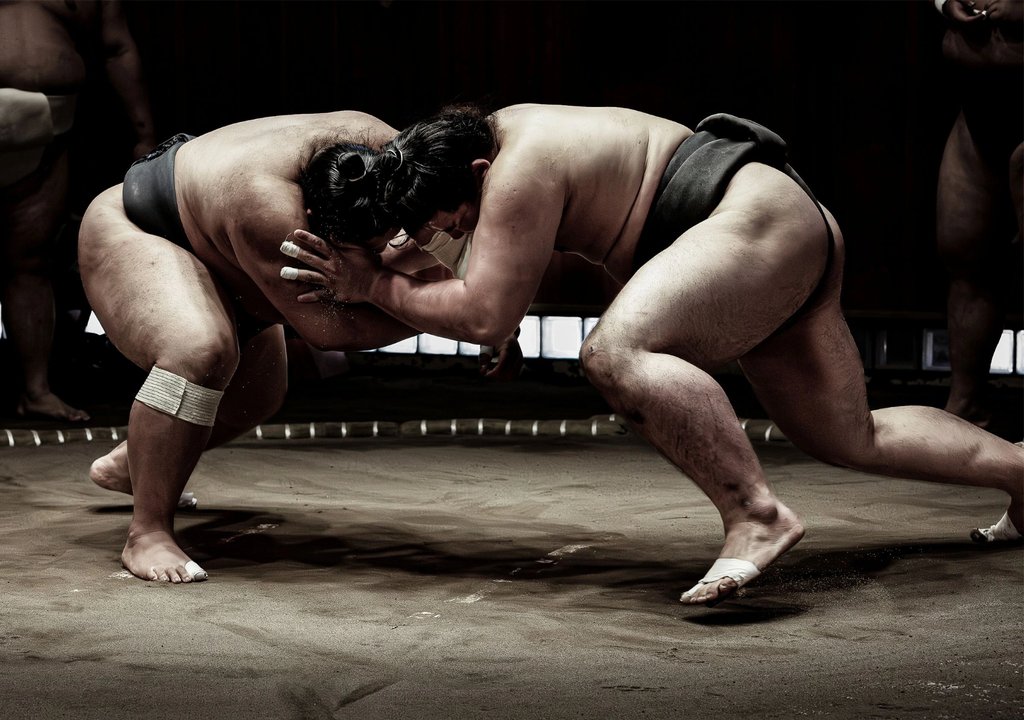
For something more immersive, Sumo Studio Osaka offers the chance to watch authentic bouts performed by retired professional rikishi up close. With five performances daily and a maximum capacity of just 50 guests, the venue maintains an intimate feel.
Audience participation, including stepping onto the dohyo (sacred clay ring), adds a memorable interactive element. English-language support makes the experience accessible for international visitors.
Details
| Address | Hanazonocho AI Building 1F, 1-5-1 Asahi, Nishinari-ku, Osaka (directly connected to Hanazonocho Station Exit 4) |
| Hours | Five performances daily |
| Closed | Open year-round |
| Official Website | https://sumowrestlingshow.jp/ |
| Best For | Those wanting unique Japanese cultural experiences; families; couples |
Night Views from Abeno Harukas Observatory
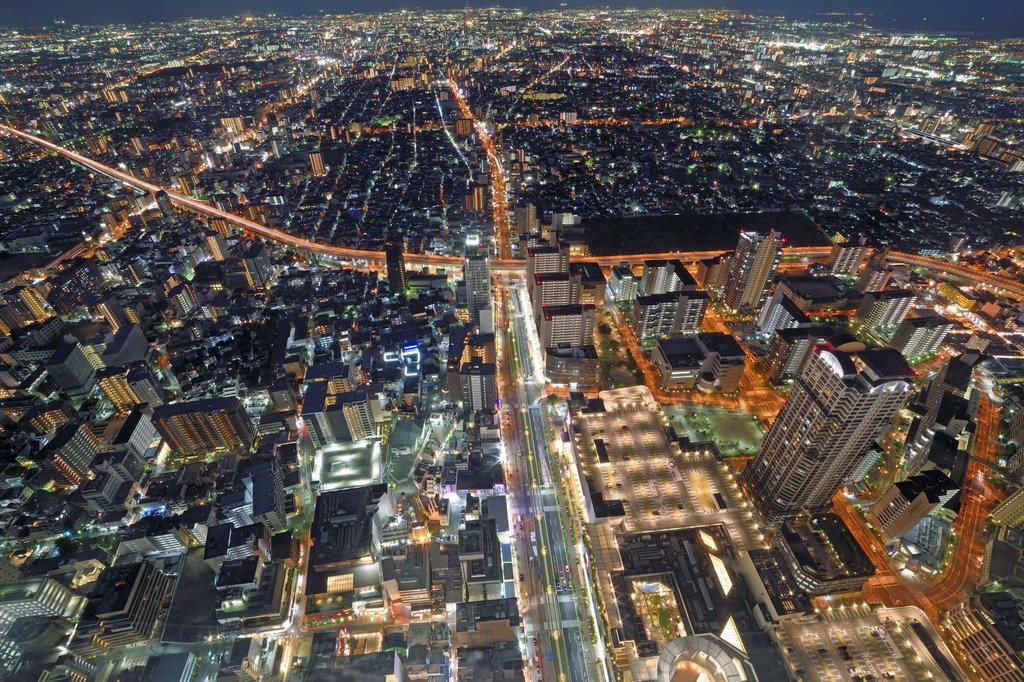
For a relaxed finale, head to the observatory at Abeno Harukas, Japan’s tallest skyscraper. Open until 10:00 p.m. (admission ¥2,000 for adults), it offers sweeping panoramic views of Osaka illuminated at night.
It’s an ideal way to rest your tired feet while reflecting on the day: a calm, elevated conclusion to an active itinerary.
Details
| Address | 1-1-43 Abenosuji, Abeno-ku, Osaka |
| Hours | 9 am–10 pm (last entry 9:30 pm) |
| Closed | Open year-round |
| Official Website | https://www.abenoharukas-300.jp/ |
| Best For | Night view enthusiasts; those conserving energy |
Day Trip Itineraries by Travel Style
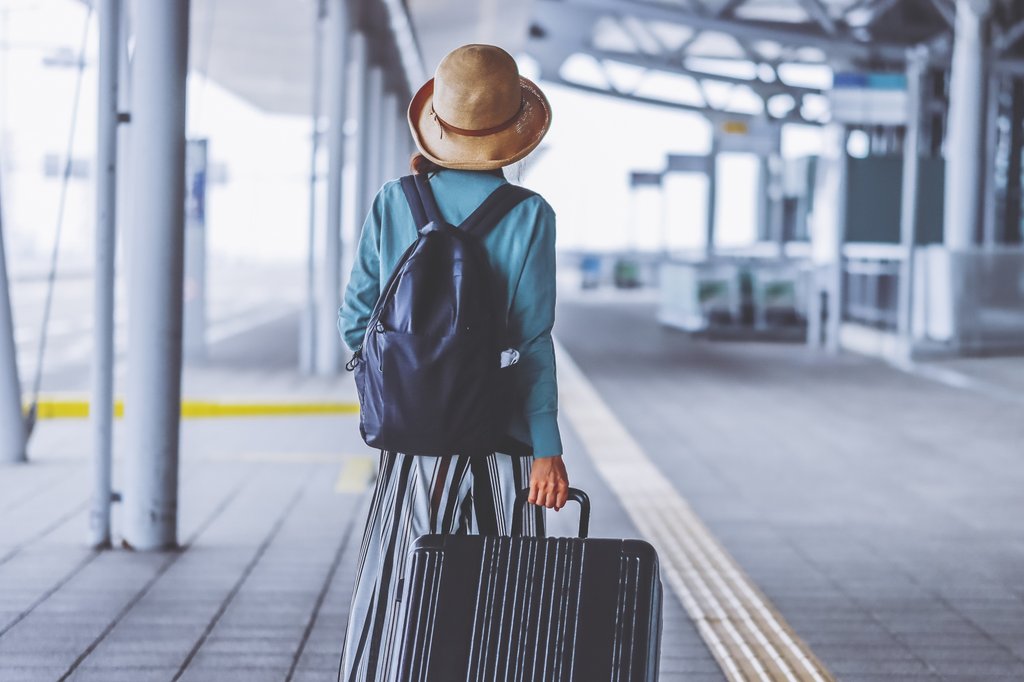
The ideal day trip plan varies greatly depending on your travel purpose, pace, and companions. Here we present specific timetable-format itineraries from morning departure to evening return for four different travel styles.
First-Time Japan Visitors
For first-time Japan visitors, dedicating one day each to Kyoto, Nara, and Kobe is recommended. With Osaka as your base, each city lies within 30–50 minutes by train, and the pace works well even for families with children.
Three-Day Timetable
Day 1: Kyoto Temple Circuit
Depart Osaka Station at 8:00 a.m., arriving in Kyoto via JR Special Rapid in approximately 30 minutes. Spend the morning visiting Kinkaku-ji and strolling through the bamboo grove in Arashiyama.
For lunch, enjoy a relaxed, food-hopping experience at Nishiki Market, sampling small local specialties along the way.
In the afternoon, explore the thousand vermilion torii gates of Fushimi Inari Taisha before returning to Osaka around 5:00 p.m. Arriving back in the early evening helps preserve children’s energy and keeps the day enjoyable rather than exhausting.
Day 2: Nara Morning + Osaka Afternoon
Depart Kintetsu Namba Station at 9:00 a.m., arriving in Nara in approximately 35 minutes.
Spend the morning interacting with the friendly deer in Nara Park and visiting Todai-ji to see the Great Buddha.
Return to Osaka around 12:30 p.m., then enjoy a relaxed afternoon sampling street food in Dotonbori or browsing for souvenirs in Shinsaibashi.
Day 3: Kobe Beef and Harbor Town Stroll
Depart Osaka at 10:00 a.m., arriving in Kobe via JR in approximately 20 minutes.
Enjoy a Kobe beef lunch in the Sannomiya area. Popular restaurants tend to fill quickly on weekends, so making a reservation at least one week in advance is highly recommended.
In the afternoon, stroll through Meriken Park and explore the historic streets of Kitano Ijinkan-gai. Returning to Osaka around 4:00 p.m. leaves ample time for evening shopping and dining in Umeda.
Total JR fares for these three days typically range from ¥4,000 to ¥5,000 per adult. The 3-day Kansai Area Pass costs approximately ¥6,000, so if you plan to use Kintetsu Railway for your Nara visit, purchasing individual tickets is often more economical than buying the pass.
Families with Children
When planning day trips with children, striking the right balance between “Will the kids enjoy it?” and “Will the parents survive?” is essential. Keep one-way travel time under 1.5 hours and limit on-site activities to 3–4 hours to help ensure the whole family ends the day smiling.
Recommended courses by age group.
| Age Group | Recommended Course | One-way Travel Time |
|---|---|---|
| Toddlers (3–5) | Nara Park deer + Katsuragi Sumo Museum | About 40 min–1 hour |
| Elementary (6–9) | Himeji Castle + Kobe Animal Kingdom | About 1 hour–1 hour 20 min |
| Tweens/Teens (10+) | Wakayama Castle + Shirahama Onsen area | About 1 hour 20 min |
For toddlers, Kehaya-za at the Katsuragi Sumo Museum is a lesser-known spot that pairs well with a visit to Nara Park for deer encounters. Children can step onto a full-size dohyo built to official tournament specifications, offering a rare opportunity for active, hands-on engagement. Located just a five-minute walk from Kintetsu Taima-dera Station, it is easily accessible. Admission is ¥300 for adults and ¥150 for children. Closed on Tuesdays and Wednesdays.
For elementary school–aged children, combining a climb to the top of Himeji Castle with a visit to Kobe Animal Kingdom is a popular option. Touring the castle in the morning and switching to animal interactions in the afternoon helps prevent boredom and keeps the day well balanced.
On rainy days, be sure to have indoor alternatives in mind. If children grow restless during transit, turning the passing scenery into a quiz game can be an effective distraction. Plan itineraries that take children’s stamina into consideration.
Culture and History Enthusiasts
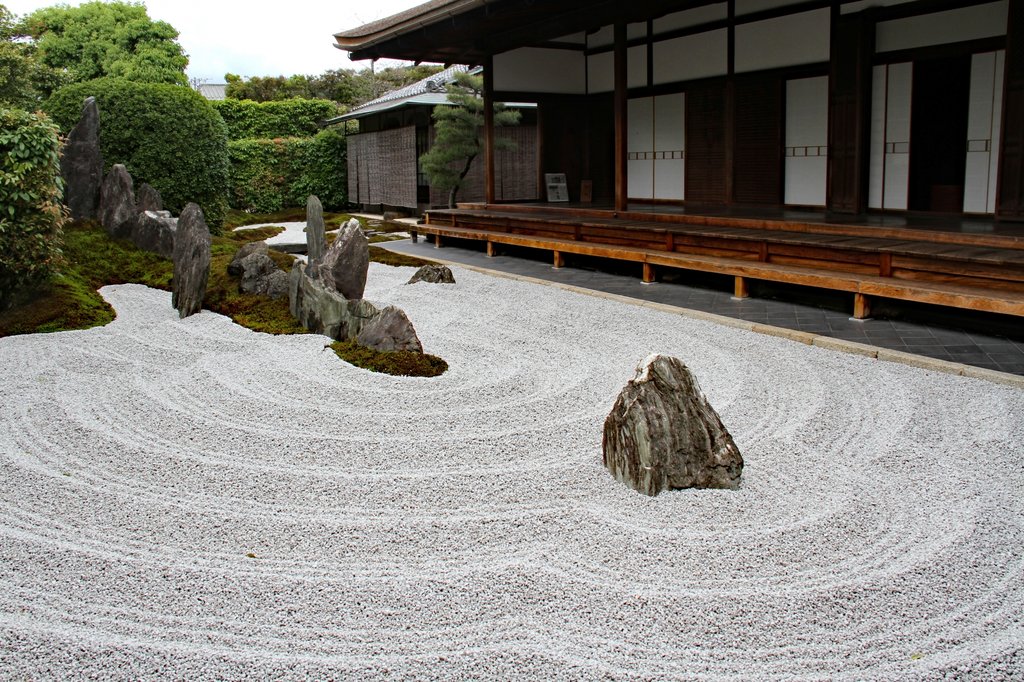
For travelers who find Kyoto’s standard sightseeing routes a bit too crowded or predictable, a thoughtfully planned day trip exploring lesser-visited temples offers a more tranquil and enriching experience.
Kyoto Hidden Temple Circuit (Day Trip)
Depart Osaka Station at 8:00 a.m., arriving at Kyoto Station via the JR Special Rapid Service in about 30 minutes. Spend the morning admiring Tofuku-ji’s Tsuten-kyo Bridge and Hojo (Abbot’s) Garden (approximately 90 minutes), then take a bus to Daitoku-ji.
At Daitoku-ji, explore several sub-temples associated with the Zen master Ikkyu (allow about 90 minutes). In the afternoon, ride the Keifuku Railway to Ryoan-ji and take your time appreciating its renowned rock garden at this temple, founded in 1450.
Using audio guides and reference materials at each temple can greatly deepen your understanding of architectural styles and Zen philosophy.
Koyasan or Hiroshima — Which to Prioritize?
Both Koyasan and Hiroshima require more than 90 minutes each way from Osaka, making it impractical to visit both in a single day. Here are a few criteria to help you decide.
| Destination | Experience Characteristics | One-way Estimate |
|---|---|---|
| Koyasan | Ajikan (Shingon Buddhist meditation) experience; spiritual atmosphere of Okunoin | About 2 hours |
| Hiroshima | Atomic Bomb Dome; modern history learning at Peace Memorial Museum | About 1.5 hours (shinkansen) |
Travelers drawn to spirituality and religious architecture will likely find greater fulfillment in Koyasan, while those interested in gaining a deeper understanding of modern history should prioritize Hiroshima.
After returning to Osaka in the evening, consider enhancing your cultural experience with a visit to Osaka Castle’s museum or by participating in a sumo experience at Sumo Studio Osaka, both offer further insight into Japan’s rich historical and cultural heritage.
Nature and Relaxation Seekers
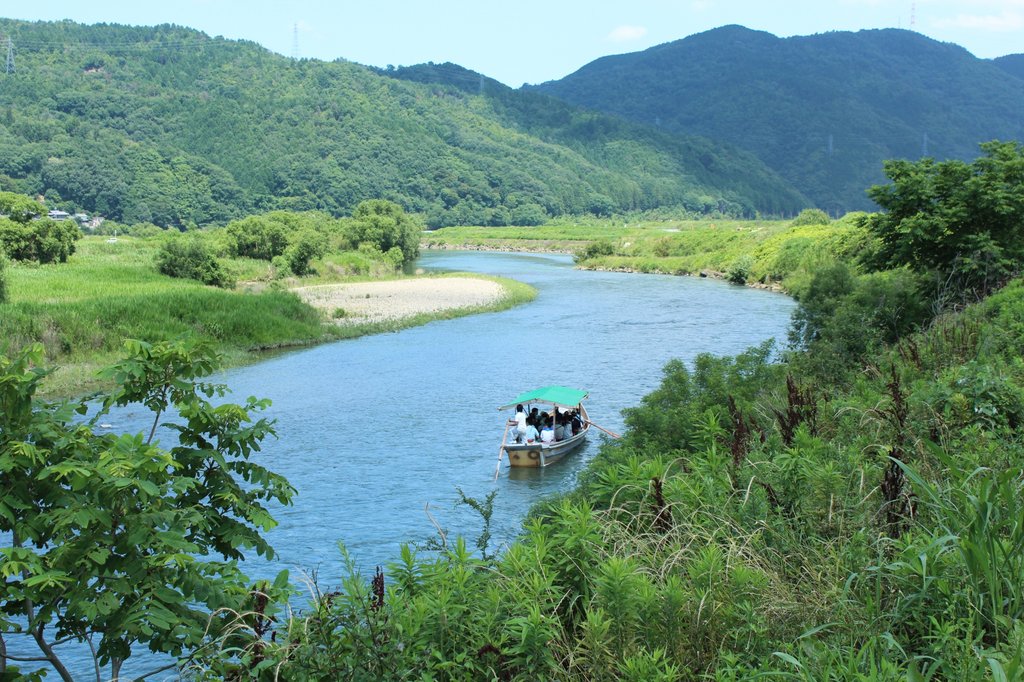
Whether you’re looking to unwind in hot springs or hike through scenic landscapes, day trips from Osaka offer rewarding escapes. Here are three options to choose from, depending on your energy level and mood.
| Course | Fatigue Level | Relaxation Level |
|---|---|---|
| Kinosaki Onsen bathhouse hopping | ★★☆☆☆ | ★★★★★ |
| Arashiyama + Hozu River cruise | ★★★☆☆ | ★★★★☆ |
| Wakayama/Tomogashima | ★★★★☆ | ★★★☆☆ |
Kinosaki Onsen Bathhouse Hopping
The Limited Express Kounotori from Osaka Station takes approximately 2 hours and 40 minutes to 3 hours. While the journey is relatively long, JR Pass coverage helps reduce additional costs.
Upon arrival, the charming hot spring town stretches out from the station, with seven public sotoyu bathhouses that can be enjoyed while strolling in a yukata. A comfortable pace includes visiting two to three baths in the morning, enjoying a lunch featuring local crab or Tajima beef, and then soaking in one or two more baths in the afternoon.
Arashiyama + Hozu River Cruise
This elegant itinerary flows from a walk through the bamboo grove to a Hozu River cruise (approximately a two-hour river descent), finishing with a relaxing soak at Arashiyama Onsen.
Advance reservations are essential for the Hozu River cruise, especially during the autumn foliage season and on weekends. Having lunch in the Arashiyama area before boarding helps keep the schedule smooth and stress-free.
Wakayama/Tomogashima
Tomogashima, an uninhabited island preserving former military fortifications, offers an atmosphere often compared to stepping into a Studio Ghibli film. A ferry from Kada Port takes about 20 minutes.
Island trekking takes approximately two hours on beginner routes and up to four hours on more advanced courses. Ferries may be canceled on windy days, so it’s wise to prepare alternatives such as Wakayama Castle or Shirahama Onsen if the weather looks uncertain.
Frequently Asked Questions About Day Trips from Osaka

As your plans take shape, questions such as “Do I really need a rail pass?”, “Can I visit multiple cities in one day?”, and “What if it rains?” naturally arise. Here, we address three questions that international visitors commonly find challenging.
Which Rail Pass Offers the Best Value for Day Trips from Osaka?
The most cost-effective rail pass depends largely on whether your destinations are nearby or farther afield.
For trips to Kyoto, Nara, Kobe, or Himeji, the Kansai Area Pass (from ¥2,800 for one day) is often worth considering. If you plan to travel as far as Okayama or Hiroshima, the Kansai Wide Area Pass, valid for five days and covering the San’yō Shinkansen between Shin-Osaka and Okayama, may offer better value.
The key is to compare the total cost of individual round-trip tickets with the price of the pass before making your decision.
| Destination | Individual Ticket Round-trip Estimate | Pass Worth It? |
|---|---|---|
| Nara | About ¥1,360–1,680 | For one day only, individual tickets are cheaper |
| Okayama | About ¥10,600–14,600 | Wide Area Pass offers value if used on other days too |
| Hiroshima | About ¥21,500–21,900 | Wide Area Pass nearly pays for itself in one round trip |
For a single nearby day trip, individual tickets are usually sufficient, and purchasing a rail pass may not be necessary. However, if you’re planning two or more longer-distance excursions during your stay, the Kansai Wide Area Pass can quickly become much more cost-effective.
Advance purchase through JR West’s official online store is highly recommended. While passes are also available at station ticket counters, long lines are common during peak travel seasons. Securing your pass online before departure offers both convenience and peace of mind.
Can I Visit Both Kyoto and Nara in One Day from Osaka?
It’s possible, but expect a whirlwind itinerary. This plan works best for travelers with stamina or nimble couples comfortable with a brisk pace.
The key is following a southbound route: Fushimi Inari Taisha in Kyoto → Nara Park. Traveling from Fushimi Inari Station to Nara Station takes approximately 65–75 minutes via the JR Nara Line, usually requiring one or two transfers. Returning to Osaka from Nara is also straightforward, about 35 minutes via Kintetsu Railway.
Sample schedule.
| Time | Activity |
|---|---|
| Around 7:30 am | Depart Osaka → JR to Fushimi Inari (about 40 min) |
| 8:15 am–8:45 am | Fushimi Inari Taisha/Senbon Torii (about 30 min to Okusha-hohaisho) |
| Around 9:00 am | Depart Fushimi Inari Station → JR Nara Line to Nara (about 1 hour 15 min) |
| 10:15 am–12:00 pm | Nara Park/Todai-ji/deer interaction |
| Around 12:30 pm | Depart Kintetsu Nara → Osaka-Namba (about 35 min) |
At Fushimi Inari Taisha, climbing all the way to the summit can take over two hours, so turning back at Okusha-hohaisho is a more realistic plan. Spending about 1.5 hours at Nara Park allows time to see Todai-ji’s Great Buddha and feed the friendly deer.
Returning to Osaka with the afternoon free gives you the opportunity to enjoy Dotonbori street food and a lively evening stroll.
What’s the Best Osaka Plan for a Rainy Day?
Even on rainy days, Osaka offers plenty of indoor options for a full day of sightseeing, so there’s no need to feel disappointed if a day trip is canceled.
Kaiyukan (Osaka Aquarium) is an excellent choice. As one of the world’s largest aquariums, it houses around 620 species and 30,000 creatures. The multi-level structure descends via gentle slopes, creating the sensation of diving into the ocean depths. Plan to spend 90–120 minutes here. Coin lockers near the entrance (small ¥300–large ¥700) make it convenient for travelers carrying luggage, even on airport travel days.
For a full-day indoor adventure, Universal Studios Japan (USJ) is ideal. With numerous indoor attractions, you can enjoy the park from morning through evening, rain or shine.
If you prefer a half-day program, hands-on activities such as takoyaki cooking classes or the sumo experience at Sumo Studio Osaka offer engaging and uniquely local experiences, perfect for keeping everyone entertained despite the weather.
Making the Most of Day Trips from Osaka
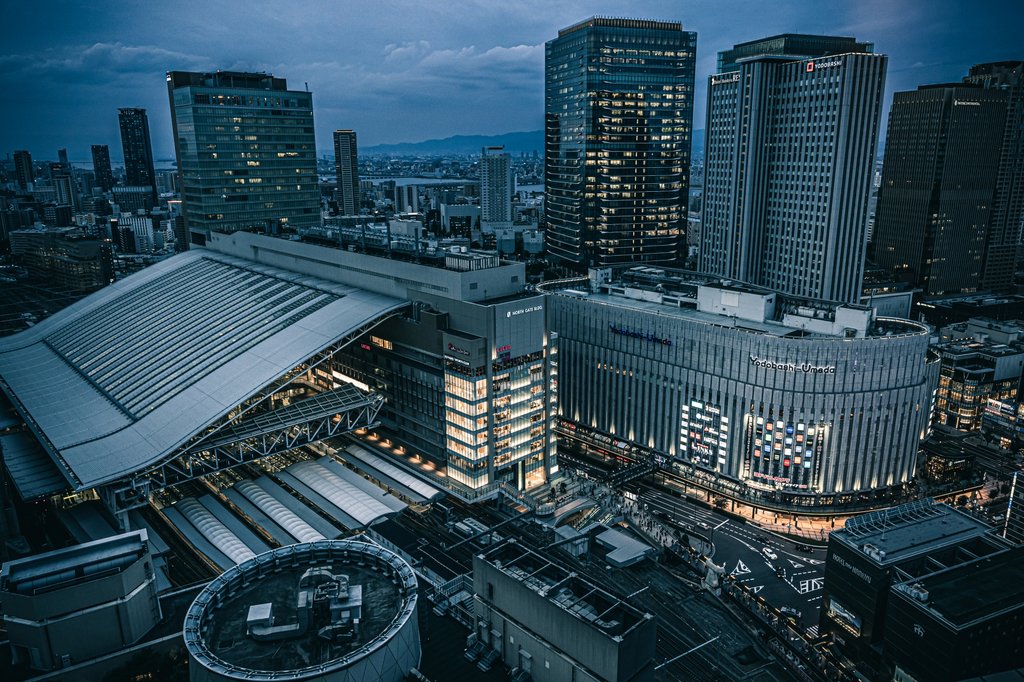
With Osaka as your base, a wide variety of day trips are possible by train, whether you choose nearby cities like Kyoto, Nara, and Kobe or venture farther to destinations such as Koyasan or Kinosaki Onsen.
Maximizing your experience involves a few key strategies: using rail passes wisely, departing early in the morning, and taking advantage of Osaka’s evening scene after your return. Being mindful of this rhythm can dramatically enrich your stay in the Kansai region.
Pick your favorite destination, plan thoughtfully, and enjoy a full, rewarding day.